
A dramatic escalation has shaken the Middle East after four countries reportedly joined forces in a coordinated military operation that analysts say could reshape the balance of power in the region.
The joint strike, carried out in the early hours of the morning, involved forces linked to the United States, United Kingdom, Israel, and France, according to multiple defense officials familiar with the situation. The operation targeted strategic military facilities believed to be connected to weapons development and regional proxy forces tied to Iran.
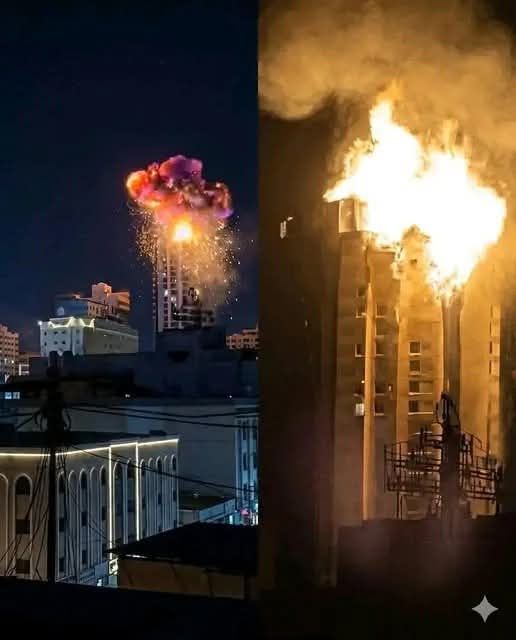
Explosions were reported across several locations shortly before dawn, with witnesses describing loud blasts followed by columns of smoke rising into the sky. Videos circulating online appear to show flashes lighting up the horizon as air defense systems attempted to intercept incoming missiles.
Officials have not yet released a full list of targets, but early reports suggest the strikes focused on military infrastructure believed to support operations throughout the region.
The operation marks one of the most coordinated multinational military responses in recent years and signals a sharp shift in how Western allies are responding to rising tensions with Iran.
For weeks, geopolitical analysts had warned that the region was moving toward a dangerous tipping point.
Attacks involving regional militias, threats against shipping routes, and escalating rhetoric between governments had already pushed tensions close to the brink. But few expected a four-nation military response to unfold so quickly.
According to defense sources, the operation was designed to send a clear message: coordinated action would follow if threats continued to grow.
Military aircraft and naval assets from the participating countries were reportedly involved in the operation. Some strikes were believed to have been launched from ships stationed in nearby waters, while others were carried out by fighter jets operating from regional bases.
The goal, officials say, was to hit specific military sites while avoiding civilian infrastructure.
However, the scale of the operation immediately triggered fears of retaliation.
Iranian officials condemned the attack within hours, calling it a violation of sovereignty and warning that the response would come “at a time and place of our choosing.” State media outlets described the strike as an act of aggression carried out by foreign powers attempting to destabilize the region.
The statement raised concerns among diplomats that the situation could spiral quickly.
Any direct retaliation could pull additional countries into the conflict, turning what is currently a targeted military action into a much wider confrontation.
Security has already been heightened in several major cities across the region, including Tel Aviv, Tehran, and Baghdad, where authorities are preparing for potential demonstrations or security incidents.
Airspace monitoring groups have also reported increased military flight activity across parts of the Middle East, suggesting that additional operations could be underway or being prepared.
Meanwhile, governments around the world are urging restraint.
Diplomats at the United Nations have called for emergency discussions as global leaders attempt to assess whether the strikes represent a limited military operation or the opening stage of a larger conflict.
For civilians across the region, the sudden escalation has created a wave of uncertainty.
Flights continue to depart from major international airports, but travel warnings have already begun to intensify. Several governments are advising their citizens to remain alert or reconsider travel plans as the situation develops.
Military analysts say the biggest question now is how Iran will respond.
If Tehran chooses a restrained diplomatic reaction, tensions could eventually cool. But if retaliation targets military bases, shipping lanes, or allied territory, the situation could escalate into a much broader confrontation involving multiple nations.
The involvement of four countries in the initial strike has already changed the strategic picture.
Rather than a single nation acting alone, the operation signals a coalition approach that could complicate any response.
For now, the region is watching closely.
Smoke has cleared from the targeted sites, but the political and military shockwaves are only beginning to spread. Diplomats are scrambling, military commanders are on alert, and millions of people across the Middle East are waiting to see what happens next.











Leave a Reply