
A tragic crash on Interstate 20 in Talladega County claimed the life of one person after a collision involving a school bus carrying athletes from Handley High School and Middle School.
Authorities confirmed that the driver of the passenger vehicle, 31-year-old Amanda Nicole Hubbard of Munford, died at the scene. Officials identified her following the incident.
The school bus was transporting the Handley High School junior varsity football team along with seventh and eighth grade middle school athletes. They were returning to Roanoke after a game in Leeds.
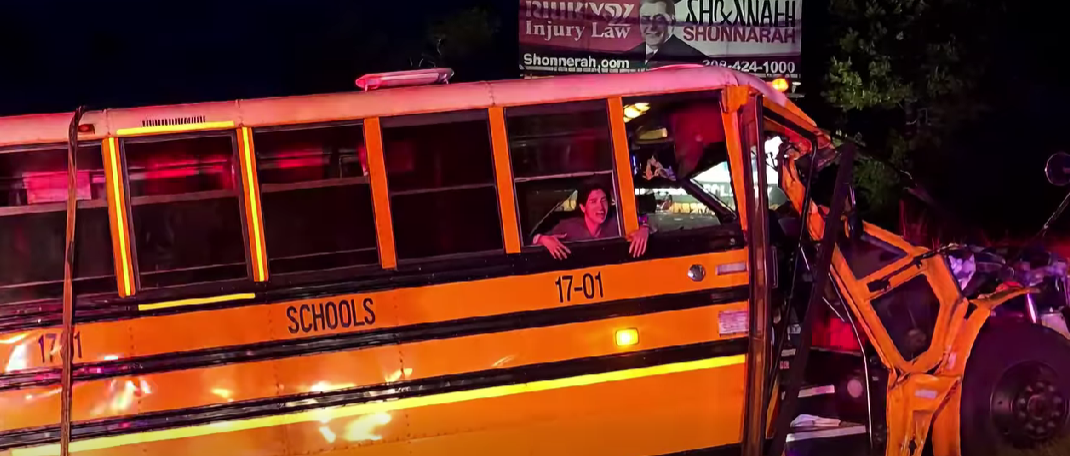
According to officials, the bus was carrying a group of student athletes and their coaches who were returning home after what had been a routine trip. The journey was expected to end without incident, and those on board were looking forward to reuniting with their families after spending time representing their school. Instead, the trip was suddenly interrupted by a serious collision that would leave an entire community shaken and searching for answers.
Authorities reported that the crash occurred while the bus was traveling along a roadway during the return journey. Initial information indicated that the student athletes and coaching staff had been traveling together in an organized group when the collision took place. Although many details surrounding the incident remained under investigation, officials emphasized that the event unfolded rapidly, giving those involved little or no warning before impact.
Emergency responders were dispatched to the scene immediately after reports of the collision were received. Police officers, firefighters, and medical personnel arrived within a short period of time and began coordinating efforts to secure the area. Their first priority was ensuring the safety of everyone involved while assessing the extent of the damage caused by the crash.
Witnesses described a scene of confusion and concern in the moments that followed the collision. Passing motorists who observed the aftermath stopped to offer assistance where possible, while emergency crews worked quickly to establish a safe perimeter around the crash site. The roadway was temporarily closed as responders focused on helping passengers and gathering preliminary information about what had occurred.
Officials stated that emergency personnel carefully examined the condition of the bus and any other vehicles involved. Medical teams conducted evaluations of passengers and provided assistance to those who required attention. Responders also worked to ensure that students and staff were accounted for and transported to appropriate locations when necessary.
The student athletes on board represented a variety of age groups and athletic programs. Many had spent the day participating in competitions, practices, or school-related events. Coaches accompanying the students were responsible for supervising the trip and ensuring the group traveled safely. School administrators later expressed gratitude for the professionalism displayed by staff members during the emergency.
Parents and family members learned of the incident through official notifications, phone calls, and reports circulating throughout the community. As news spread, concern quickly grew among relatives eager to learn the condition of their loved ones. School officials established communication channels to provide verified information and reduce confusion during the unfolding situation.
Authorities stressed the importance of relying on confirmed updates rather than rumors. In the hours after the crash, investigators began collecting evidence from the scene while attempting to establish a clear timeline of events. Officials noted that determining exactly how and why the collision occurred would require a thorough review of all available information.
Law enforcement personnel documented the crash site carefully, examining vehicle positions, roadway conditions, and physical evidence. Investigators also sought statements from drivers, passengers, witnesses, and emergency responders. Such information is often essential in reconstructing the sequence of events leading up to a collision.
Transportation safety experts were expected to play a role in the investigation. These specialists frequently analyze factors such as vehicle maintenance records, road design, visibility conditions, traffic patterns, and driver actions. Officials indicated that no conclusions would be reached until all relevant evidence had been reviewed.
School leaders issued statements acknowledging the emotional impact of the incident. They expressed concern for students, families, coaches, and staff members affected by the crash while thanking emergency personnel for their rapid response. Administrators emphasized that the well-being of students remained their highest priority throughout the situation.
Support services were quickly organized for those impacted. Counselors and mental health professionals were made available to students, faculty members, and families seeking assistance in processing the event. Experts often note that traumatic incidents can have lasting emotional effects even when physical injuries are limited, making early support especially important.
Community organizations also began offering assistance. Local groups, religious institutions, and volunteers reached out to affected families, providing practical help and emotional support. Such responses are often seen following major incidents, reflecting a collective desire to help those facing unexpected hardship.
Many residents described feelings of shock upon learning that a routine school trip had ended in such a dramatic manner. Community members noted that student athletes frequently travel for competitions and educational activities, making school transportation a familiar and trusted part of daily life. The crash served as a reminder of how quickly circumstances can change.
Friends and classmates expressed concern for those who had been on the bus. Social media platforms filled with messages of support, encouragement, and hope as people awaited official updates. Students from neighboring schools and athletic programs also shared their thoughts, demonstrating solidarity during a difficult period.
Athletic events and school activities were affected as administrators evaluated schedules and priorities. Some programs considered postponements or adjustments out of respect for those involved and to allow students time to recover emotionally. School officials emphasized that flexibility would be necessary while families and staff navigated the aftermath of the incident.
Experts frequently note that transportation incidents involving students can have a broad impact extending beyond those directly involved. Classmates, teachers, relatives, and community members may all experience emotional reactions. For that reason, schools often implement comprehensive support plans following significant events.
Investigators continued their work in the days following the collision. Authorities reviewed available evidence, including vehicle inspections and any technological data that could assist in understanding the circumstances surrounding the crash. Officials reiterated that the investigative process would take time and that accuracy remained more important than speed.
Safety advocates pointed out that investigations of this nature often examine multiple factors simultaneously. Mechanical issues, roadway conditions, weather, traffic flow, visibility, and human decision-making may all be considered. Determining the role of each factor requires careful analysis and collaboration among various agencies.
Meanwhile, families focused on supporting students and staff affected by the event. Parents praised emergency responders for their swift actions and expressed appreciation for ongoing communication from school officials. Many emphasized the importance of community unity during challenging moments.
School counselors encouraged students to discuss their feelings openly and seek support when needed. Mental health professionals often recommend maintaining routines where possible while recognizing that individuals may process traumatic experiences differently. Some students may wish to talk extensively about the event, while others may need additional time and space.
Teachers and administrators prepared to assist students returning to classrooms after the incident. Educational staff often receive guidance on recognizing signs of stress and providing appropriate accommodations during recovery periods. The goal is to create an environment where students feel safe, supported, and understood.
As more information emerged, attention remained focused on the investigation and the well-being of those involved. Community leaders urged patience while authorities worked to determine the facts. They also encouraged residents to continue supporting affected families through messages of kindness and practical assistance.
The crash prompted broader conversations about transportation safety and emergency preparedness. Parents, educators, and community members discussed the importance of regular vehicle inspections, driver training, and safety protocols designed to protect students during travel. While investigations had not yet reached final conclusions, many saw the incident as an opportunity to reinforce awareness and preparedness.
Officials acknowledged the emotional weight carried by everyone connected to the event. They noted that even after immediate concerns are addressed, recovery often continues for weeks or months. Long-term support systems may be necessary to help individuals process their experiences and regain a sense of normalcy.
Throughout the response, emergency personnel, school administrators, healthcare workers, and volunteers worked together to address both immediate and ongoing needs. Their coordinated efforts reflected the seriousness of the situation and the shared commitment to helping those affected.
The community’s reaction highlighted the deep connections that often exist within school environments. Student athletes are not only competitors but also classmates, friends, neighbors, and family members. As a result, incidents involving school groups can resonate far beyond those directly present at the scene.
While investigators continued seeking answers, residents remained united in their concern for the students and coaches who had been involved. Messages of support continued to pour in from across the region, reflecting widespread compassion and a desire to assist in any way possible.
Ultimately, the collision served as a sobering reminder of how unexpected events can alter ordinary days in an instant. What began as a routine trip home became an incident that touched countless lives, prompting reflection, concern, and an outpouring of support. As the investigation moved forward and affected individuals continued their recovery, the community remained focused on healing, understanding the circumstances of the crash, and ensuring that those impacted received the care and support they needed.











Leave a Reply