
These hilarious images may look shocking, suggestive, confusing, or completely impossible at first glance, but every single one of them has a perfectly innocent explanation. The human brain is remarkably good at recognizing patterns, filling in missing details, and making split-second assumptions about what it sees. Most of the time, that ability helps us make sense of the world around us. Occasionally, however, it leads us completely in the wrong direction. That is exactly what makes these photographs so entertaining.
A single image captured at just the right moment can tell a story that never actually happened. A strange angle, a perfectly timed movement, an unusual shadow, or an object placed in the background at exactly the wrong—or right—position can create an illusion so convincing that people need several seconds to figure out what they are really looking at. In some cases, viewers are left staring at a photo for minutes, trying to understand how something that appears impossible could actually be real. The answer is usually much simpler than expected.
Photography has always had the power to freeze moments in time, but sometimes that frozen moment creates a completely misleading impression. Unlike video, which shows events unfolding from beginning to end, a photograph captures only a tiny fraction of a second. Without context, our minds rush to fill in the blanks. We create explanations, assumptions, and narratives based on limited information. The result can be incredibly funny, especially when the truth turns out to be far more ordinary than what we imagined.
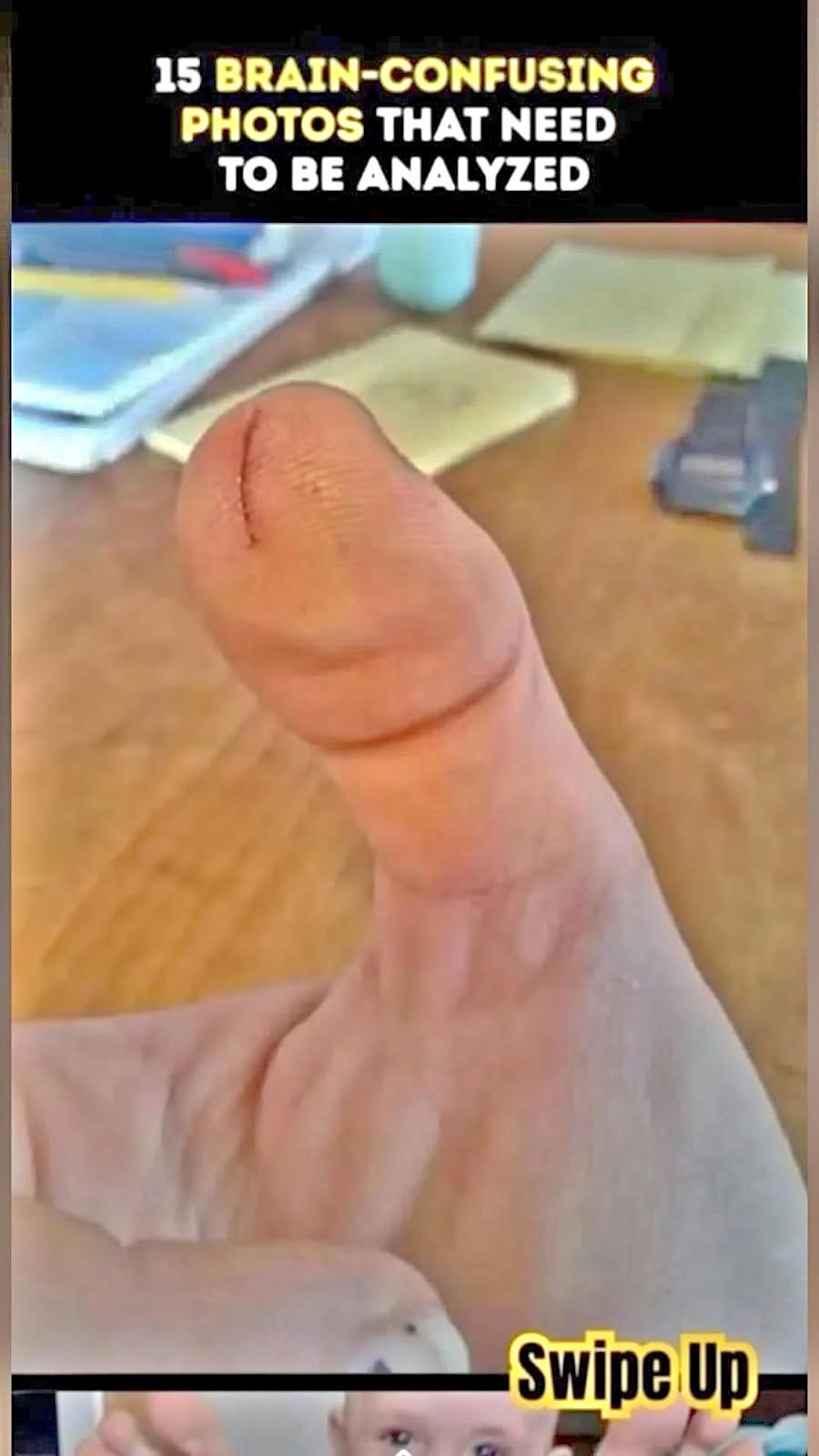
Many of the most viral images on the internet owe their popularity to this exact phenomenon. Someone scrolling through social media notices a photo that appears bizarre, shocking, or even scandalous. They share it with friends, who share it with more friends, and before long thousands or even millions of people are trying to figure out what is happening. Eventually, someone points out the innocent explanation hidden in plain sight, and suddenly the entire image makes sense. What seemed unbelievable moments earlier becomes a perfect example of how easily our eyes can be fooled.
One of the most common causes of these visual misunderstandings is perspective. Perspective can dramatically alter how objects appear relative to one another. A person standing far in the background might seem giant compared to someone closer to the camera. A distant building can appear balanced on someone’s fingertip. A pet sitting in just the right location can look enormous, as though it has suddenly grown to the size of a car. These playful illusions have entertained photographers for decades, yet they continue to fool viewers because our brains naturally assume that objects appearing side by side are located at similar distances.
Another major source of confusion comes from perfect timing. Sometimes a photographer captures an image at the exact instant that two unrelated events overlap. A bird flying behind someone’s head might create the illusion that the person has wings. A passing animal could appear to have merged with another subject. Someone jumping through the air might seem to be floating effortlessly above the ground. Because the camera records only a single moment, the reality behind the scene remains hidden, allowing the illusion to thrive.
Shadows also play a surprisingly powerful role in creating deceptive images. Under the right conditions, shadows can completely transform the appearance of a photograph. A simple shadow cast by an everyday object can resemble something entirely different. Long shadows stretching across a sidewalk may create strange shapes that appear almost human. Reflections and lighting effects can add another layer of confusion, making ordinary scenes look mysterious or impossible. In reality, nothing unusual is happening at all, but the visual trick is convincing enough to leave viewers questioning what they see.
Background details often contribute to some of the funniest misunderstandings. People tend to focus on the main subject of a photograph and pay less attention to everything else in the frame. That oversight can lead to hilarious results. An object positioned behind someone may seem attached to their body. A sign in the distance might accidentally create a misleading message when viewed from a particular angle. Everyday items can suddenly take on entirely new meanings depending on where they appear in relation to the people being photographed.
The internet has become a treasure trove of these accidental masterpieces. Every day, countless photographs are uploaded to social media platforms, and among them are images that unintentionally create visual puzzles. Some gain attention because they appear impossible. Others become popular because they seem suggestive or shocking at first glance. The common thread is that they encourage viewers to look twice. Once the true explanation becomes clear, the image often becomes even funnier than it was initially.
Part of the appeal lies in the surprise. People enjoy being fooled when the stakes are low and the outcome is amusing. There is something satisfying about realizing that what looked extraordinary is actually ordinary. The moment of recognition creates a small mental reward, similar to solving a puzzle or understanding a joke. That combination of confusion and discovery is what makes these photographs so memorable.
Psychologists have long studied the ways in which the brain interprets visual information. Our minds constantly make assumptions based on previous experiences. We expect certain objects to have specific shapes, sizes, and positions. When a photograph violates those expectations, the brain struggles to process the image correctly. It searches for the most likely explanation, even if that explanation turns out to be completely wrong. These mistakes are not signs of poor observation; they are actually evidence of how efficiently the brain normally operates.
Consider how quickly people recognize faces. The human brain is exceptionally skilled at identifying facial features, even when those features are only partially visible. This ability is so strong that people often see faces where none exist. Clouds, rocks, buildings, and household objects can all appear to have eyes, noses, and mouths. This tendency, known as pareidolia, helps explain why certain photographs immediately grab attention. The brain is constantly searching for familiar patterns, and sometimes it finds them in places where they do not actually exist.
Another reason these images become so popular is that they challenge our confidence. Most people trust their own eyes. We assume that what we see accurately reflects reality. When a photograph proves otherwise, it creates a moment of surprise. Suddenly, viewers realize that perception is not always reliable. The image becomes a reminder that appearances can be deceptive and that context matters more than we often realize.
Some of the funniest examples involve animals. Pets seem particularly talented at creating accidental optical illusions. A dog positioned behind a person’s legs can appear to have a human body. A cat stretching at the exact right moment might seem impossibly long. Birds, horses, and other animals frequently appear in viral photographs because their movements are difficult to predict, making perfect timing even more impressive. These images often spread rapidly because they combine humor, surprise, and the universal appeal of animals.
Children also contribute to many unforgettable illusion photographs. Their unpredictable behavior creates countless opportunities for amusing misunderstandings. A child leaping into a swimming pool may appear to be flying. Another might seem to be balancing in a position that defies physics. In reality, the explanation is usually straightforward, but the captured moment tells a very different story.
Travel photography offers another rich source of visual tricks. Famous landmarks are often photographed from creative angles that deliberately manipulate perspective. Tourists pretend to hold up towers, balance monuments on their hands, or interact with distant structures in impossible ways. These images work because the camera flattens three-dimensional space into a two-dimensional picture, making objects at vastly different distances appear much closer together than they actually are.
Even professional photographers occasionally capture accidental illusions. Despite careful planning and years of experience, they are not immune to the unexpected combinations of timing, perspective, and coincidence that create confusing images. In fact, some of the most famous illusion photographs were never intended to be deceptive. They simply happened because all the right elements aligned at precisely the right moment.
Social media has amplified the popularity of these images by allowing them to reach enormous audiences within hours. Users love sharing content that generates reactions, and few things are more effective than a photograph that leaves people scratching their heads. Comments sections quickly fill with guesses, jokes, and debates as viewers attempt to understand what they are seeing. Eventually, someone identifies the correct explanation, transforming confusion into laughter.
What makes these photographs particularly fascinating is that they reveal how much information our brains add to what we see. Vision is not a passive process. We do not simply record reality like cameras. Instead, our minds actively interpret incoming information, constructing a version of reality based on expectations, experience, and context. Most of the time, this process works remarkably well. Occasionally, however, it produces amusing errors that remind us not to take our perceptions for granted.
Many people intentionally seek out collections of optical illusions because they enjoy testing their perception. These images provide a form of entertainment that is both simple and engaging. Unlike complicated puzzles, they require no special knowledge or skills. Anyone can participate by taking a closer look and trying to figure out what is really happening. The challenge is universal, which helps explain why such images appeal to people of all ages and backgrounds.
The best examples often share a common characteristic: they appear completely ordinary once the illusion is understood. There is no hidden trick, digital manipulation, or elaborate setup. The photograph is genuine. The only unusual element is the way our brains interpret it. That simplicity makes the reveal especially satisfying because it demonstrates how easily perspective can transform reality.
In an era when edited images and artificial intelligence have become increasingly common, these accidental illusions offer a refreshing reminder that reality can be just as surprising as fiction. No special effects are required. Sometimes all it takes is a camera, a fortunate coincidence, and a fraction of a second. The resulting image can be every bit as astonishing as something created through advanced technology.
Ultimately, these photographs remind us of an important lesson: things are not always what they seem. A quick glance can lead to mistaken assumptions, while a closer look often reveals a completely different story. Whether the illusion involves perspective, timing, shadows, reflections, or simple coincidence, the result is usually the same. Viewers experience a brief moment of confusion followed by a burst of understanding and laughter.
That unique combination of mystery, surprise, confusion, and humor is exactly what makes these kinds of images so endlessly fascinating to people around the world. They have an almost universal appeal because they tap into something everyone experiences: the tendency to trust our first impressions. At first glance, these photographs often seem shocking, unbelievable, suggestive, or even impossible. They capture a moment that appears to tell one story, only for a closer inspection to reveal a completely different reality. That contrast between what we think we see and what is actually happening creates a powerful sense of curiosity that keeps viewers staring at the image, trying to solve the visual puzzle hidden within it.
Part of the reason these photos become so popular is that they challenge our confidence in our own perception. Most people move through life assuming that their eyes provide an accurate representation of reality. We rarely stop to question whether what we are seeing might be misleading. Yet a perfectly timed photograph can expose just how easily our brains can be tricked. A strange angle, an unexpected shadow, a reflection, or an object positioned in exactly the right place can completely alter the meaning of an image. Suddenly, something ordinary appears extraordinary, and something innocent seems far more dramatic than it really is.
These photographs reward curiosity in a way that few other forms of entertainment can. The longer you look, the more details you begin to notice. What first appeared to be a bizarre situation slowly starts to make sense as hidden clues reveal themselves. The object that seemed impossible is suddenly recognizable. The unusual shape turns out to be nothing more than a coincidence. The shocking scene becomes a completely ordinary moment viewed from a misleading perspective. This process of discovery is incredibly satisfying because it transforms confusion into understanding. Viewers feel as though they have solved a small mystery, and that sense of achievement makes the image even more memorable.
In a world where people are constantly scrolling through content at high speed, these images encourage something increasingly rare: taking a moment to slow down and pay attention. Rather than immediately moving on to the next post, viewers find themselves examining every corner of the photograph. They zoom in, study the background, and look for details they may have missed. The image becomes a challenge, inviting people to uncover the truth hidden behind the illusion. In many ways, these photographs remind us that first impressions are not always reliable and that patience often reveals a more accurate picture of reality.
What makes these visual illusions especially entertaining is that they often emerge from completely ordinary situations. There is usually no elaborate setup, no expensive equipment, and no complicated special effects involved. Instead, they are the result of everyday life unfolding in unexpected ways. A person walks into the frame at exactly the right moment. An animal appears in the background. A shadow falls across the ground at a peculiar angle. Two unrelated objects line up perfectly from the camera’s perspective. Individually, these details are unremarkable. Together, they create an image capable of fooling thousands—or even millions—of viewers.
Many of the most memorable examples become popular because they spark conversation. People immediately begin sharing their interpretations, debating what they think they are seeing, and comparing observations with friends. Some viewers notice the explanation right away, while others remain confused for several minutes. This shared experience of trying to solve the mystery adds another layer of enjoyment. The image becomes more than just a photograph; it becomes a puzzle that people work through together.
These photographs also highlight an important truth about human perception. The brain is constantly making assumptions based on limited information. It fills in gaps, predicts outcomes, and constructs explanations before all the facts are available. Most of the time, this process helps us navigate the world efficiently. However, images like these reveal the occasional flaws in that system. They show how easily context can influence interpretation and how quickly assumptions can lead us in the wrong direction. Rather than being a weakness, this tendency is simply part of how the human mind works. The humor comes from recognizing those mistakes and appreciating how convincing they can be.
Perhaps the most remarkable aspect of these images is their ability to transform ordinary moments into unforgettable experiences. A photograph taken in a fraction of a second can generate laughter, curiosity, surprise, and discussion years after it was captured. Long after viewers discover the innocent explanation, they often remember the moment of confusion that came first. That emotional journey—from certainty to doubt, from confusion to understanding, and finally from understanding to laughter—is what gives these images their lasting appeal.
Most importantly, these photographs serve as a reminder that the world is full of unexpected moments waiting to be discovered. Reality is often far stranger, funnier, and more surprising than we expect. What appears shocking at first glance may have a perfectly innocent explanation. What seems impossible may simply be the result of perspective. What looks bizarre may be nothing more than a coincidence frozen in time. The gap between appearance and reality is where the magic happens, turning ordinary scenes into extraordinary visual experiences that continue to captivate people across the internet.
So the next time a photograph leaves you questioning your eyesight, resist the urge to jump to conclusions. Take a closer look. Examine the details. Consider alternative explanations. Chances are, the truth is hiding somewhere within the image, waiting to be discovered. And when that moment of realization finally arrives, it often transforms confusion into laughter, proving once again that some of the funniest and most unforgettable tricks are not created by photographers, editors, or technology—they are created by reality itself. Through a perfect combination of timing, perspective, coincidence, and human perception, these images remind us that the world is capable of producing moments far more entertaining than anything we could have imagined.











Leave a Reply