
A frightening headline is circulating online saying: “RIGHT NOW, PLANE WITH MORE THAN 244 ONBOARD JUST CRASH… See more.” The wording makes the event sound like a brand-new aviation disaster unfolding at this very moment.
But there is an important fact that readers need to know: this headline is referring to an older tragedy, not a newly confirmed plane crash happening right now.
The wording has been repeatedly reposted on social media, including Facebook. One current Facebook post uses almost exactly the same headline, while another social-media result identifies the incident as a flight carrying 244 people.
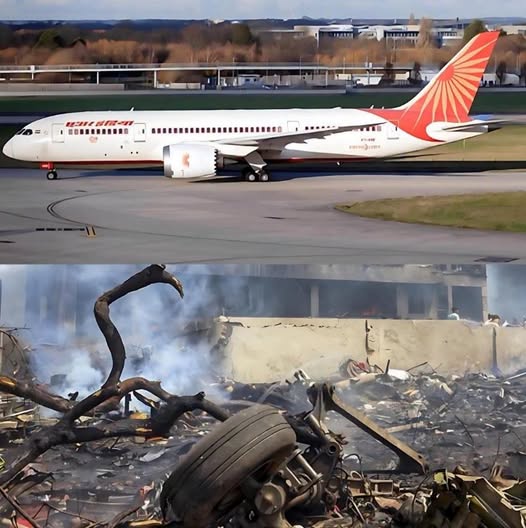
The underlying event was the devastating crash of Air India Flight AI171 on June 12, 2025.
What Happened to Air India Flight AI171?
Air India Flight AI171 was a Boeing 787-8 Dreamliner traveling from Ahmedabad, India, to London Gatwick.
Shortly after takeoff from Ahmedabad, the aircraft crashed in a residential area.
The flight had 244 people aboard, including passengers and crew. Contemporary reporting described the aircraft as carrying 232 passengers and 12 crew members.
The crash generated enormous international attention because it involved a modern Boeing 787, one of the world’s most recognizable long-haul passenger aircraft.
Video recorded from the ground showed the aircraft struggling shortly after departure before disappearing from view. Moments later, a huge fireball and thick smoke could be seen rising from the crash area.
A Disaster That Shocked India
The aircraft came down in Ahmedabad, a densely populated city.
The location made the tragedy even more devastating because the aircraft did not crash into an empty area.
The crash struck a residential and institutional area, resulting in casualties not only among people aboard the aircraft but also among people on the ground. Reports said medical students were among those killed when the aircraft struck a building.
Emergency responders rushed toward the scene as smoke and flames filled the area.
Firefighters, police officers, medical personnel, volunteers, and other emergency workers faced an extremely difficult situation.
The wreckage was scattered across the crash site, while investigators began the painstaking process of identifying victims and determining what had happened.
The Story of the Sole Survivor
One of the most extraordinary aspects of the disaster was the report of a lone survivor.
Vishwashkumar Ramesh, a passenger traveling to London, survived the crash.
According to reports, he was treated at a nearby hospital after escaping the wreckage. His brother was also traveling on the flight, but Ramesh initially did not know what had happened to him.
The circumstances surrounding his survival attracted worldwide attention.
Ramesh reportedly described hearing a loud noise shortly after takeoff and then finding himself outside the aircraft.
His survival became one of the few moments of hope amid a catastrophe that claimed more than 240 lives.
Investigators Faced Difficult Questions
One of the biggest questions following the crash was simple:
Why did the aircraft fail shortly after takeoff?
A Boeing 787 is designed for long-distance commercial aviation, and pilots are trained extensively for emergencies occurring during takeoff.
Yet Flight AI171 appeared to experience serious problems almost immediately after departure.
Investigators therefore needed to examine numerous possibilities.
These included the engines, fuel systems, flight controls, aircraft configuration, maintenance history, weather conditions, pilot actions, and other technical or operational factors.
At the time of the initial reports, the exact cause had not been established. A full aviation investigation takes time because investigators must recover evidence from the wreckage, analyze flight data, examine cockpit recordings, interview witnesses, and reconstruct the aircraft’s final moments.
Why the Boeing 787 Was So Significant
The aircraft involved was a Boeing 787-8 Dreamliner.
The 787 is a modern wide-body aircraft used by airlines around the world for long-distance international routes.
The accident therefore attracted enormous attention throughout the aviation industry.
The aircraft was also relatively new compared with many older commercial jets, making the circumstances particularly important for investigators and aviation specialists.
When a modern aircraft experiences a catastrophic accident, investigators do not simply ask what happened to one airplane.
They examine whether there could be a broader safety issue affecting other aircraft of the same model.
That process is one reason aviation investigations can take months or even years.
Why Is the Story Appearing Again?
The biggest issue with the viral headline is the word “RIGHT NOW.”
The original tragedy occurred in June 2025.
Yet social-media pages have continued reposting versions of the headline. One Facebook video using the wording was still being viewed in August 2026.
This can create the false impression that a new crash has just occurred.
A person scrolling through Facebook or another social platform might see the words “plane with more than 244 onboard just crash” and immediately assume that emergency services are currently responding to a disaster.
But the underlying story is an older event.
This is a classic example of how recycled news can become misleading when the original date is removed.
Remembering the Victims
Behind every aviation statistic are real people.
The number “244” can sound like a simple figure on a screen, but each passenger had a family, friends, plans, responsibilities, and a destination.
Some were traveling for work.
Others were returning home.
Some were beginning vacations or visiting loved ones.
The tragedy also affected people on the ground who had nothing to do with the flight.
For families, the crash was not a viral headline.
It was a life-changing loss.
That is why sensationalizing aviation disasters can be especially painful for victims’ relatives.
Aviation Safety and the Importance of Investigation
Despite the terrible consequences of the Air India crash, aviation safety investigations serve an important purpose.
Investigators examine every available piece of evidence to determine what went wrong.
If investigators discover a mechanical problem, airlines may be warned or required to inspect similar aircraft.
If a procedural issue is identified, training may change.
If a design problem is discovered, manufacturers may be required to modify equipment.
The goal is not simply to explain one tragedy.
The ultimate objective is to prevent another one.
Modern aviation has become exceptionally safe partly because previous accidents have been investigated and their lessons incorporated into future operations.
The Bottom Line
The headline “RIGHT NOW, PLANE WITH MORE THAN 244 ONBOARD JUST CRASH… See more” is misleading when presented as a brand-new event.
The claim refers to the tragic Air India Flight AI171 crash of June 12, 2025, when a Boeing 787-8 crashed shortly after takeoff from Ahmedabad while carrying 244 people.
The tragedy resulted in a massive emergency response and an extensive investigation. The crash also became known worldwide because of the extraordinary survival of one passenger, Vishwashkumar Ramesh.
Most importantly, readers should not mistake recycled social-media footage or an old headline for a new aviation disaster.
Before sharing a breaking-news post, check the date.
Check the original source.
Look for independent confirmation.
And never assume that “RIGHT NOW” means the event actually happened today.
The Air India tragedy remains a deeply painful chapter in aviation history, but using an old disaster to suggest that another plane has just crashed can unnecessarily frighten people and mislead the public.
For responsible readers, the lesson is simple:
Stop. Check the date. Verify the source. Then share.










Leave a Reply