
Political discussions across Florida intensified after Marco Rubio was confirmed for a new leadership role, drawing attention from supporters, analysts, and community leaders. The announcement sparked widespread interest about its broader impact. In the weeks leading up to the confirmation, speculation surrounded his future responsibilities. The official decision brought clarity and reinforced his continued presence…
In the weeks leading up to the confirmation, speculation surrounded his future responsibilities. The official decision brought clarity and reinforced his continued presence in national politics.
Supporters highlighted his experience, noting his long involvement in public service and policy discussions. Many viewed the confirmation as recognition of his years of work.
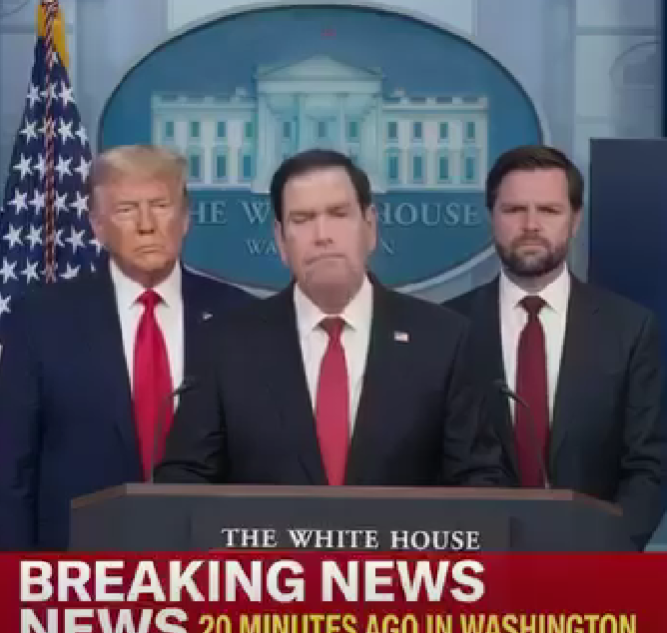
Throughout his career, Rubio has focused on issues such as economic development, education, and national policy. Backers expressed optimism about how his experience might shape future initiatives.
Observers also pointed out that leadership roles bring greater expectations. Public officials are often judged not only on past achievements but on how they respond to new challenges.
Others emphasized the importance of public debate. They noted that open discussions about policy and accountability help ensure institutions remain responsive to citizens.
Analysts suggested the move reflects the evolving nature of politics, where timing, experience, and opportunity shape leadership paths. This marks another chapter in Rubio’s career.
As attention continues, many are focused on results rather than titles. Across political perspectives, effective leadership is often measured by service, responsibility, and real-world impact.
The announcement quickly generated interest among supporters, political observers, community leaders, and people following the changing direction of American politics.
For weeks before the decision was officially confirmed, speculation had surrounded Rubio’s future responsibilities and what a new position could mean for his role in national policy discussions.
Now, with the decision officially settled, that uncertainty has largely disappeared.
Instead, attention has shifted toward what comes next.
Rubio has spent years building a prominent career in American public life, becoming a familiar name in political discussions both in Florida and across the country.
His supporters have pointed to that experience as one of the reasons they believe he could bring valuable knowledge and perspective to his new responsibilities.
For many of those watching the development, the confirmation represents more than simply another title.
They see it as another significant chapter in a political career that has already involved years of public service, policy debates, and some of the country’s most closely watched political conversations.
At the same time, the announcement has not gone unnoticed by those who take a different view.
Political leadership rarely happens without debate, and Rubio’s continued rise within national politics is likely to remain a subject of discussion among people with very different opinions about the country’s future.
That disagreement, however, is part of what makes developments like this so closely followed.
Supporters argue that experience matters.
They point to Rubio’s long involvement in public service and his participation in discussions involving economic development, education, national policy, and broader issues affecting American communities.
From their perspective, years spent working through complicated policy questions can provide an important foundation when taking on greater responsibility.
Some supporters have expressed optimism that his experience could help shape future initiatives and contribute to decisions with consequences far beyond Florida.
But leadership also brings a different level of scrutiny.
Once a politician takes on a more prominent responsibility, expectations tend to increase.
Past accomplishments can help establish credibility, but they do not guarantee future success.
Instead, public officials are ultimately judged by what they do when confronted with difficult decisions, unexpected challenges, and competing demands.
That is where much of the attention surrounding Rubio’s new role is now beginning to move.
The question is no longer simply why he was chosen or what the confirmation represents.
The bigger question is what he will actually do with the opportunity.
Across Florida, political conversations have reflected that shift.
Some community leaders have emphasized the importance of watching future actions rather than focusing entirely on political headlines.
Others have stressed that public debate should remain an important part of the process, particularly when decisions made by national leaders can affect millions of people.
For those observers, disagreement is not necessarily a sign that something has gone wrong.
Instead, they argue that open discussion, criticism, transparency, and accountability are essential parts of a functioning political system.
The development has also prompted broader conversations about how political careers evolve.
Leadership opportunities can emerge from years of experience, changing circumstances, political relationships, public support, and moments of national importance.
A new position can therefore represent both recognition of the past and a test for the future.
Rubio’s career illustrates that reality.
His name has remained part of major political conversations for years, and the latest development ensures that he will continue to attract attention from people on both sides of the political spectrum.
For supporters, the confirmation is a reason to look ahead with optimism.
They believe his experience could provide a foundation for meaningful work and potentially influence future policy decisions.
For critics, the new position creates another opportunity to examine his decisions and hold him accountable for the results.
And for many voters who may not identify strongly with either side, the focus appears to be much simpler.
They want to know whether the new leadership role will produce tangible results.
Titles can generate headlines.
Confirmations can create political excitement.
But neither necessarily tells the public whether a leader will ultimately succeed.
That judgment usually comes later, when promises meet reality and decisions begin producing consequences.
Political analysts have therefore suggested that the latest development should be viewed as part of a much larger evolution within American politics.
The country’s political landscape continues to change, and leadership paths can shift quickly as new challenges emerge.
Experience can create opportunities, but responsibility determines what happens after those opportunities arrive.
For Rubio, the confirmation marks another turning point.
The speculation that surrounded his future responsibilities has now been replaced by a clearer reality: he has another significant role to fulfill, and attention will increasingly turn toward how he handles it.
That could mean greater scrutiny, more intense public debate, and increased expectations from supporters and opponents alike.
It could also provide Rubio with an opportunity to demonstrate whether the experience accumulated throughout his career can translate into effective leadership in a new chapter.
For now, the political spotlight remains firmly focused on what comes next.
Supporters are watching with anticipation.
Critics are watching closely.
Analysts are examining what the development could mean for the broader political landscape.
And communities across Florida are continuing to debate what effective leadership should look like in an increasingly complicated political environment.
One thing is certain: the confirmation has ensured that Marco Rubio’s political journey is far from disappearing from the national conversation.










Leave a Reply