
Another day, another federal court stuffed with activist judges who believe their rulings should be based on hurting President Donald Trump.
On Monday, a federal appeals court ruled 2-1 that portions of the Trump administration’s policy of not admitting trans people into military service were unlawful.
The court has ruled that the policy is unconstitutional and further stated that it “appears to be driven by the bare desire to harm a politically unpopular group.” It also states that the policy advanced by Secretary of War Pete Hegseth is “arbitrary and based on animus.”
“The record shows that the purpose of the Hegseth Policy is to target applicants and servicemembers who express what the Administration believes is a ‘false gender identity,’ and the Policy goes far beyond disqualifying persons currently or recently suffering from gender dysphoria,” the decision says.“Some of those disqualifications are completely unexplained and have no reasonable justification.”
Hows this for justification. The military has been working endlessly for years to stamp out sexual harrassment and assault. Now some bozo judges with TDS want to allowed gender confused people into the military?
Here’s more justification. Serving in the military is not a right, it’s a privilege that not everyone enjoys or should enjoy. What’s next – a court ruling that people with diabetes and heart disease should be allowed to serve? Or one that says the military’s physical standards ‘discriminate against overweight people’?
It’s absurd.
In any event, the appeals panel left Trump’s ban on enlisting new transgendered troops stand for now, so there’s that.
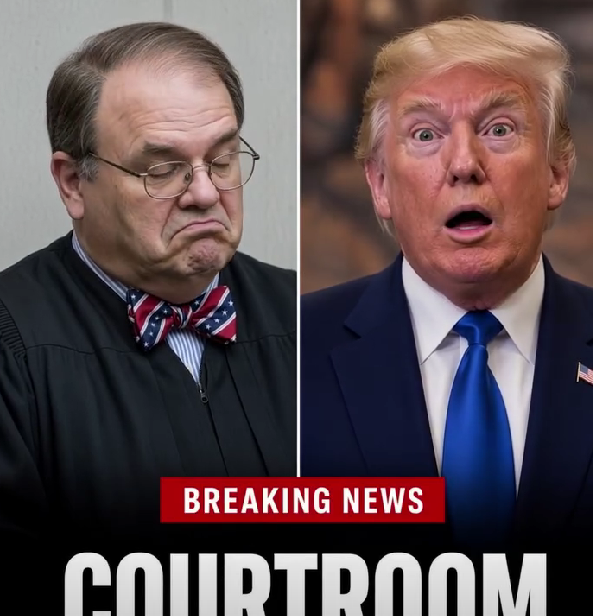
A major legal battle over transgender service members has erupted in Washington, after a divided federal appeals court ruled that key parts of the Trump administration’s military policy are likely unconstitutional.
The 2-1 decision, issued by the U.S. Court of Appeals for the D.C. Circuit, represents another significant clash between the Trump administration and the federal judiciary over the president’s approach to military policy. The ruling specifically concerns the policy implemented under Defense Secretary Pete Hegseth that restricts military service for people with a history of gender dysphoria or related circumstances.
But there is an important twist that could easily get lost in the headlines.
The appeals court did not simply order the military to open enlistment to transgender applicants.
Instead, the court maintained protection for transgender service members already serving in the military while allowing the administration to continue restricting new transgender applicants from joining.
That distinction means the legal fight is far from over.
At the center of the controversy is the Hegseth Policy, introduced in 2025 following an executive order signed by President Donald Trump. The policy stated that individuals with a current diagnosis or history of gender dysphoria, or symptoms consistent with it, would generally be ineligible for military service. It also addressed people who had transitioned or attempted to transition away from their sex assigned at birth.
The Trump administration has argued that the policy is connected to military readiness, medical considerations and the standards expected of members of the armed forces.
The appeals court majority, however, viewed the policy differently.
Judges Robert Wilkins and Judith Rogers concluded that the policy likely violated equal-protection principles as applied to transgender service members. Wilkins wrote that the policy appeared to be motivated, at least in part, by an impermissible desire to harm a politically unpopular group.
The majority also questioned why the policy automatically targeted people with a history of gender dysphoria without requiring the same type of individualized assessment that can apply to other medical conditions.
That point became one of the most important parts of the court’s reasoning.
According to the opinion, government attorneys appeared to acknowledge during oral arguments that gender dysphoria was treated differently from other medical conditions because it could trigger administrative separation without an individualized determination of whether the condition actually prevented a service member from continuing to serve.
For supporters of the administration’s policy, however, the question is much broader: Who gets to decide what standards are appropriate for America’s military?
The Trump administration has maintained that military leadership needs substantial authority to determine who is capable of serving under the unique physical, medical and operational demands of military life.
The administration’s position is now heading toward another major legal confrontation.
In a filing asking the Supreme Court to intervene, the Justice Department argued that the appeals court’s decision improperly interfered with the government’s authority to determine military eligibility. The administration described the question as one of exceptional importance because the armed forces must be able to establish standards for service members based on military needs.
That means the Supreme Court could ultimately have a major role in determining what happens next.
For the people directly affected, the stakes are enormous.
A transgender service member already serving in uniform could remain protected from removal under the current injunction, while someone attempting to begin a military career could still face restrictions under the administration’s policy.
That creates an unusual legal situation in which two people seeking military service could potentially face very different treatment depending on whether one is already serving or has not yet entered the armed forces.
The appeals court itself acknowledged the difference.
Its majority concluded that the equities were stronger for current service members who had already spent years serving than for people seeking admission to the military for the first time. The court therefore kept the protection for current service members while allowing the administration greater authority over new enlistments.
And that is where the political debate surrounding the ruling becomes even more intense.
Supporters of Trump’s approach argue that military service is fundamentally different from ordinary employment. The armed forces have specialized requirements, demanding environments and responsibilities that can justify standards not applied elsewhere in American society.
Opponents argue that military standards cannot be used as a blanket justification for excluding an entire category of people when individualized assessments could determine whether someone is actually capable of serving.
The disagreement is therefore not simply about transgender rights.
It is also about the constitutional limits of presidential power, the authority of military leadership and the degree of judicial oversight that should apply when the government establishes personnel policies for the armed forces.
And now, the final word may belong to the Supreme Court.
The D.C. Circuit’s decision does not end the dispute. The administration has continued challenging lower-court restrictions, while litigation over the policy remains active.
For now, the result is a complicated one.
Trump’s administration has not been given everything it wanted. Current transgender service members covered by the case have received continued protection from removal.
At the same time, the administration retains the ability to restrict new transgender enlistments under the policy.
One federal appeals court has now declared that the administration’s treatment of current transgender service members likely crosses constitutional boundaries.







Leave a Reply