
As an animal owner, it is your responsibility not only to feed and care for your pet, but also to understand how they communicate and why they behave the way they do. Being a good “hooman” to your dog means learning their language—one that doesn’t rely on words, but on instincts, senses, and subtle signals. Among the many behaviors dogs display, one of the most commonly misunderstood is their tendency to sniff people, sometimes in ways that may feel awkward or embarrassing.
However, what might seem strange from a human perspective is completely natural in the canine world.
Dogs Communicate Differently
Dogs cannot speak the way humans do, but they are far from silent. They communicate through body language, movement, sounds, and most importantly—scent. While humans rely heavily on speech and vision, dogs experience the world primarily through their noses.
Their sense of smell is incredibly powerful—estimated to be tens of thousands of times stronger than that of humans. This allows them to gather detailed information that we simply cannot perceive.
When a dog sniffs something—or someone—it is not just detecting a smell. It is collecting layers of information.
Why Dogs Sniff People
When your dog approaches someone and begins sniffing, especially around sensitive areas, it is not being rude or inappropriate. Instead, it is doing what comes naturally—gathering information and saying “hello” in its own way.
Humans have special sweat glands called apocrine glands, which release pheromones. These chemical signals carry important information such as age, mood, health, and even emotional state. These glands are more concentrated in areas like the armpits and groin.
Since dogs cannot easily reach a person’s armpits, they often gravitate toward other areas where scent is stronger.
To a dog, this behavior is the equivalent of a handshake combined with a conversation. It’s how they identify individuals and understand their environment.

If you have ever taken your dog for a walk or introduced them to someone new, you have probably witnessed the moment that makes every dog owner slightly uncomfortable.
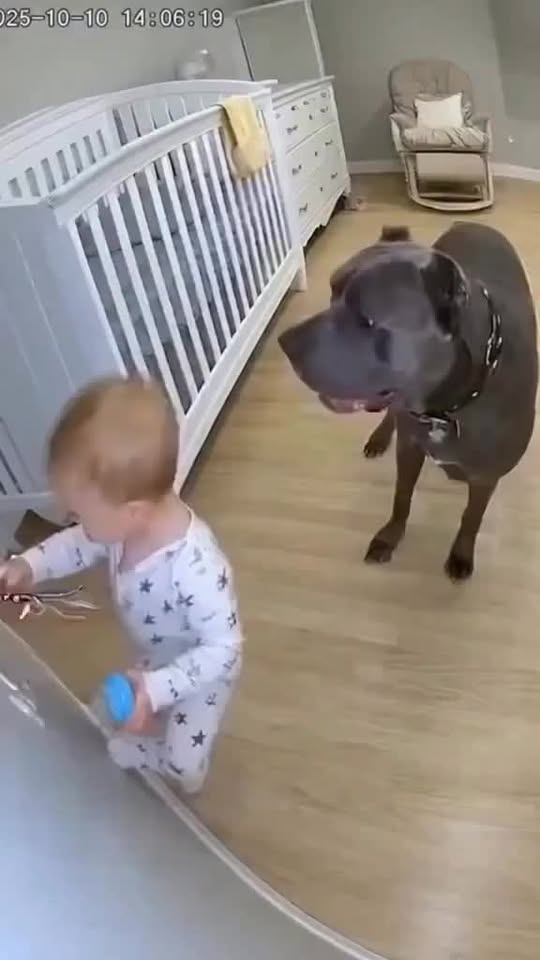
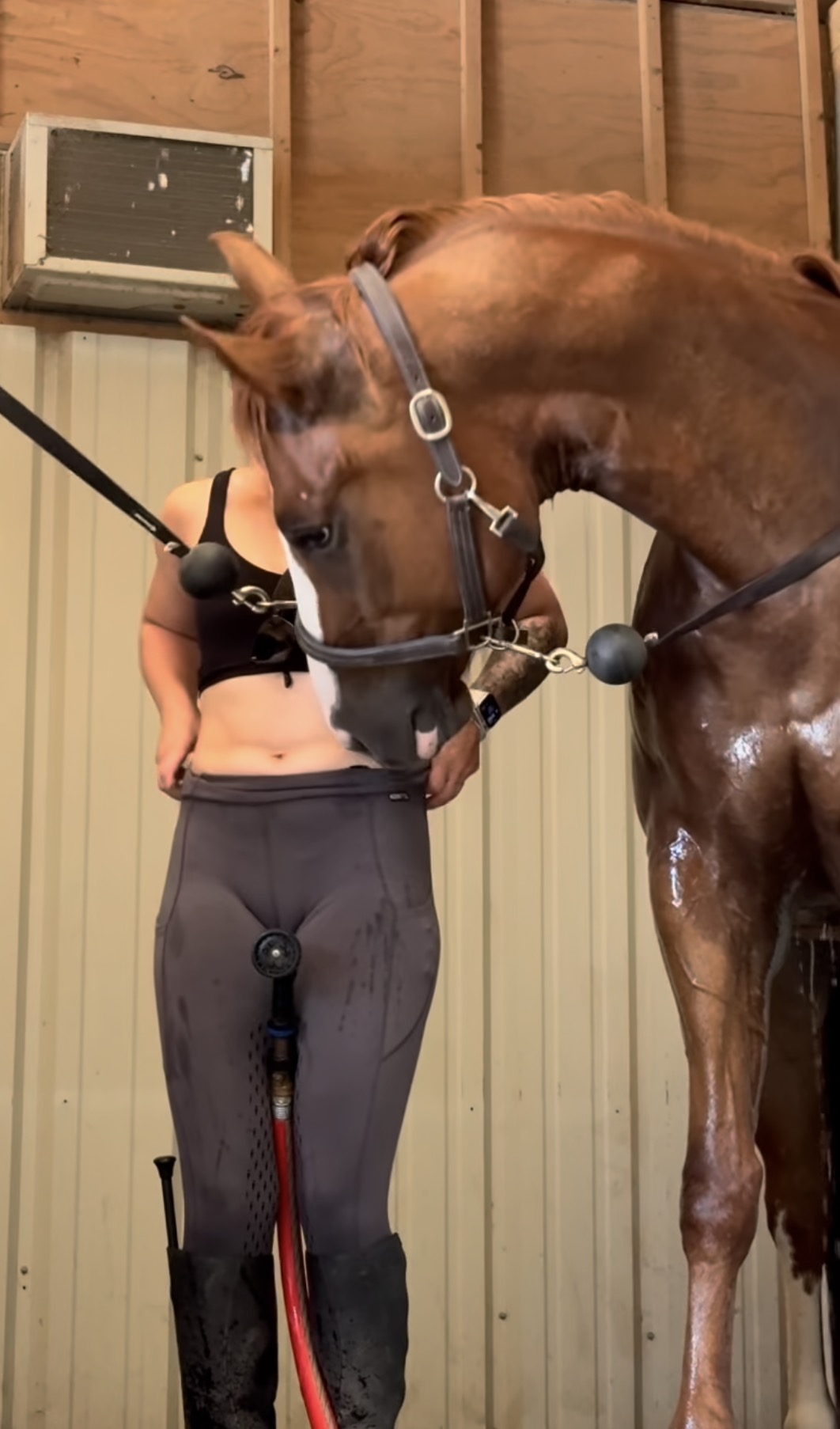
Your dog walks over to a stranger, looks completely innocent, and then immediately starts sniffing them — sometimes choosing an area that humans consider particularly awkward.
You quickly pull the leash.
“Sorry about that!”
The other person laughs.
And your dog simply looks confused, as if everyone else is the one behaving strangely.
But there is actually a very good reason for this behavior.
Dogs do not experience the world in the same way humans do. While people rely heavily on sight and language to understand their surroundings, dogs depend enormously on their sense of smell.
To a dog, sniffing is not just smelling.
It is information.
Their noses allow them to detect an incredible range of odors and distinguish between scents that would be impossible for humans to notice. Every person, animal, object and environment carries its own combination of smells.
That means when your dog approaches someone and begins sniffing, they could simply be trying to figure out who that person is.
Dogs Have Their Own Way Of Saying Hello
Humans usually greet one another by saying hello, shaking hands or making eye contact.
Dogs have different rules.
A sniff can be part of a dog’s normal social investigation. It can help them identify whether someone is familiar, unfamiliar, interesting or simply carrying a new scent.
This is particularly noticeable when dogs sniff around areas such as the armpits or groin.
While this can feel embarrassing to humans, these areas contain concentrations of apocrine sweat glands that contribute to a person’s natural body odor. For a dog with an incredibly sensitive nose, those scents can provide a lot of information.
Your dog is not thinking about human ideas of politeness.
They are following their instincts.
What looks like an awkward moment to you can simply be your dog collecting information about a new individual.
Their Nose Is Like A Superpower
Dogs have an extraordinary sense of smell, and their entire biology is designed around using it.
They can follow scent trails, identify familiar people and animals, locate objects and investigate changes in their surroundings.
This is why a simple walk around the neighborhood can be much more interesting for a dog than it appears to be for their owner.
You might see an ordinary patch of grass.
Your dog might detect that several animals have recently passed through the area.
You might see a person standing nearby.
Your dog may immediately notice that they smell different from everyone else.
You might see an old jacket on the floor.
Your dog may detect traces of places, animals or people associated with that jacket.
For dogs, the world is full of invisible information.
And their nose is how they read it.
Sniffing Does Not Always Mean Something Is Wrong
Another common mistake is assuming that a dog sniffing someone intensely means there is something unusual or medically wrong with that person.
There are countless stories about dogs supposedly detecting illnesses, pregnancy or emotional changes.
Dogs can certainly detect subtle changes in human scent and behavior, and specially trained detection dogs have demonstrated impressive abilities.
But ordinary pet behavior should not be treated as a medical diagnosis.
If your dog suddenly becomes interested in someone’s scent, there could be a much simpler explanation.
Maybe the person recently exercised.
Maybe they have another animal at home.
Maybe they used a new perfume or soap.
Maybe they were cooking.
Maybe they simply smell unfamiliar.
For your dog, any of these things could be fascinating.
Owners Still Need To Set Boundaries
Understanding why dogs sniff does not mean they should be allowed to sniff everyone whenever they want.
Dogs need training just like people need manners.
If your dog repeatedly invades someone’s personal space, jumps on strangers or refuses to move away when called, it is your responsibility to intervene.
Teaching commands such as “leave it,” “come” and “stay” can make social situations much easier.
The goal isn’t to punish your dog for using their natural senses.
Instead, owners should teach them when investigating is appropriate and when it is time to move on.
It is also important to pay attention to the other person’s body language.
Not everyone likes dogs.
Some people are nervous around them, while others may have allergies or simply prefer not to interact with animals.
A responsible owner respects those boundaries.
Let Your Dog Sniff Sometimes
There is another important reason owners should not constantly rush their dogs through walks.
Sniffing provides mental stimulation.
For a dog, a walk is not only about exercise. It is also an opportunity to investigate the world.
Allowing your dog to stop and smell appropriate areas can give them a chance to explore naturally.
In fact, a slower walk filled with sniffing can sometimes be more mentally engaging than simply walking quickly for the same amount of time.
So the next time your dog stops to investigate a tree, a patch of grass, another dog or even a stranger, try to remember what is actually happening.
Your dog is not necessarily being rude.
They are not trying to embarrass you.
They are simply using one of their most powerful senses to understand the world.
For humans, a greeting might begin with “Hi, nice to meet you.”
For dogs, it can begin with a sniff.









Leave a Reply