
President Donald Trump has said he believes the United States and Iran could reach a new agreement within the next week that would extend the current ceasefire and potentially reopen the strategically vital Strait of Hormuz, raising hopes that a major escalation in the Middle East could be avoided.
Trump’s comments offered a more optimistic assessment of the situation, suggesting that diplomatic efforts could produce a breakthrough despite the deep tensions that have defined relations between Washington and Tehran. The possibility of an agreement has attracted international attention because any prolonged disruption in the region could have consequences far beyond the Middle East, particularly for global energy markets, international shipping and the broader economy.
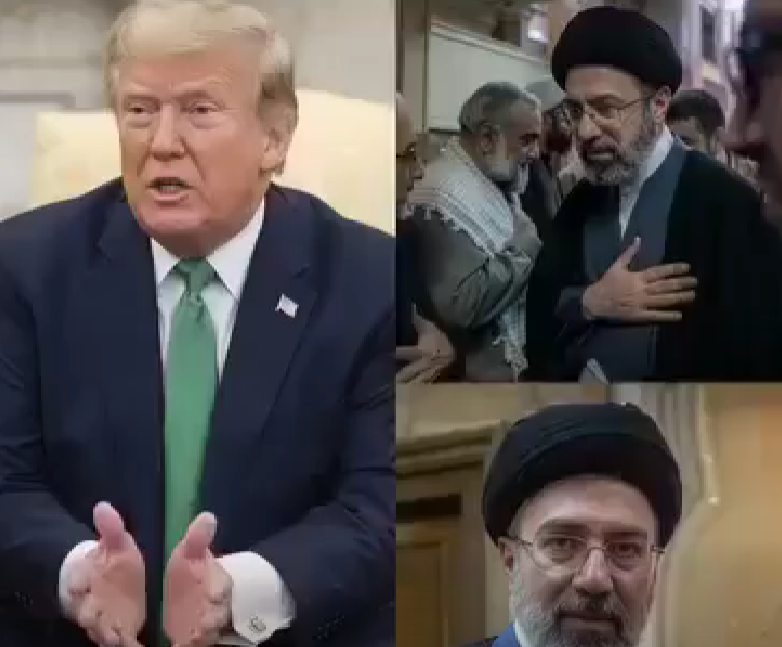
Speaking about the ongoing situation, Trump indicated that negotiations could move quickly if both sides remain committed to maintaining the ceasefire. His comments appeared to signal that the United States is interested in finding a diplomatic path forward rather than allowing the current confrontation to develop into a wider and potentially more dangerous conflict.
At the center of the situation is the Strait of Hormuz, one of the world’s most strategically important waterways.
The narrow passage, located between Iran and Oman, is a critical route for international energy shipments. Large quantities of oil and other energy products pass through the strait, meaning that any significant disruption can immediately raise concerns about supply, transportation costs and energy prices around the world.
For years, governments and energy analysts have closely monitored tensions surrounding the waterway because of its importance to the global economy. A prolonged closure or serious restriction of shipping through the strait could create enormous uncertainty in international markets.
That is why Trump’s suggestion that an agreement could lead to the reopening of the Strait of Hormuz has been closely watched.
The potential deal would reportedly focus on extending the existing ceasefire while creating conditions for the waterway to return to normal operations. Such an arrangement could provide both sides with additional time to address their broader disagreements without immediately returning to military confrontation.
However, reaching an agreement would not necessarily be simple.
The United States and Iran have spent years locked in a complicated relationship shaped by disputes over Iran’s nuclear program, regional influence, sanctions, military activity and competing strategic interests. Even when tensions have temporarily declined, disagreements have remained difficult to resolve.
A successful agreement would therefore require both sides to make decisions that could be politically sensitive at home.
For Washington, any deal with Tehran would likely face scrutiny from lawmakers, foreign-policy experts and American allies. Questions could be raised about what concessions were made, whether the agreement provides sufficient guarantees and whether Iran would comply with its commitments.
For Iran, the situation is equally complicated. Tehran has historically emphasized national sovereignty and resistance to outside pressure, meaning that any agreement perceived as giving too much ground to the United States could face criticism domestically.
Despite those challenges, the possibility of negotiations has created a window for diplomacy.
The ceasefire itself has provided an opportunity for officials to step back from immediate military confrontation and explore whether a longer-term arrangement is possible. If that period can be extended, diplomats could have more time to address the issues that brought the two countries to the brink of further escalation.
Trump’s remarks suggest that he believes such an opportunity exists.
The former president has frequently presented himself as someone capable of reaching agreements that others have struggled to achieve, and his comments about the possibility of a deal within a week reflect that approach. Rather than describing the situation as hopeless, Trump portrayed negotiations as a realistic possibility.
Still, optimism from political leaders does not necessarily mean an agreement is imminent.
Diplomatic negotiations can change rapidly, particularly when they involve countries with decades of mistrust between them. Statements made publicly may also be intended to influence negotiations behind the scenes, reassure financial markets or communicate expectations to allies and adversaries.
For that reason, international observers are likely to watch closely for concrete signs of progress.
Those signs could include direct diplomatic meetings, statements from Iranian officials, changes in military deployments, agreements concerning shipping through the Strait of Hormuz or announcements regarding the continuation of the ceasefire.
The reopening of the waterway would be particularly significant.
International shipping companies and energy markets depend heavily on stability in the region. Even the possibility that the strait could remain closed for an extended period can create uncertainty, while an actual disruption could have much more serious consequences.
Oil prices, transportation costs and insurance premiums can all be affected when ships face increased risks in strategically important waterways. Countries that depend heavily on imported energy can also become vulnerable to sudden price increases or supply disruptions.
The effects could extend well beyond countries directly involved in the conflict.
European and Asian economies, in particular, closely monitor developments around the Gulf because of their dependence on energy imports and international shipping routes. A sustained crisis could place additional pressure on businesses and consumers already dealing with economic uncertainty.
That broader impact is one reason diplomatic progress between Washington and Tehran would be welcomed by governments around the world.
An extended ceasefire could also reduce the immediate risk of the conflict spreading to other countries or involving additional armed groups in the region. The Middle East contains a number of overlapping security relationships, and a confrontation involving the United States and Iran could potentially affect neighboring countries and international military forces operating in the region.
Preventing such an escalation is therefore a major priority for many governments.
At the same time, the road toward a lasting agreement remains uncertain.
The two countries have repeatedly demonstrated how difficult it can be to transform temporary de-escalation into a durable political settlement. Previous diplomatic efforts have encountered disagreements over sanctions, nuclear activities, verification mechanisms and security guarantees.
Any new agreement would have to address enough of those concerns to make continued cooperation possible.
The next several days could therefore prove critical.
If negotiators are able to maintain the ceasefire and establish a framework for reopening the Strait of Hormuz, the development could represent a major diplomatic turning point. It could also provide a foundation for broader discussions about the issues that have kept Washington and Tehran apart.
If negotiations fail, however, the situation could become considerably more uncertain.
The expiration or collapse of a ceasefire could increase the risk of renewed military activity, while uncertainty surrounding the Strait of Hormuz could once again weigh heavily on global markets.
For now, Trump’s comments have introduced a measure of hope into an otherwise tense situation.
His belief that a deal could be reached within a week suggests that the administration sees a potential path toward de-escalation. Whether that optimism translates into an actual agreement will depend on the willingness of both Washington and Tehran to compromise and on whether negotiators can resolve the most difficult issues separating them.
The stakes are enormous.
A successful agreement could extend the ceasefire, reduce the immediate threat of further confrontation and allow one of the world’s most important shipping routes to reopen. It could also give diplomats valuable time to pursue a broader settlement.
For millions of people far from the Middle East, the outcome could eventually be felt through something as ordinary as fuel prices, transportation costs, energy bills and the price of everyday goods.
That is what makes the coming week so important.
What may appear to be a diplomatic dispute between two governments could have consequences reaching across international borders and into the global economy. The Strait of Hormuz is only a narrow waterway, but its importance to the world is enormous.
Trump’s comments have now placed renewed attention on the possibility that diplomacy could prevent another escalation.
Whether the United States and Iran can turn that possibility into reality remains to be seen. But if negotiators succeed in extending the ceasefire and reopening the strait, it could mark one of the most significant moments of de-escalation in the crisis and demonstrate just how much can change when diplomacy remains possible.









Leave a Reply