
warnings came too late.
By the time Congress demanded answers, a quiet string of cases had already shaken some of America’s most sensitive space and defense labs. Names tied to NASA, SpaceX, Blue Origin, and nuclear research suddenly surfaced in briefings no one wanted to acknowledge. Eleven researchers. High-level clearances. And now, Washington is whispering about someth…
Behind closed doors, lawmakers are pressing federal agencies to explain how so many researchers connected to NASA, private space firms, and nuclear programs ended up under the same cloud of suspicion. The House Oversight Committee has demanded briefings from top officials, warning that even the possibility of a coordinated effort targeting scientists with access to sensitive data cannot be brushed aside. To some in Congress, the odds of coincidence are shrinking by the day.
Inside the White House, officials are trying to walk a narrow line—publicly urging caution while privately treating the matter as a serious national security question. The FBI now leads a multi-agency effort, quietly mapping connections, tracing foreign contacts, and reviewing classified access histories. No confirmed link has been established, but the investigation’s scope signals how deeply this mystery cuts into the heart of America’s scientific and strategic edge.
A growing national security controversy is raising difficult questions in Washington after a series of cases involving researchers connected to some of America’s most sensitive scientific, aerospace, and defense-related institutions reportedly drew increased scrutiny. With references to NASA, SpaceX, Blue Origin, and nuclear research appearing in discussions surrounding the matter, lawmakers are demanding answers about what happened, whether the cases share any meaningful connections, and whether federal agencies recognized potential warning signs early enough.
The situation has attracted attention because of the extraordinary sensitivity of the work associated with these fields. Space exploration, advanced aerospace engineering, nuclear science, and national defense depend on highly specialized knowledge, sophisticated technology, and information that can have far-reaching strategic consequences.
Now, questions are emerging about eleven researchers whose names have reportedly surfaced in briefings connected to the broader concerns. Their alleged connections to sensitive research environments have prompted renewed discussions about security clearances, information protection, foreign contacts, and the safeguards designed to prevent unauthorized access to critical scientific knowledge.
However, an important distinction remains: the available description does not establish that the researchers committed wrongdoing, that their cases are connected, or that a coordinated operation has been confirmed. The questions being raised are serious, but the answers remain essential.
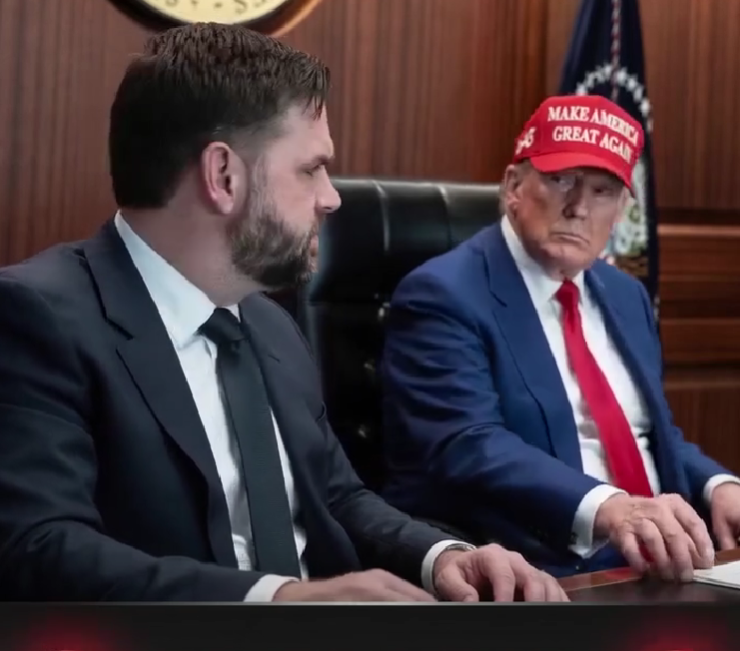
Washington Demands a Clear Explanation
As concern grows, congressional scrutiny is reportedly intensifying. Lawmakers want federal agencies to explain what they know, how the cases came to their attention, and whether investigators have identified any common circumstances that warrant a broader inquiry.
The central question is not simply why individual researchers attracted attention. It is whether the circumstances surrounding the cases reveal a larger vulnerability within America’s scientific and national security infrastructure.
Members of Congress responsible for oversight of federal agencies have long examined how sensitive information is protected, particularly when government research overlaps with private companies, universities, laboratories, and contractors. These environments frequently involve complex relationships in which researchers may collaborate across institutions while handling information subject to different security requirements.
That complexity can make investigations particularly challenging.
A researcher might participate in several legitimate scientific partnerships, work with international colleagues, or move between government-funded and privately funded projects. None of those activities automatically indicates suspicious conduct. Investigators must distinguish normal professional relationships from evidence of an actual security threat.
If the eleven cases share meaningful characteristics, authorities would need to establish precisely what those characteristics are. Similar professional backgrounds alone would not demonstrate coordination. More substantial evidence, such as documented unauthorized disclosures, communications indicating a shared plan, or verified attempts to obtain restricted information, would be necessary to support stronger conclusions.
For lawmakers, the priority is obtaining a factual account rather than allowing speculation to fill the gaps.
Why NASA, SpaceX and Blue Origin Matter
The institutions mentioned in discussions of the controversy operate in areas that are increasingly important to America’s economic competitiveness and strategic position.
NASA leads major civil space exploration and scientific research programs. Its work includes spacecraft development, planetary science, Earth observation, and missions designed to expand humanity’s understanding of the universe.
SpaceX, meanwhile, plays a significant role in commercial spaceflight, satellite communications, and the transportation of astronauts and cargo. Blue Origin is also involved in developing spaceflight systems and technologies intended to expand access to space.
Although these organizations have different missions and structures, the broader aerospace industry depends on specialized engineering knowledge, advanced manufacturing, software systems, and complex supply chains.
Protecting sensitive information is therefore a significant responsibility.
The potential exposure of proprietary designs, restricted technical information, or sensitive operational details could create serious consequences. Depending on the information involved, unauthorized access might affect commercial competitiveness, research priorities, operational security, or national defense capabilities.
But the presence of a researcher’s name in a briefing does not establish that any of these organizations experienced a breach. Nor does an association with an institution mean that the institution itself is implicated in wrongdoing.
Determining what, if anything, occurred requires evidence specific to each case.
The Nuclear Research Dimension Raises Additional Questions
The references to nuclear research have added another layer of concern to the discussion.
Nuclear science encompasses a broad range of activities, from civilian energy research and medical applications to specialized work involving national security. Access requirements vary considerably depending on the facility, project, and information involved.
Certain nuclear-related programs operate under exceptionally strict safeguards. Unauthorized access to protected information can create risks that extend beyond commercial or scientific competition, which is why relevant agencies maintain detailed procedures for handling classified material and controlling access.
If any of the cases involve personnel who worked with restricted nuclear information, investigators would need to determine what information those individuals could access, whether any security rules were violated, and whether any unauthorized transfer actually occurred.
Those questions cannot be answered solely by identifying someone’s employer, professional background, or clearance status.
A security clearance is not evidence of misconduct. It is an authorization granted under specific conditions, and possessing one does not establish that a person has misused the information available to them.
Likewise, an investigation does not necessarily mean that authorities have established a crime.
These distinctions matter because allegations involving nuclear research can quickly become sensationalized, particularly when details remain classified or have not been publicly confirmed.
What Federal Investigators Would Need to Establish
A serious investigation into possible threats involving sensitive research would generally examine several areas.
Investigators could review access records to determine whether restricted information was accessed outside authorized procedures. They might examine communications, travel records where legally relevant, institutional relationships, and the movement of sensitive documents or technical data.
They could also compare timelines to determine whether apparently separate cases contain verifiable connections.
Such work requires careful analysis. Similarities between cases can provide useful investigative leads, but they do not automatically establish a common cause.
For example, multiple researchers might have worked in related scientific fields without ever communicating with one another. Several cases might attract attention during the same period because an agency has changed its reporting procedures or begun reviewing older records.
Alternatively, investigators could uncover evidence that genuinely connects separate incidents.
The purpose of an investigation is to distinguish between these possibilities through verifiable evidence.
The FBI may investigate potential federal crimes involving national security, while other agencies could contribute expertise concerning their own facilities, personnel, and information systems. The exact responsibilities would depend on the facts and the legal authorities involved.
Without an official confirmation of the investigative structure, however, claims that a particular agency is leading a specific operation should be treated cautiously.
The Challenge of Protecting America’s Scientific Advantage
The controversy also highlights a wider challenge facing the United States.
Modern scientific progress depends on collaboration. Researchers exchange ideas, publish findings, attend conferences, and work with colleagues across institutional and national boundaries. These activities have helped advance medicine, computing, aerospace engineering, and numerous other fields.
At the same time, some discoveries and technologies have applications that extend into defense, intelligence, and strategic competition.
Government agencies and private companies must therefore balance openness with appropriate security protections.
Too little protection can expose valuable information. Excessively broad restrictions, however, can interfere with legitimate research, damage professional reputations, and discourage talented scientists from participating in important projects.
The challenge is to build safeguards that identify genuine risks without treating ordinary professional activity as evidence of wrongdoing.
If the eleven cases ultimately prove to be connected, authorities would need to explain the nature of those connections and identify any failures that allowed the problem to develop. If they are unrelated, officials would need to make that distinction clear enough to prevent separate incidents from being presented as one coordinated event.
Either outcome would carry important lessons for institutions responsible for protecting sensitive research.
What Happens Next?
For now, the most important questions remain unanswered.
What specific circumstances brought the researchers to official attention? Were their cases connected by evidence, or merely discussed together because of their professional backgrounds? Did investigators identify unauthorized access or the transfer of protected information? And what, if anything, do the cases reveal about existing security procedures?
Congressional oversight, if formally confirmed, could help establish whether agencies followed appropriate procedures, communicated effectively, and responded adequately to credible warning signs.
Officials may also face pressure to explain what can be disclosed publicly without compromising legitimate investigations or exposing sensitive information.
That balance will be difficult. Too little transparency can fuel suspicion, while releasing unverified allegations can unfairly damage individuals and institutions.
The public deserves accurate information about credible national security concerns. The researchers involved also deserve the presumption that allegations must be supported by evidence rather than speculation.
Ultimately, the significance of this controversy will depend on what investigators can demonstrate, not on how alarming the early descriptions sound.








Leave a Reply