
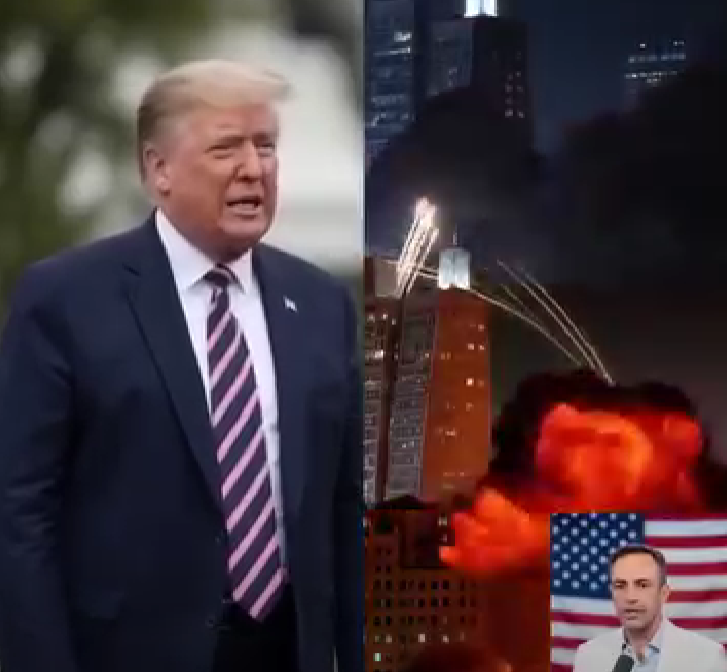
Reports indicate that Israel has recently completed a significant operation, though details remain scarce and emerging in fragments.
Initial reactions suggest the action was planned and deliberate, raising questions about its targets, objectives,
and timing. Analysts caution that in a region as geopolitically sensitive as Israel, even a single operation can carry layers of strategic meaning far beyond its immediate impact.
At this stage, witness accounts and early intelligence remain inconsistent.
Some report unusual activity prior to the operation, while others noticed nothing out of the ordinary. Investigators are working to
reconstruct events, separating verified information from speculation, a process that will take time. Meanwhile, observers are considering possible responses
from other regional actors, ranging from diplomatic statements to heightened security measures.
The international community is closely monitoring developments, waiting for official confirmation and clarification.
Media coverage and social platforms are spreading information rapidly, but unverified claims are also circulating,
complicating the picture. Experts emphasize patience and careful evaluation, noting that premature conclusions could worsen an already sensitive situation.
The implications of this operation may extend far beyond Israel’s borders, influencing diplomatic relations, alliances, and regional stability.
Human, economic, and strategic effects could all unfold in the coming days, depending on both verified information and responses from other actors.
As details gradually emerge, analysts and policymakers will work to understand the intent, scale, and
potential consequences of the operation, with global attention firmly focused on the region.
Reports that Israel has completed a significant operation have drawn international attention, with analysts and observers seeking answers about what happened, why the action was taken, and what could follow. Details remain limited, and the information emerging so far has yet to provide a complete picture of the operation’s scale, objectives, or potential consequences.
The reports have prompted renewed discussion about regional security at a time when developments involving Israel can carry implications far beyond its immediate borders. However, with key details still unclear, officials, investigators, and analysts face the difficult task of separating confirmed information from speculation.
For now, several important questions remain unanswered.
What Is Known So Far?
Initial reports suggest that the operation was planned rather than an entirely spontaneous development. Yet the precise nature of the action, its intended targets, and the circumstances surrounding its completion have not been fully established in the information currently available.
That uncertainty has created an environment in which even small pieces of information are attracting attention.
Some accounts have referred to unusual activity before the operation, while other accounts have suggested that there were few obvious signs of an impending event. These differing descriptions highlight the challenges facing anyone attempting to reconstruct what happened.
Without independently verified information, it remains difficult to determine which accounts accurately reflect events on the ground.
Investigators and relevant authorities will need to establish a reliable timeline, examine available evidence, and assess information from multiple sources before a clearer explanation can emerge.
The distinction matters because early reports can change significantly as additional details become available. An initial account may describe only part of an event, while later information can reveal circumstances that were not apparent at first.
For that reason, the central questions surrounding the operation remain open.
Why the Timing Matters
In a region as geopolitically sensitive as the Middle East, the timing of a military or security operation can be just as important as the action itself.
Analysts typically examine several factors when assessing such developments, including recent security incidents, diplomatic negotiations, military movements, and the broader political environment.
The timing may help explain whether an operation was connected to an immediate threat, a longer-term strategic objective, or a wider effort to influence regional security. However, without reliable details about the specific operation, any definitive explanation would be premature.
The same caution applies to questions about the intended audience or message behind the action.
Some operations have immediate tactical objectives, while others can also influence negotiations, deterrence, or the calculations of other governments and armed groups. Understanding which considerations apply in this case will require more information.
For now, observers are watching for official statements that might clarify the circumstances and provide a better understanding of the decisions involved.
Conflicting Accounts Add to the Uncertainty
One of the biggest challenges during the early stages of a developing international story is the speed at which information spreads.
News organizations, independent commentators, eyewitnesses, and social media accounts may all publish descriptions of an event before a consistent account has been established. Some information may prove accurate, while other claims may be incomplete, misleading, or impossible to verify.
This can make it difficult for the public to distinguish between established facts and interpretations presented with confidence.
In situations involving military activity, even apparently minor details can become significant. The location of an operation, the identity of a target, the timing of an announcement, or the reported involvement of another actor may influence how the event is understood.
If those details are incorrect, the conclusions drawn from them may also be unreliable.
That is why responsible reporting depends on corroboration rather than simply repeating the most widely circulated claims.
At this stage, the available description does not establish the precise targets, the full operational scope, or the verified outcome. Those gaps should remain part of the story rather than being filled with assumptions.
What Could Happen Next?
Attention is now turning toward the possible response from other regional actors.
Depending on the circumstances, reactions to an operation can range from formal diplomatic statements and public criticism to increased security precautions or other political measures. More serious consequences are also possible in some situations, although there is currently insufficient verified information to determine whether any particular response is likely.
Governments across the region will be assessing what the reported development means for their own interests and security concerns.
Even when an operation is limited in scope, its political significance can depend on how other actors interpret it. One government may view an action as a security measure, while another may regard the same development as a challenge requiring a response.
Such differences in interpretation can complicate diplomatic efforts and increase the risk of misunderstandings.
However, a strong reaction should not be assumed simply because an operation has attracted international attention. Governments may choose to respond publicly, pursue private diplomatic discussions, increase defensive precautions, or avoid escalation altogether.
The next developments will depend on verified facts, official decisions, and the broader regional context.
The International Community Is Watching Closely
International attention reflects the possibility that the consequences could extend beyond the immediate location of the reported operation.
Diplomatic relationships, security partnerships, and ongoing negotiations may all be affected by major developments involving Israel, depending on the circumstances.
Foreign governments will likely want clarity about the purpose and consequences of the action before determining what position to take. International organizations and diplomatic representatives may also monitor developments for signs of rising tensions or opportunities to prevent further escalation.
At the same time, public statements may not reveal the full extent of diplomatic discussions taking place behind closed doors.
In sensitive situations, governments sometimes avoid making immediate commitments while they assess the evidence and consult with partners. Others may issue statements quickly to communicate their position to domestic audiences or signal their concerns to other governments.
These different approaches can make the international response appear fragmented during the early stages of a developing story.
That does not necessarily mean that a broader confrontation is inevitable. It means that the significance of the operation cannot be understood in isolation from the decisions that follow.
The Potential Human and Economic Impact
Beyond military and diplomatic considerations, regional instability can have consequences for ordinary people.
When tensions rise, communities may face increased uncertainty, disruptions to daily life, and concerns about personal safety. Depending on the location and nature of an event, businesses, transport networks, and essential services may also be affected.
Economic consequences can extend further if uncertainty influences commercial activity, travel decisions, shipping arrangements, or investor confidence.
However, these are potential consequences associated with regional instability, not confirmed effects of the operation described in the initial reports. Determining whether any of them have occurred will require reliable information about the event and its aftermath.
The human impact is particularly important to monitor. Public discussion of military developments often focuses on strategic objectives and political calculations, while the experiences of civilians receive less attention.
Verified information about injuries, displacement, infrastructure damage, or disruptions to essential services would help establish the practical consequences of the event.
Until such information is available, it would be inappropriate to draw conclusions about the extent of any harm.
Why the Coming Days Could Be Important
The next phase of the story will likely depend on whether officials provide a clearer account of what happened and whether independent reporting can confirm the details.
A more complete timeline could help establish the operation’s purpose, its scope, and the circumstances that led to it. Statements from relevant authorities may also clarify whether the action is considered complete or whether further measures are being contemplated.
Analysts will then be better positioned to evaluate its strategic significance and distinguish immediate effects from longer-term implications.
For the public, the most important development may not be the next dramatic claim circulating online, but the arrival of reliable information that answers the questions left unresolved by the initial reports.
At present, the reported operation has generated considerable interest, but its precise significance remains uncertain. Its broader consequences will depend on facts that have yet to be established and on how governments and other regional actors respond.










Leave a Reply