
Iranian television, citing the military, has announced the launch of an attack on US bases in the Gulf region.
According to reports, Iran has hit military bases in the Persian Gulf, while local authorities in several countries have called on citizens to stay home and avoid any military areas.
According to Reuters, a powerful explosion has been reported in Abu Dhabi, while the United Arab Emirates has closed its airspace.
It is reported that the Al Dhafra air base in the United Arab Emirates has been targeted with Iranian ballistic missiles, causing large explosions.
In Manama (Bahrain), smoke has been reported in the Al Jufair area, where a US Fifth Fleet base is located, after an alleged Iranian attack.
Qatar’s Interior Ministry has called for shelter in place as a Patriot missile system reportedly intercepted a missile targeting the Al Udeid airbase. Authorities have announced the closure of the country’s airspace.
Qatar’s Defense Ministry said it had successfully repelled several attacks and that the country is on high alert.
According to Al Jazeera, powerful explosions were also heard in Kuwait, while authorities have urged citizens to stay home and not go out to work.
Reports of explosions across the Persian Gulf have raised serious security concerns after Iranian state television, citing the country’s military, announced attacks on US bases in the region. Authorities in several Gulf countries have reportedly issued emergency instructions, urged residents to remain indoors, and taken measures to protect civilians as reports of missile launches and interceptions emerged.
According to the information reported, the developments have affected several strategically important locations, including the United Arab Emirates, Bahrain, Qatar and Kuwait. Explosions were reported in multiple areas, while airspace restrictions and public safety warnings added to concerns about a potential regional escalation.
The situation described in the reports remains dependent on official statements and independent verification. Nevertheless, the reported incidents highlight the risks that military confrontations can pose to civilians, commercial aviation and regional stability.
Explosions Reported in Abu Dhabi as UAE Closes Its Airspace
One of the most significant reports came from Abu Dhabi, the capital of the United Arab Emirates, where a powerful explosion was reportedly heard, according to Reuters.
The reports also indicated that the UAE had closed its airspace, a significant measure that can disrupt international travel and affect airlines operating through one of the world’s major aviation hubs.
The United Arab Emirates is home to important commercial airports, international business centres and military facilities. Any security emergency affecting its airspace can therefore have consequences extending well beyond the immediate area.
Al Dhafra Air Base, a strategically important military installation in the UAE that hosts US forces, was reportedly among the locations targeted by Iranian ballistic missiles. Reports described large explosions associated with the alleged attack, although the precise extent of any damage and whether there were casualties would require confirmation from reliable official sources.
When missile attacks are reported near military installations, authorities must assess whether further launches are possible, whether defensive systems have intercepted incoming weapons and whether debris could threaten populated areas.
For residents, the uncertainty can be particularly difficult. A loud explosion does not necessarily reveal whether a missile struck its intended target, was intercepted in the air, or caused damage elsewhere.
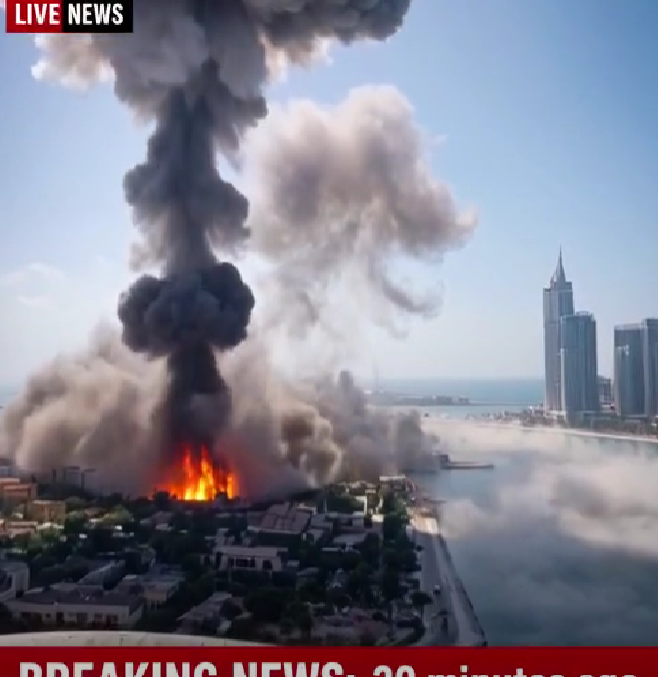
These distinctions are essential when assessing the scale of an attack and its potential consequences.
The reported closure of UAE airspace also highlights the wider implications for international aviation. Flights may be cancelled, diverted or delayed when authorities consider an air corridor unsafe. Passengers travelling through the region can face sudden disruptions, even if their destinations are thousands of kilometres from the reported incidents.
For now, the central questions concern the scale of the reported attacks, the condition of the affected facilities and whether further security measures will be necessary.
Smoke Reported Near US Fifth Fleet Headquarters in Bahrain
Bahrain was another location mentioned in the reports, with smoke reportedly seen in the Al Jufair area of Manama following an alleged Iranian attack.
The area is particularly significant because Bahrain hosts the headquarters of the US Navy’s Fifth Fleet, which plays a central role in American naval operations across the region.
The Fifth Fleet’s area of responsibility includes important maritime routes and waterways, making its presence strategically significant during periods of heightened military tension.
Any reported attack near such a facility is likely to prompt heightened security measures and close monitoring by military officials.
The appearance of smoke, however, does not by itself establish the precise location of an impact, the weapon involved, or the extent of any damage. Those details would need to be confirmed through official statements and independently verified reporting.
For people living in Manama, reports of explosions or smoke near a military installation can create understandable concern, particularly when information is emerging from several locations at once.
Authorities must determine whether the reported incident represents an isolated event or part of a broader series of attacks.
The wider concern is that a confrontation involving military installations in multiple countries could place additional pressure on regional governments already responsible for protecting civilians, maintaining public services and keeping transport networks operational.
Qatar Issues Shelter Instructions as Missile Interception Is Reported
Qatar also featured prominently in the reports, with the country’s Interior Ministry reportedly urging residents to shelter in place.
The instructions came amid reports that a Patriot air defence system had intercepted a missile allegedly targeting Al Udeid Air Base, a major military installation that hosts US forces.
Qatar’s airspace was also reported to have been closed, while the country’s Defence Ministry said that several attacks had been successfully repelled and that the nation remained on high alert.
Missile interceptions are a critical part of modern air defence. Systems such as Patriot are designed to detect and engage certain incoming aerial threats, although their effectiveness depends on the specific weapon, circumstances and defensive configuration.
An interception does not necessarily mean that all danger has passed. Debris from intercepted missiles can fall to the ground, and authorities may need time to assess whether additional threats remain.
That is one reason residents are often instructed to remain indoors during a security emergency.
Sheltering in place can help reduce exposure to potential debris and other hazards while emergency services assess the situation. Residents are generally advised to follow official instructions rather than travel toward military facilities or attempt to observe events from nearby locations.
Al Udeid Air Base is an important hub for US military operations in the Middle East. Its strategic importance means that reports of a missile threat against the installation would attract considerable attention from military and diplomatic officials.
However, the details of the reported interception, including the missile’s origin, trajectory and intended target, require confirmation from reliable sources.
Kuwait Reports Explosions as Authorities Urge Caution
Kuwait was also included in the reports, with Al Jazeera said to have reported powerful explosions in the country.
Authorities reportedly urged citizens to remain at home and avoid unnecessary travel to work or other destinations.
Such instructions can be introduced when officials believe that movement could expose people to unnecessary danger or interfere with emergency operations.
Kuwait occupies a strategically important position in the northern Persian Gulf and hosts military facilities used by the United States. As a result, developments involving US military installations elsewhere in the region can have direct security implications for the country.
Reports of explosions can also generate uncertainty about whether the sounds came from an incoming weapon, an interception, an impact or another source.
Until authorities establish what occurred, residents may have limited information about the nature of the threat.
This uncertainty can be especially difficult when reports from neighbouring countries emerge almost simultaneously.
For governments, communicating clearly with the public becomes essential. Residents need to know which areas to avoid, whether sheltering is necessary, and where to obtain reliable updates.
For people outside the immediate region, the reports also highlight how quickly a military confrontation can disrupt normal life across national borders.
Why the Gulf Region Is So Strategically Important
The Persian Gulf is one of the world’s most strategically significant regions, connecting major energy producers with international shipping routes and global markets.
Countries along its coastline host important ports, commercial airports, oil and gas facilities, and military installations. The region is also home to maritime routes that are essential to the international movement of energy supplies.
The Strait of Hormuz is particularly important because it connects the Persian Gulf with the Gulf of Oman and the wider Arabian Sea.
Any serious disruption to shipping through this narrow waterway can have consequences for oil and gas markets, transportation costs and international trade.
Military escalation can also affect insurance premiums for ships, airline operations, investor confidence and the movement of goods.
The reported closure of UAE and Qatari airspace illustrates how security concerns can quickly affect people far removed from the immediate locations of a confrontation.
Airlines may have to reroute aircraft, passengers may face cancellations, and cargo operations can be disrupted.
If tensions persist, the economic effects can extend across multiple industries, from tourism and hospitality to energy production and international logistics.
However, the scale of any economic impact would depend on the duration and geographical extent of the disruption.
Could the Attacks Lead to a Wider Regional Escalation?
One of the biggest questions surrounding reports of attacks across several Gulf countries is whether the incidents could contribute to a broader regional confrontation.
When military installations in different countries are reportedly targeted within a short period, governments must consider whether further attacks are possible and how they should respond.
The situation becomes particularly complicated when the countries hosting those installations have their own security relationships, diplomatic priorities and regional interests.
An attack on a facility used by American forces can create pressure for a military response from Washington. At the same time, Gulf governments must consider the safety of their own populations and the potential consequences for their economies.
Diplomatic communication can become especially important during such moments, as governments attempt to clarify what has happened, assess the risks and avoid further escalation.
Nevertheless, it would be premature to predict the next military or diplomatic development based solely on initial reports.
The most important information will come from verified accounts of the attacks, official statements from the governments involved, and evidence about damage or casualties.
Claims made by military authorities also need to be distinguished from independently confirmed findings.
What Residents and Travellers Need to Know
For people living in the affected countries, immediate safety instructions are more important than speculation about the broader conflict.
Residents should follow announcements from local authorities, avoid military installations and restricted areas, and remain alert for further emergency instructions.
People should also avoid approaching suspicious debris or objects that could be associated with intercepted missiles.
Travellers with flights through Abu Dhabi, Doha, Manama or other regional hubs should check directly with their airlines and airports for the latest information about cancellations, diversions and changes to departure times.
Airspace closures can change rapidly, and information circulating on social media may become outdated before it reaches everyone affected.
Anyone with family members in the region may also wish to contact them directly when it is safe to do so, while avoiding the spread of unverified claims about casualties or damage.
These practical steps matter because uncertainty often creates a second problem during emergencies: rumours can spread faster than verified information.
A Developing Situation With Major Regional Implications
The reports of Iranian attacks on US bases, explosions in several Gulf locations and emergency instructions issued by local authorities describe a potentially serious security situation.
Abu Dhabi, Manama, Qatar and Kuwait are all strategically important locations, and developments affecting military facilities in these areas can have consequences for regional security, commercial aviation and international energy markets.
At the same time, the precise details of individual incidents remain important. The extent of damage, the number of missiles involved, whether any casualties occurred and which facilities were directly hit must be established through reliable reporting and official confirmation.
For now, the situation calls for careful attention to verified updates rather than assumptions about what may happen next.











Leave a Reply