
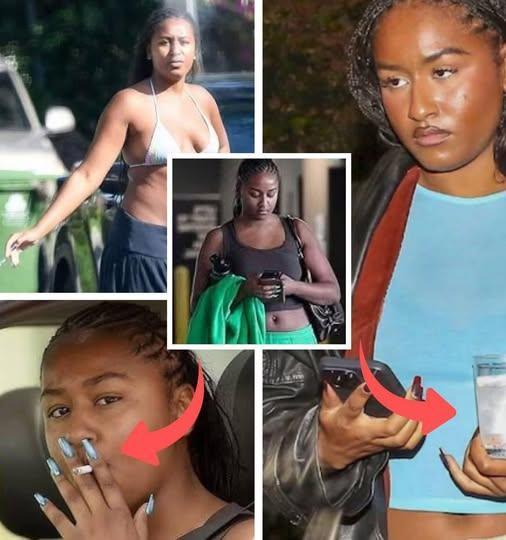
When people think about life inside the White House, they usually imagine power, pressure, and the weight of global decisions.
But for Michelle Obama, the hardest part of those eight years had nothing to do with policy, politics, or public scrutiny aimed at her or her husband.
It was something far more personal—and far more human.
It was fear for her daughters.
Speaking candidly about her time as First Lady alongside former President Barack Obama, Michelle peeled back the curtain on what life was really like behind the scenes. And instead of grand political drama, what emerges is a deeply relatable story of motherhood under unimaginable pressure.
Because while the world saw history being made, Michelle saw something else entirely: two young girls growing up in a place where every mistake could become a headline.
Malia and Sasha Obama weren’t just teenagers navigating school, friendships, and identity. They were doing it while the entire world watched their every move.
And for Michelle, that reality never stopped being terrifying.
She explained that raising daughters in the White House meant constantly thinking several steps ahead. Normal teenage experiences—testing boundaries, making new friends, going through emotional ups and downs—suddenly carried a different kind of weight.
Every choice had the potential to be magnified. Every misstep could be twisted, judged, or turned into something much bigger than it really was.
It wasn’t just about keeping them safe physically, although that came with its own challenges. Secret Service protection, motorcades, and strict protocols were part of daily life.
But what weighed even heavier was the emotional protection.
Michelle wasn’t just guarding her children from danger—she was trying to shield their sense of self.
Because growing up in the public eye meant that narratives could be written about them before they even had the chance to define who they were.
She has described parenting during that time as a constant balancing act: how do you let your children grow, make mistakes, and become independent individuals when the cost of those mistakes could follow them forever?
It meant setting boundaries, creating as normal an environment as possible, and quietly working behind the scenes to make sure their lives didn’t feel entirely consumed by their father’s presidency.
Sleepovers had to be carefully planned. Friendships were navigated with caution. Even small moments—like going out with friends—required layers of consideration most families never have to think about.
And through it all, Michelle carried the same worries any parent does, just amplified to an extraordinary level.
Would her daughters be okay?
Would they stay grounded?
Would they come out of this experience whole?
It’s a side of life in the White House that rarely gets talked about. The history books focus on legislation, speeches, and milestones. But Michelle’s reflections bring attention to something quieter and more fragile: the emotional reality of raising children in an environment that was never designed for normal family life.
Eventually, that chapter came to an end.
And with it came something Michelle hadn’t fully felt in years: the ability to exhale.
Leaving Washington meant stepping away from the constant spotlight. It meant giving Malia and Sasha the space to grow into young women on their own terms, rather than as symbols tied to their father’s legacy.
In Los Angeles, their lives look very different.
Malia has pursued her passion for storytelling, stepping into creative spaces where she can explore her voice. Sasha has focused on her studies, diving into understanding people and the world around her.
And perhaps most importantly, they’ve been able to do it without every move being scrutinized.
For Michelle, that’s the real success story.
Not the speeches. Not the global influence. Not even the historic nature of their time in the White House.
It’s the fact that her daughters came through it grounded, private, and able to define themselves.
Her story is a powerful reminder that even at the highest levels of power, the most important victories are often the most personal ones.
Because at the end of the day, Michelle Obama wasn’t just navigating life in one of the most famous buildings in the world.
She was doing what millions of parents do every day—trying to raise kind, resilient, and independent children.
The only difference?
The whole world was watching.










Leave a Reply