
Pope Leo XIV’s Inauguration: A New Dawn for the Church Rooted in Tradition and Heartfelt Connection
The inauguration of Pope Leo XIV marks a significant and symbolic ceremony in St. Peter’s Square, heralding the beginning of a new spiritual leadership over the Catholic Church. This pivotal event not only represents the formal transition of papal authority but also sets the stage for a potential shift in the Church’s approach to contemporary challenges.
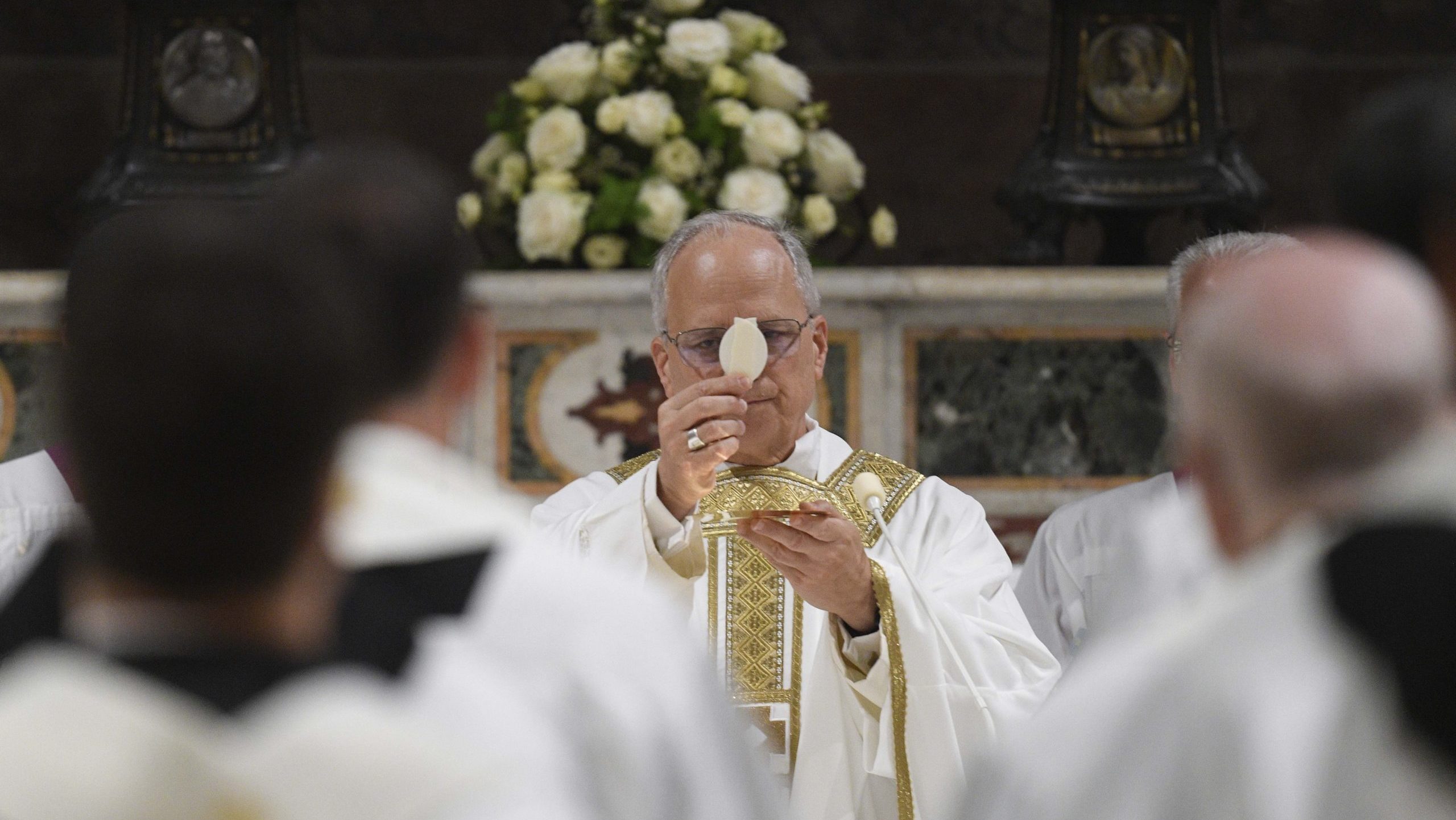
During the ceremony, Pope Leo XIV donned traditional vestments and was presented with the Palio, a humble woolen band draped over his shoulders, symbolizing his pastoral commitment. Additionally, he received the Fisherman’s Ring, a sacred emblem that connects him to Saint Peter, underscoring his mission as a “fisher of men.” This ritual not only signifies the papal office but also emphasizes the pastoral responsibilities undertaken by the pontiff.
The importance of this inauguration extends beyond the ceremonial aspects. It has generated worldwide anticipation as Catholics from all corners of the globe look forward to how Leo XIV will continue the inclusive and youth-focused legacy left by his predecessor, Pope Francis. The transition comes at a time when the Church faces numerous societal challenges, and many believe Leo XIV could be the leader to navigate these complexities.
A Pontiff Bridging Two Worlds
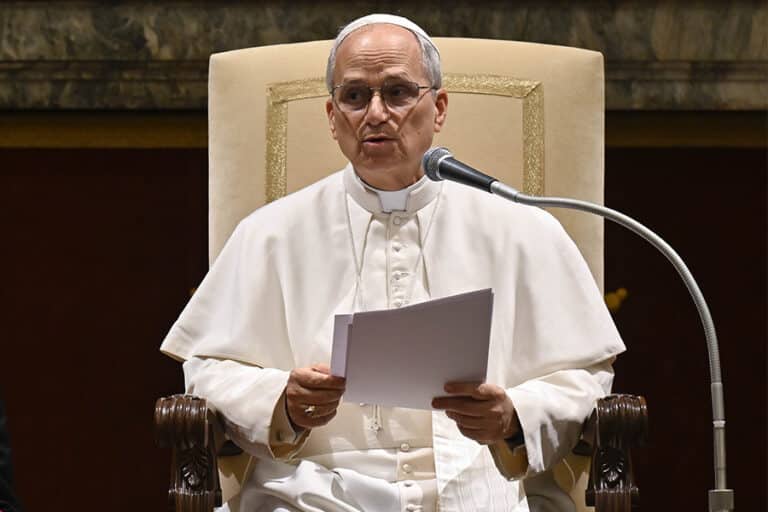
Pope Leo XIV holds a historical distinction as the second Pope from the Americas, an achievement that resonates deeply, particularly with Latin American Catholics. His origins in Chicago do not overshadow his strong connections to the broader Latin American context. In his inaugural address, he addressed the faithful in Spanish, reaching out to the people of Chiclayo, Peru, a region that has significantly influenced his spiritual journey.
Leo XIV’s relationship with Peru is not merely symbolic but is steeped in personal history. His first visit to the country in 1985 laid the foundations for a lifelong commitment to the Church’s mission in Latin America. Reflecting on this journey, he suggested that his elevation to the papacy was foretold over 26 years ago, a statement that invites reflection on the interconnectedness of faith and destiny.
Looking Forward: Tradition Meets Renewal

The ascent of Pope Leo XIV signals the dawn of a new chapter for the Catholic Church, one that seeks to honor its rich traditions while simultaneously embracing the need for renewal and hope. His authentic relationships within communities across Latin America and his focus on inclusivity indicate a papacy that may mirror the compassion and reformist spirit championed by Pope Francis.
This new pope steps into his role at a critical juncture, as the Church faces significant scrutiny over issues such as clerical abuse, social justice movements, and the role of women within the Church. Leo XIV’s demonstrated commitment to engagement with contemporary issues may lead to a more responsive and proactive Church under his leadership.
As the international community observes closely, the unfolding of Leo XIV’s papacy promises to be a journey characterized by faith, resilience, and a deepened connection to the people. His extensive experience within diverse communities suggests that he may adeptly address the complexities of modern society while remaining rooted in the Catholic tradition.
Moreover, the expectations surrounding Leo XIV’s leadership are shaped not only by his personal background but also by the broader societal context. The Catholic Church is experiencing challenges related to declining attendance, particularly among younger generations, who often seek a Church that is both relevant and relatable. In this regard, Leo XIV’s youth-centric approach and his affinity for inclusivity may resonate with those disenchanted by institutional barriers.
The Catholic Church’s role in social issues, such as climate change, economic disparities, and global health crises, will undoubtedly be central to Leo XIV’s papacy. His approach to these matters could redefine the Church’s stance as an advocate for social justice and environmental stewardship, aligning with the values expressed by many of today’s Catholic faithful.
Pope Leo XIV has the unique advantage of being able to draw from the lessons learned during Pope Francis’ tenure while also infusing his vision into the Church’s future direction. This delicate balance of tradition and innovation may very well define the impact of his papacy, as he works to engage a diverse and global congregation.
As the world watches with great interest, the hope is that Pope Leo XIV’s leadership will not only uphold the traditions of the Church but also inspire a renewed commitment to compassion, justice, and community engagement. His journey is awaited with both reverence and optimism, representing the potential for a transformative era in Catholicism.
Conclusion
The inauguration of Pope Leo XIV marks a profoundly significant moment in the enduring narrative of the Catholic Church—one that carries both the weight of history and the promise of transformation. It is far more than a ceremonial transition of leadership; it is a powerful symbol of continuity, resilience, and renewal within one of the world’s oldest and most influential institutions. At a time when the global landscape is defined by rapid change, uncertainty, and shifting values, this moment invites reflection on the Church’s role in addressing the spiritual, moral, and social needs of humanity in the modern age.
For centuries, the Catholic Church has stood as a guiding force for millions, offering not only religious direction but also a sense of identity, community, and purpose. Yet, like all institutions that span generations, it must continually navigate the tension between preserving its sacred traditions and responding to the evolving realities of the world. The inauguration of Pope Leo XIV symbolizes this delicate balance—a recognition that while the foundations of faith remain constant, the way in which that faith is lived, expressed, and understood must continue to grow.
Pope Leo XIV’s unique background and life experiences play a crucial role in shaping the expectations surrounding his papacy. His journey, marked by exposure to diverse cultures, perspectives, and challenges, equips him with a broader understanding of the complexities facing modern society. This depth of experience allows him to approach leadership not only as a spiritual authority but also as a compassionate listener, a thoughtful reformer, and a unifying presence. In a world often divided by differences, his ability to connect across boundaries—cultural, social, and ideological—may become one of his greatest strengths.
As he assumes this sacred responsibility, there is a widespread sense of anticipation that his leadership will usher in a renewed era of purpose and direction for the Church. Many hope that he will address pressing contemporary issues with both courage and humility—issues such as social justice, global inequality, environmental responsibility, and the search for meaning in an increasingly secular world. His voice has the potential to resonate far beyond the walls of the Church, offering guidance and inspiration to individuals from all walks of life who are seeking clarity, hope, and a deeper sense of belonging.
At the heart of these expectations lies a desire for a more compassionate and inclusive Church—one that not only upholds its teachings but also embraces the diversity of human experience with empathy and understanding. Pope Leo XIV has the opportunity to reinforce the idea that faith is not about exclusion or judgment, but about love, service, and connection. By reaching out to marginalized communities, engaging in open dialogue, and fostering a spirit of unity, he can help reshape the perception of the Church as a place of welcome, healing, and renewal.
Equally important is the role of tradition in defining the Church’s identity. The rituals, teachings, and values that have been passed down through generations serve as a spiritual anchor, providing continuity and stability in an ever-changing world. Pope Leo XIV’s challenge will be to honor these traditions while also ensuring that they remain relevant and meaningful for future generations. This requires not only wisdom and discernment, but also the courage to embrace change when it is necessary for growth.
The global community, both within and beyond the Catholic faith, watches this moment with a sense of cautious optimism. In an era often characterized by division and uncertainty, there is a longing for leadership that is grounded in integrity, compassion, and a genuine commitment to the common good. Pope Leo XIV’s papacy has the potential to serve as a source of moral clarity, encouraging dialogue over conflict, understanding over division, and hope over despair.
As this new chapter unfolds, it also presents an opportunity for individuals to reconnect with the deeper meaning of faith in their own lives. Beyond institutional structures and formal practices, faith is ultimately about the human experience—about seeking purpose, building relationships, and finding strength in moments of difficulty. Through his words and actions, Pope Leo XIV may inspire a renewed engagement with these fundamental aspects of spirituality, reminding people that faith is not distant or abstract, but deeply personal and profoundly relevant.
Moreover, his leadership could play a vital role in strengthening the sense of global community that the Church represents. In a world that is increasingly interconnected yet often fragmented, the idea of unity—of belonging to something greater than oneself—holds immense significance. By fostering collaboration, encouraging dialogue between cultures and religions, and promoting shared values of compassion and respect, Pope Leo XIV can help build bridges that extend far beyond the boundaries of the Church.
In reflecting on the significance of his inauguration, it becomes clear that this moment is not defined solely by tradition or ceremony, but by the possibilities it represents. It is a reminder that institutions, like individuals, must evolve in order to remain meaningful. It is a call to embrace both the past and the future, to honor what has been while courageously stepping into what can be.
Ultimately, the inauguration of Pope Leo XIV is a moment filled with hope—a hope that his leadership will bring renewed energy, deeper compassion, and a stronger sense of connection to the Catholic Church and the wider world. It is a hope that under his guidance, faith will continue to serve as a source of light in times of darkness, a foundation of strength in moments of uncertainty, and a force for good in a world that deeply needs it.
In the years to come, his legacy will be shaped not only by the decisions he makes, but by the lives he touches, the unity he fosters, and the inspiration he provides. And in that sense, this inauguration is not an ending or a beginning alone—it is part of an ongoing journey, one that reflects the enduring spirit of faith, the resilience of tradition, and the limitless potential for renewal and transformation.











Leave a Reply