
Height and Attraction
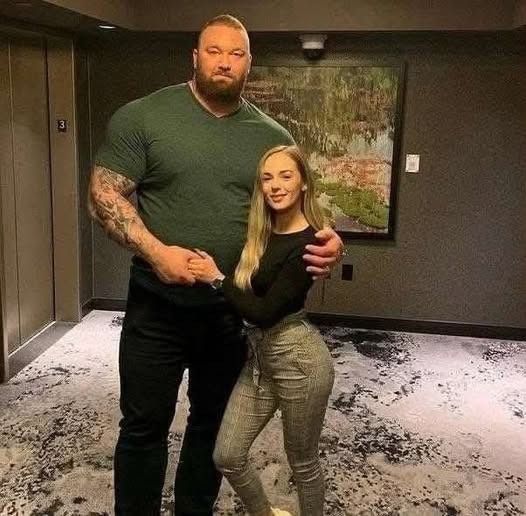
A Frontiers in Psychology study shows height strongly impacts romantic choices across cultures.
Men Prefer Shorter Women
Researchers found “men tend to prefer shorter women,” a pattern seen globally.
This perspective is often linked to broader social and psychological traits such as youthfulness and approachability. In many cases, individuals who are perceived as more youthful are also seen as more energetic, adaptable, and open to new experiences. These qualities can make someone appear easier to connect with on an emotional level, fostering a sense of comfort and familiarity even in early interactions. Approachability, in particular, plays a crucial role in attraction, as it signals warmth, friendliness, and a reduced likelihood of rejection—factors that can significantly influence how relationships begin and develop over time.
Women Prefer Taller Men
A widely discussed and frequently studied pattern in human attraction is the tendency for women to prefer taller men. This preference is often rooted in both evolutionary and social interpretations, where height is associated with qualities such as strength, protection, and social dominance. From an evolutionary standpoint, these attributes may have historically signaled a greater ability to provide safety and resources. In modern contexts, while these survival-based needs are less direct, the symbolic meaning of height can still carry weight in how individuals perceive attractiveness and compatibility.
Height can also influence first impressions in subtle but powerful ways. Taller individuals are sometimes perceived as more confident or authoritative, even when other factors are equal. These perceptions are not necessarily accurate, but they can shape initial attraction and social dynamics. Importantly, while this preference exists on average, it is not universal, and many women prioritize other qualities—such as emotional intelligence, humor, kindness, and shared values—over physical characteristics like height.
These Traits in Long-Term vs. Short-Term Relationships
The importance of traits like height, youthfulness, and perceived dominance often varies depending on the type of relationship being considered. Research suggests that such characteristics may play a more prominent role in initial attraction and short-term dating scenarios, where first impressions and physical cues are more heavily relied upon. However, when it comes to long-term relationships, deeper qualities tend to become far more significant.
In committed partnerships, traits such as reliability, emotional support, communication skills, and mutual respect typically outweigh purely physical attributes. While height or physical presence might contribute to initial interest, long-term compatibility is far more closely tied to how partners interact, resolve conflicts, and support one another through different life stages. In this sense, physical preferences may open the door, but they rarely determine whether a relationship will endure.
Context and Individual Differences
One of the most important aspects highlighted by studies on attraction is the role of context and individual variation. Preferences are not fixed; they shift depending on circumstances, goals, and personal experiences. For example, a person’s criteria for a short-term partner may differ significantly from what they seek in a long-term, committed relationship. In casual dating, factors like physical attraction and excitement may take priority, whereas in long-term contexts, stability and emotional compatibility become central.
Additionally, individual differences play a substantial role in shaping attraction. Cultural background can influence what traits are considered desirable, as standards of beauty and social expectations vary widely across societies. Personality also matters—some individuals may be drawn to confidence and assertiveness, while others may value gentleness and empathy more highly. Personal experiences, including past relationships, can further refine what someone looks for in a partner.
Additionally, individual differences play a deeply significant and often underestimated role in shaping patterns of attraction, influencing not only what people find appealing but also how they interpret and prioritize those preferences over time. Attraction is not a fixed or universal formula; rather, it is a complex interplay of internal dispositions and external influences that vary from person to person. Among these influences, cultural background stands out as one of the most powerful factors. Across different societies, standards of beauty, social expectations, and relationship norms can differ dramatically. What is considered attractive or desirable in one cultural context may not hold the same value—or may even be viewed quite differently—in another. These cultural frameworks subtly guide individuals from an early age, shaping their perceptions of physical appearance, behavior, and even long-term compatibility.
Beyond culture, personality plays an equally important role in determining attraction. People are often drawn to qualities that resonate with their own emotional needs, values, and ways of interacting with the world. For some, confidence and assertiveness may signal strength, stability, and the ability to lead, making these traits particularly appealing. For others, qualities such as kindness, empathy, and emotional sensitivity may carry greater weight, as they suggest warmth, understanding, and the potential for deep emotional connection. In many cases, attraction is not just about what is objectively “desirable,” but about what feels personally meaningful and compatible with one’s own personality.
Personal experiences further add layers of complexity to this process. Past relationships, whether positive or negative, often leave lasting impressions that influence future preferences. Someone who has experienced a supportive and nurturing relationship may seek out similar qualities again, while someone who has gone through conflict or disappointment may become more cautious, selectively drawn to traits that offer a sense of security or emotional safety. Even subtle experiences—such as early friendships, family dynamics, or formative social interactions—can shape expectations and desires in ways that are not always consciously recognized.
Moreover, attraction can evolve over time as individuals grow, change, and gain new perspectives. What a person finds appealing in one stage of life may shift as their priorities, goals, and self-understanding develop. For example, traits that once seemed exciting or intriguing may later be replaced by a preference for stability, reliability, or shared values. This dynamic nature of attraction highlights the importance of context, timing, and personal development in shaping romantic and interpersonal connections.
Ultimately, while general patterns and trends can certainly be observed across various studies and discussions about human attraction, they should never be mistaken for fixed rules that define every individual’s preferences or experiences. Human attraction is far more complex, nuanced, and deeply personal than any single theory or dataset can fully capture. It operates at the intersection of biology, psychology, culture, and personal history, making it one of the most intricate aspects of human behavior.
What one person considers absolutely essential in a partner—whether it be physical appearance, personality traits, lifestyle, or values—another person may view as secondary or even entirely irrelevant. For some, qualities like kindness, emotional intelligence, and loyalty take precedence above all else. For others, shared ambitions, intellectual compatibility, or a sense of humor might be the defining factors. There are also individuals who prioritize emotional safety and stability, while others may be drawn to excitement, novelty, or a sense of unpredictability. These differences are not contradictions; they are reflections of the diverse ways in which people experience connection and meaning.
This diversity of preferences is precisely what makes relationships so unique and dynamic. No two connections are exactly alike because no two individuals bring the same combination of experiences, expectations, and desires into a relationship. Cultural background, upbringing, past relationships, and even moment-to-moment life circumstances can all influence what someone is drawn to and why. As a result, attraction is not static—it evolves over time, sometimes in subtle ways and other times in profound ones, as people grow and their priorities shift.
Moreover, real-life relationships often develop in ways that challenge or even contradict what generalized patterns might predict. People frequently find themselves attracted to someone who does not fit their “usual type,” or forming deep connections based on qualities they may not have previously considered important. These experiences highlight the limitations of broad generalizations and reinforce the idea that attraction cannot be reduced to a simple checklist of traits.
In this sense, while statistical tendencies and commonly observed preferences can provide useful insights into human behavior, they should always be understood as tendencies—not rules. They offer a broad framework for understanding patterns, but they cannot account for the individuality that defines each person’s experience. Ultimately, it is this very unpredictability and diversity that make human relationships so meaningful. The fact that attraction cannot be universally defined is not a limitation—it is what allows genuine, personal, and deeply unique connections to form.
In this sense, while statistical tendencies and commonly observed preferences can offer valuable insights into patterns of human behavior, they must always be interpreted with caution and nuance. These patterns emerge from large groups of people and reflect general trends, but they are not absolute laws that dictate individual outcomes. At best, they provide a broad framework—a way of identifying recurring themes in attraction and relationship dynamics. However, they cannot fully capture the depth, variability, and uniqueness that define each person’s lived experience. Reducing human attraction to statistics alone risks overlooking the very qualities that make relationships meaningful in the first place.
It is important to recognize that every individual exists at the intersection of countless influences: cultural background, personal values, emotional needs, life experiences, and even timing and circumstance. No dataset, no matter how comprehensive, can fully account for how these factors interact within a single person. Two individuals may share similar backgrounds or preferences on paper, yet respond entirely differently when faced with the same situation. This is because attraction is not simply a reaction to traits—it is also shaped by perception, emotional resonance, and the subtle, often unexplainable ways in which people connect with one another.
Furthermore, human beings are not static. Preferences evolve as people grow, learn, and adapt to new experiences. What once aligned with someone’s desires may no longer hold the same significance years later. Emotional maturity, changing priorities, and shifting life goals all play a role in redefining what feels meaningful or appealing. As a result, any attempt to define attraction in fixed or universal terms will inevitably fall short, because it fails to account for the fluid nature of human development.
In this light, the unpredictability and diversity of attraction should not be seen as limitations, but rather as essential features of human connection. It is precisely because attraction cannot be universally defined that relationships have the potential to be deeply personal and authentic. The absence of rigid rules allows individuals to form bonds that reflect who they truly are, rather than who they are expected to be according to generalized standards. This openness creates space for unexpected connections—relationships that might not fit conventional patterns, yet prove to be meaningful and enduring.
Moreover, this diversity fosters a broader sense of empathy and understanding. When we accept that attraction and connection vary from person to person, we become more open to perspectives that differ from our own. We begin to see that there is no single “correct” way to form a relationship, no universal formula for compatibility. Instead, there are countless ways in which people can come together, each shaped by their own unique combination of traits, experiences, and intentions.
Ultimately, what makes human relationships so compelling is not their predictability, but their individuality. Each connection carries its own story, its own context, and its own emotional depth. The fact that attraction resists simple definition is what allows it to remain genuine, dynamic, and deeply meaningful. Rather than seeking to confine it within rigid boundaries, it is far more valuable to appreciate its complexity—to recognize that within this variability lies the potential for truly unique and transformative human experiences.











Leave a Reply