
Bogus or Justice?
It started like so many reckless decisions do—not with malice, not with a grand criminal plan, but with a moment of impulsivity that spiraled far beyond what anyone involved expected. For one young man, what he believed would be a harmless thrill—a quick ride, a fleeting escape from boredom—quickly transformed into a life-altering legal battle that would leave a lasting mark on his future.
On a quiet evening, under the dim glow of streetlights and the hum of a sleeping neighborhood, he made a choice that would change everything. The car was there, keys accessible, temptation within reach. To him, it didn’t feel like theft in the traditional sense. There was no intention to sell the vehicle, no plan to dismantle it for parts. In his mind, it was simple: take it for a spin, feel the rush, and return it before anyone noticed.
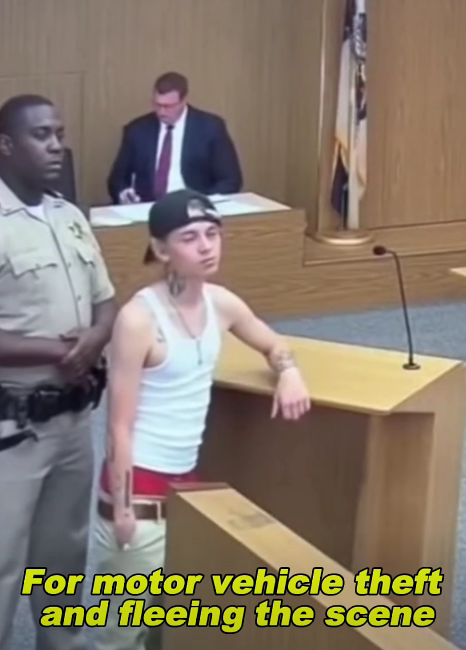
That is the line where everything began to unravel—quietly at first, almost invisibly, and then all at once. Within minutes of pulling away, adrenaline took over in a way that felt intoxicating rather than dangerous. The engine didn’t just hum—it roared, louder than expected, feeding into the illusion of control. The streets stretched out ahead, unusually empty, almost inviting, as if the night itself had made space for what was about to happen. There were no immediate obstacles, no visible consequences, just open road and a growing sense of confidence.
Speed crept up gradually. It didn’t feel reckless at first. It felt thrilling.
Caution, once present, began to dissolve. Each turn was taken a little faster than the last, each acceleration a little more aggressive. What began as a “joyride”—a term that felt harmless, almost playful—quietly shifted into something far more dangerous. It didn’t happen in a single moment, but in a series of small decisions. A missed turn here. A delayed brake there. A growing overconfidence that blurred the line between control and chaos.
And then, suddenly, the situation escalated.
Witnesses would later describe the driving as erratic. They spoke of near collisions, sudden swerves, and a complete disregard for traffic laws. But from inside the car, it didn’t feel that way. Inside, it still felt like control—like freedom. Like something that could be managed.
To the driver, it still didn’t feel like a crime.
That illusion shattered in an instant when flashing blue lights filled the rearview mirror.
At first, it didn’t fully register. The lights seemed distant, almost unreal. But as they grew closer, more intense, the reality began to sink in. This wasn’t just a ride anymore. This was something else entirely.
Panic set in.
His heart began to pound, each beat louder than the engine itself. Thoughts raced faster than the car. What now? Pull over? Keep going? Explain? Escape? In that split second, instinct took over—and instinct made the worst possible choice.
Instead of pulling over, he accelerated.
That single decision marked a turning point. What could have been a relatively minor legal issue—unauthorized use of a vehicle—suddenly crossed into far more serious territory. Now it wasn’t just about the car. It was about evasion. About defiance. About escalating a situation that was already on fragile ground.
The road ahead no longer felt open and inviting. It felt narrow, unpredictable, and dangerous. Every second stretched longer than it should have. Every turn carried risk. The flashing lights behind him weren’t just a warning anymore—they were a countdown.
The chase didn’t last long, but it didn’t need to.
Within minutes, control was lost.
Tires screeched violently against the asphalt. The car fishtailed, swerving beyond correction. And then—impact. Metal collided with a force that silenced everything for a brief, terrifying moment. The world seemed to pause, suspended between what had just happened and what would come next.
When the car came to a stop, the silence was deafening.
Thankfully, no one was killed. No innocent bystanders were caught in the chaos. But that fact, as significant as it was, would not erase what had already occurred. It would not undo the damage—physical or legal.
Because the damage was done.
When officers approached the vehicle and pulled him out, the adrenaline began to fade. In its place came something heavier—something far more difficult to ignore. Reality. The kind that doesn’t bend, doesn’t soften, and doesn’t disappear with excuses.
What had felt like a harmless act just moments before now carried weight. Real, irreversible weight.
In the days that followed, the story began to take on a different shape. The narrative he held onto—of a simple joyride, of a mistake without intention—was no longer the dominant version of events. Authorities framed it differently. Sharply. Clearly.
Reports detailed the danger posed to the public. The speed. The erratic behavior. The refusal to stop. The crash.
Prosecutors focused not just on the initial act of taking the vehicle, but on everything that followed. Because in the eyes of the law, it wasn’t just one decision—it was a chain of decisions. Each one building on the last. Each one increasing the risk.
Intent, they argued, did not erase impact.
By the time the case reached the courtroom, the tone had shifted completely. The casual language of a “mistake” or a “bad decision” was gone. In its place stood structured arguments rooted in law, precedent, and accountability.
The defense tried to bring the narrative back to its origin. They emphasized the lack of malicious intent. They painted him as young, impulsive, misguided—but not dangerous in nature. They argued that he never intended to steal the vehicle permanently. That he never set out to harm anyone. That his actions, while wrong, were not driven by criminal purpose.
But the prosecution didn’t focus on intent.
They focused on outcome.
They presented evidence of the driving. Testimonies from witnesses who described fear and unpredictability. The crash itself. The risk imposed on everyone who happened to be on the road that night.
They painted a picture that was difficult to ignore—not of a harmless ride, but of a situation that could have ended in tragedy.
And ultimately, the judge had to decide which version of the story carried more weight.
The decision was clear.
In a ruling that resonated far beyond that courtroom, the judge made a critical point: the law is not guided by what someone thought they were doing—it is defined by what they actually did.
The acknowledgment of his lack of malicious intent was there. It wasn’t ignored. But it wasn’t enough.
Because intention does not cancel consequence.
The judge emphasized that his actions created a situation of significant risk. Taking a vehicle without permission, driving recklessly, and attempting to evade law enforcement were not minor mistakes—they were serious offenses with real implications.
“This was not a harmless mistake,” the judge stated. “It was a chain of decisions that placed lives at risk.”
The sentence reflected that reality.
It was not the harshest possible outcome, but it was far from lenient. It included penalties that would follow him long after the memory of that night faded. A criminal record. Financial consequences. The possibility of incarceration. Limitations that could affect future opportunities—jobs, travel, even personal relationships.
For him, the realization was overwhelming.
What he once dismissed as “just a joyride” had become something far more significant. A defining moment. A turning point that would shape the course of his life in ways he never anticipated.
But this story isn’t just about one person.
It highlights a broader truth—one that applies far beyond this single case. There is often a gap between how people perceive their actions and how those actions are judged in reality. Especially in moments of impulsivity, where the thrill of the present overshadows the weight of potential consequences.
Intent matters. But it is not everything.
Because in many situations, it is the outcome—the impact—that carries the most weight.
This is particularly relevant for younger individuals, where risk perception can be distorted by a sense of invulnerability. The belief that “nothing will happen” is powerful—and dangerous. It creates a mindset where consequences feel distant, almost hypothetical.
Until they aren’t.
In a world where reckless behavior is often glamorized—through movies, social media, and cultural narratives—the idea of a “joyride” can seem trivial. Exciting, even. But reality doesn’t follow those scripts. It doesn’t pause before consequences. It doesn’t offer second takes.
There’s also a psychological layer to all of this. Decisions like these are rarely calculated in a rational, step-by-step way. They happen in moments where judgment is clouded—by emotion, by pressure, by the desire for excitement. They feel small in the moment. Manageable.
But the legal system doesn’t measure decisions by how they felt—it measures them by what they caused.
And that’s where many people are caught off guard.
For the community, this case served as a reminder of how quickly situations can escalate. How a single decision can spiral into something much larger. It sparked conversations about responsibility, about accountability, and about the real-world consequences of impulsive behavior.
For the victim—the owner of the vehicle—the impact went beyond physical damage. There was a loss of trust. A sense of violation. The understanding that something personal had been taken and misused without permission.
And for the young man at the center of it all, the lesson came in the hardest way possible.
Not through advice.
Not through warning.
But through consequence.
As the courtroom emptied and the case came to a close, one thing was undeniable: the narrative of “just a joyride” no longer existed. It had been replaced by something far more serious. Far more permanent.
A reality defined not by intention—but by impact.
And that reality will stay with him long after everything else fades.
Because sometimes, what feels like a moment of freedom becomes a lifetime of consequences.
And sometimes, what you think is “just a joyride”… is anything but.







Leave a Reply