
In the quiet residential corridors of Stockton, California, on February 20, 2026, the sounds of celebration were violently eclipsed by a tragedy that has left the local community and the nation reeling. What was intended to be a vibrant, sun-drenched afternoon dedicated to a child’s birthday party—a quintessential milestone of innocence—dissolved into a scene of unimaginable carnage when gunfire tore through the gathering. According to the most recent updates from the Stockton Police Department, at least four individuals have been confirmed dead, while ten others were rushed to regional trauma centers. The medical status of several survivors remains precarious, with many listed in critical condition as surgical teams work to mitigate the damage of a senseless act of violence.
The atmosphere in the quiet Stockton neighborhood on the afternoon of February 20, 2026, had all the markings of a perfect family celebration. Neighbors would later describe the scene as peaceful, warm, and deeply ordinary in the best possible way. Colorful balloons swayed gently above a backyard fence while music drifted through the street from a portable speaker set near a picnic table covered in birthday decorations. Children chased one another across lawns with plastic toys in their hands, their laughter blending with the chatter of relatives who had gathered from across the city to celebrate a young child’s birthday. Cars lined both sides of the residential street, evidence of a large family gathering where cousins, grandparents, close friends, and neighbors had come together for what should have been a joyful milestone. Adults stood near grills preparing food while younger guests crowded around piles of wrapped presents waiting to be opened. Nothing about the afternoon suggested danger. To everyone present, the gathering represented the kind of ordinary happiness that communities often take for granted until it is shattered.
That sense of comfort vanished in seconds.
Witnesses later recounted hearing what initially sounded like a string of fireworks exploding somewhere nearby. The noises came rapidly—sharp, aggressive cracks that echoed against the houses and parked vehicles. For a brief and terrible moment, many guests hesitated, confused by the sound. Some adults reportedly smiled nervously, assuming teenagers nearby were setting off late-afternoon fireworks. But confusion quickly turned into horror. The music stopped abruptly. Screams erupted from the backyard. Parents began shouting the names of their children as panic spread through the crowd with terrifying speed. The realization that the sounds were gunshots transformed the celebration into a scene of chaos and survival.
Guests scattered in every direction. Parents instinctively threw themselves over toddlers and young children, shielding them with their own bodies. Several witnesses described adults diving behind parked cars, patio furniture, and backyard walls while desperately trying to protect family members from incoming bullets. Children who moments earlier had been opening gifts and eating cupcakes suddenly found themselves crawling across concrete or hiding beneath tables while adults screamed instructions over the deafening confusion. Some attendees reportedly froze in shock, unable to comprehend how violence had erupted in the middle of a child’s birthday party.
The attack unfolded with horrifying speed. Survivors described hearing dozens of shots fired in rapid succession, each one intensifying the terror gripping the neighborhood. Some neighbors locked themselves inside their homes after hearing the gunfire, while others rushed outside in confusion, unsure whether to help or seek cover. Several witnesses later said the emotional trauma of hearing children screaming amid the gunfire was something they would never forget. One nearby resident stated that the sounds of panic and anguish carried across the block long after the shooting had stopped.
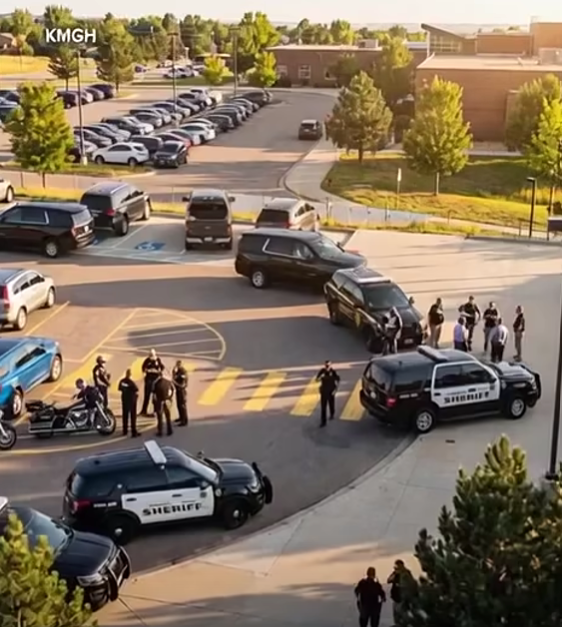
When emergency responders arrived minutes later, they encountered a scene that officers described as one of the most emotionally devastating incidents many had ever witnessed. The contrast was deeply haunting. Brightly colored birthday decorations still fluttered in the breeze while injured victims lay nearby awaiting medical attention. Half-eaten slices of cake rested untouched on folding tables. Wrapping paper and children’s toys were scattered across the yard alongside spent shell casings, overturned chairs, and abandoned shoes lost during the frantic escape. Sirens pierced the evening air as paramedics rushed from victim to victim attempting to stabilize the wounded.
Family members wandered through the chaos searching desperately for loved ones. Some parents screamed the names of missing children while others clung to relatives in shock and disbelief. Officers attempted to separate witnesses for questioning, but many survivors were too traumatized to speak coherently. Children cried uncontrollably as emergency crews tried to escort them away from the violence. Several first responders later admitted that the presence of so many young victims and terrified families made the scene almost unbearable emotionally. Law enforcement officials stated that the juxtaposition of birthday decorations and extreme violence created an image that would remain with investigators for years.
Hospitals across Stockton quickly entered emergency response mode as ambulances transported victims suffering from gunshot wounds and traumatic injuries. Trauma surgeons worked through the night in operating rooms filled with medical teams fighting to save lives. Physicians later stated that many victims arrived in critical condition, forcing doctors to perform emergency surgeries under immense pressure. Families crowded waiting rooms praying for updates while clergy members and grief counselors attempted to comfort relatives overwhelmed by fear and uncertainty.
As the city grappled with the immediate aftermath, investigators launched an intensive manhunt to determine who carried out the attack and why. Detectives spent hours combing through the crime scene collecting shell casings, documenting ballistic evidence, and reconstructing the timeline of events. Doorbell cameras from surrounding homes became a crucial part of the investigation as officers searched for footage that might reveal suspicious vehicles or individuals in the area before the shooting. Authorities also interviewed dozens of traumatized witnesses in hopes of identifying the suspect or uncovering a possible motive.
Yet despite the scale of the investigation, one terrifying reality persisted: no clear explanation immediately emerged. Investigators could not initially determine whether the birthday party had been deliberately targeted or whether the violence stemmed from some broader conflict spilling into the neighborhood. The uncertainty intensified fear throughout Stockton. Residents began questioning whether the attack had been random, retaliatory, or connected to gang activity. Parents across the city expressed growing anxiety about public safety, particularly in places traditionally viewed as secure family environments.
Community leaders described the emotional impact on Stockton as profound. Churches opened their doors for prayer vigils while local organizations organized counseling services for survivors and grieving families. Makeshift memorials began appearing near the crime scene almost immediately. Candles, flowers, stuffed animals, handwritten messages, and children’s drawings lined the sidewalks outside the police barricades. Residents gathered silently at night to mourn the victims, many struggling to understand how such violence could erupt during a celebration centered around children and family.
The psychological toll extended far beyond those physically injured. Mental health experts warned that survivors—especially young children—could experience severe long-term trauma after witnessing such brutality. Pediatric specialists emphasized that children exposed to mass violence often struggle with nightmares, anxiety, depression, emotional withdrawal, and an overwhelming loss of security. Therapists deployed to assist the affected families stressed that emotional wounds from incidents like this can persist for years, shaping the way survivors perceive safety, trust, and community.
Parents who shielded their children during the shooting were widely praised for acts of extraordinary courage. Witnesses recounted stories of adults risking their lives to protect others, with some physically covering children as bullets flew through the backyard. First responders similarly received recognition for entering an active and uncertain scene to provide aid under immense pressure. Officials stated that the bravery displayed during the tragedy reflected the resilience and humanity that emerge even in moments of unimaginable horror.
As news of the shooting spread nationally, the Stockton tragedy became part of a broader conversation about violence, security, and the vulnerability of everyday spaces in modern America. Analysts noted that the incident reflected a growing fear shared by many communities: that no environment, not even a child’s birthday party, is entirely insulated from sudden violence. Public debate intensified around issues of gun crime, community policing, mental health support, and preventative intervention strategies aimed at reducing similar tragedies in the future.
Meanwhile, investigators continued pursuing every possible lead. Authorities urged residents to report anything unusual they may have seen in the days leading up to the attack, emphasizing that seemingly insignificant details could prove critical. Detectives examined forensic evidence late into the night while digital analysts reviewed surveillance footage frame by frame searching for clues. Officials repeatedly assured the public that identifying and apprehending the suspect remained the department’s highest priority.
For the families of the victims, however, the search for answers could never fully erase the devastation left behind. February 20, 2026, would forever mark the day their lives changed irrevocably. Birthdays that once symbolized joy and family unity would now carry painful memories of fear, loss, and grief. Survivors would spend years rebuilding emotionally from the trauma inflicted in mere moments of violence.
And yet, amid the sorrow, Stockton also witnessed extraordinary solidarity. Neighbors delivered food to grieving families. Volunteers organized fundraisers to support medical expenses and funeral costs. Strangers embraced one another at vigils, united not only by mourning but by determination to prevent the community from being defined solely by tragedy. In the face of overwhelming darkness, acts of compassion became small but powerful reminders that resilience can survive even the deepest wounds.
Ultimately, the Stockton birthday party shooting would be remembered not only for the horror that unfolded that evening, but also for the courage displayed by ordinary people forced into unimaginable circumstances. It became a story about parents protecting children, first responders confronting trauma, and a grieving city struggling to reclaim its sense of safety. Though investigations, headlines, and public debates would continue in the weeks and months ahead, the emotional scars left upon the survivors and the wider community would endure far beyond the news cycle.









Leave a Reply