
What was supposed to be a journey filled with hope became a nightmare that left an entire community grieving.
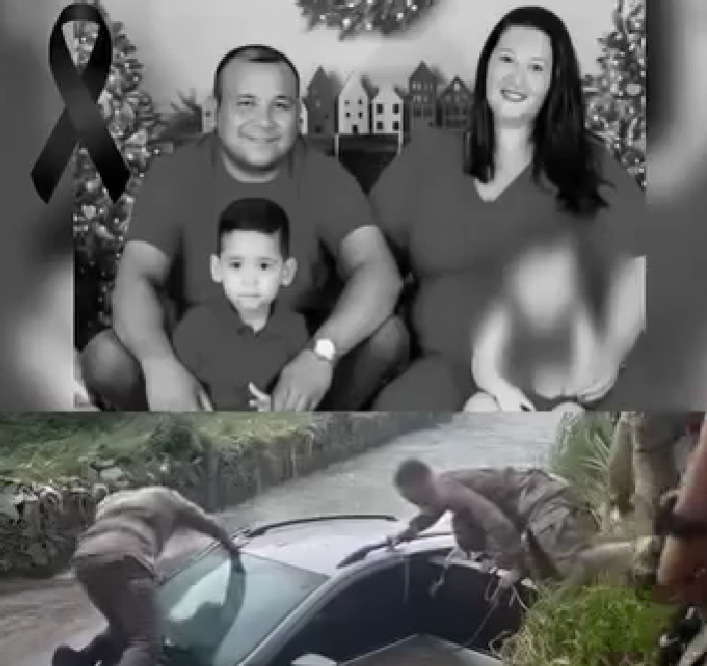
A young family traveling toward a hospital for their little boy’s surgery never reached their destination after their car veered off the road and plunged into deep water near Sítio Piripiri. By the time rescue crews managed to reach the submerged vehicle, it was already too late.
The tragedy has devastated residents across the region, many of whom had been praying for the child’s recovery in the days leading up to the trip. Instead of celebrating a successful procedure, loved ones are now preparing funerals, candlelight vigils, and memorial services for a family whose final moments ended in darkness and silence beneath the water.
According to early reports, the family had left home before sunrise, hoping to arrive at the hospital in time for young Miguel’s scheduled surgery. Relatives say the operation represented a major turning point in the boy’s life, and everyone around them believed the difficult journey would ultimately lead to healing.
People close to the family described Miguel as energetic, affectionate, and constantly smiling despite the medical challenges he faced at such a young age. Neighbors recalled seeing him playing outside his home, waving at passing cars, and talking excitedly about things most children dream about — toys, football, cartoons, and someday feeling healthy enough to run without limitations.
His parents had reportedly spent months preparing for the surgery.
Friends say they organized appointments, spoke with doctors, saved money where they could, and remained determined even during moments of uncertainty. For them, the hospital trip symbolized possibility. It was the moment they believed things could finally start improving.
No one imagined it would become their last journey together.
Authorities say the accident occurred near a rural roadway close to Sítio Piripiri, where the vehicle suddenly left the road and plunged into a stream approximately five meters deep. Investigators are still working to determine exactly what caused the car to lose control.
Some locals familiar with the road say the area can become dangerous under certain conditions, especially during poor visibility or after rainfall. Others claim the section has worried drivers for years because of its narrow edges and lack of protective barriers.
But in the moments after the crash, none of that mattered.
What mattered was the desperate race against time unfolding in front of rescuers.
Witnesses who arrived near the scene described hearing cries for help before the vehicle disappeared completely beneath the dark water. Some attempted to reach the car themselves, but the depth and current made it nearly impossible.
Emergency teams rushed to the location shortly afterward, launching a rescue operation that quickly turned into a heartbreaking recovery effort.
Divers reportedly struggled with visibility underwater, while the current complicated attempts to access the submerged vehicle. Every passing minute reduced the already slim chances of survival.
People gathered near the banks in silence, watching rescue crews disappear beneath the surface again and again.
Some prayed out loud.
Others simply stared.
One witness later described the atmosphere as “unbearably heavy,” saying everyone nearby knew they were witnessing a tragedy unfold in real time.
“There was hope at first,” the witness reportedly said. “People believed maybe they could still save them. But as time passed, you could feel that hope fading.”
Eventually, rescue crews managed to reach the vehicle.
Inside were Miguel and his parents.
None survived.
The news spread through the community almost instantly.
In small towns and rural areas, tragedies like this travel quickly, carried from phone call to phone call, message to message, neighbor to neighbor. Within hours, homes were filled with tears, churches opened their doors, and people who barely knew the family found themselves overwhelmed with grief.
Because while accidents happen every day, some stories strike people differently.
Perhaps it was the fact that the family had been traveling for a child’s surgery — a journey motivated entirely by love and hope.
Perhaps it was Miguel’s age.
Or perhaps it was the unbearable contrast between where the family believed they were heading and where their lives ultimately ended.
The emotional weight of that contrast has shaken countless people online as details continue spreading across social media.
Many users shared messages expressing heartbreak over the cruel timing of the tragedy.
“One trip to save their son changed into all of them dying together,” one person wrote.
Another commented: “This is every parent’s worst nightmare.”
Others focused on Miguel himself, saying stories involving children often affect communities in a uniquely painful way.
“He should have had a future,” one post read. “He should have made it to that hospital.”
Throughout the day, candles began appearing outside local churches and homes. Residents gathered to pray not only for the family, but also for the rescue workers forced to witness scenes many people could never imagine enduring.
First responders are often praised for bravery, but tragedies like this also leave emotional scars on those who arrive first.
Several rescue personnel reportedly remained at the scene long after the recovery operation ended, visibly shaken by what they had experienced.
One volunteer involved in the effort allegedly described the silence afterward as the hardest part.
“When everything stopped, nobody spoke,” the volunteer reportedly said. “We all just stood there looking at the water.”
That silence now hangs over the community itself.
Neighbors describe streets that feel quieter than usual. Conversations pause abruptly whenever Miguel’s name is mentioned. Parents hold their children tighter. Teachers struggle to explain the tragedy to classmates who cannot fully understand why a child their age suddenly disappeared forever.
At vigils held following the accident, mourners carried flowers, photographs, and handwritten notes.
Some messages were directed toward Miguel.
Others toward his parents.
Many simply asked the same question repeatedly:
Why?
Why did a family already facing medical hardship have to endure something even worse?
Why did a road leading toward healing become the place where three lives ended?
Why does tragedy strike people who seem to deserve happiness the most?
Those questions may never truly have answers.
Investigators will eventually determine technical details — whether speed, visibility, road conditions, mechanical failure, or another factor contributed to the crash. Officials may produce reports explaining how the vehicle entered the water.
But explanations rarely bring peace in moments like these.
Facts cannot erase the image of a family trapped beneath dark water while loved ones waited helplessly nearby.
Nor can they change the devastating reality that a child headed toward life-saving treatment never even reached the hospital.
For many residents, the tragedy has also renewed concerns about road safety in rural areas.
Locals claim dangerous roads often remain overlooked until disaster occurs. Some are now calling for barriers, warning signs, improved lighting, and infrastructure changes near waterways and isolated routes.
Community members argue that while nothing can bring back Miguel and his parents, future accidents might still be prevented if action is taken quickly enough.
“This family should not die for people to notice the danger,” one resident reportedly said during a gathering after the accident.
Online, thousands of strangers continue reacting emotionally to the story.
Some shared their own experiences of losing loved ones suddenly.
Others spoke about how quickly life can change.
One comment that gained attention simply read:
“They woke up believing they were heading toward hope.”
That sentence seems to capture why the tragedy has affected so many people.
Because most families understand what it means to fight for someone they love.
Most parents understand the fear of seeing a child sick or in pain.
And most people understand the fragile optimism that comes with believing better days are finally ahead.
That is what makes the story so heartbreaking.
The family was not traveling for vacation or routine errands. They were making a journey driven by love, sacrifice, and the desperate hope of improving a little boy’s future.
Instead, everything ended within seconds.
As mourning continues, local churches have reportedly organized prayer services and memorial gatherings honoring the family. Residents have also discussed creating a permanent tribute near the area where the accident occurred.
Some hope the memorial will ensure Miguel’s story is never forgotten.
Others say it may remind drivers to remain cautious along rural roads where one mistake can become irreversible.
For now, grief remains raw.
Friends describe struggling to process how quickly life changed for the family. One moment they were preparing for surgery appointments and recovery plans. The next, they were gone.
The emotional impact has been especially intense among parents in the community.
Many reportedly admitted they could not stop imagining the fear the family must have experienced in those final moments.
A mother attending one vigil said she went home afterward and sat beside her sleeping children for nearly an hour.
“I just kept looking at them,” she reportedly said. “You realize how fragile everything really is.”
That feeling — the realization of life’s fragility — often follows tragedies involving young children.
People begin thinking about ordinary moments differently.
School drop-offs.
Family road trips.
Goodbye hugs.
Phone calls saying, “We’ll see you later.”
No one expects those moments to become final memories.
Yet for Miguel’s relatives, that reality arrived without warning.
Now, instead of celebrating a successful surgery and recovery, they are preparing to bury an entire family at once.
The heartbreak of that reality has united strangers, neighbors, and online communities alike in collective mourning.
Candles continue flickering late into the night.
Flowers continue appearing beside photographs.
And Miguel’s name continues being spoken softly by people who never met him, yet somehow feel connected to his story.
Because sometimes tragedies become larger than a single accident.
They become reminders of how quickly hope can disappear.
How fragile life truly is.
And how love, even in the face of unbearable loss, continues bringing people together.
For the community mourning near Sítio Piripiri, the road where the family vanished into the water may forever symbolize sorrow.
But many residents hope it will also symbolize something else:
A reminder to cherish every ordinary moment, ever










Leave a Reply