
An attack on a Colombian National Police helicopter and a suspected car bombing near a military air base killed at least 19 people Thursday in what Colombian authorities are describing as terrorist acts.
It’s unclear whether the events are related.
The police helicopter was attacked by a drone in the department of Antioquia as it was supporting the manual eradication of illicit crops in the area, Antioquia Gov. Andrés Julián Rendón said.
The governor posted a video that appears to show the helicopter crashing into a hill.
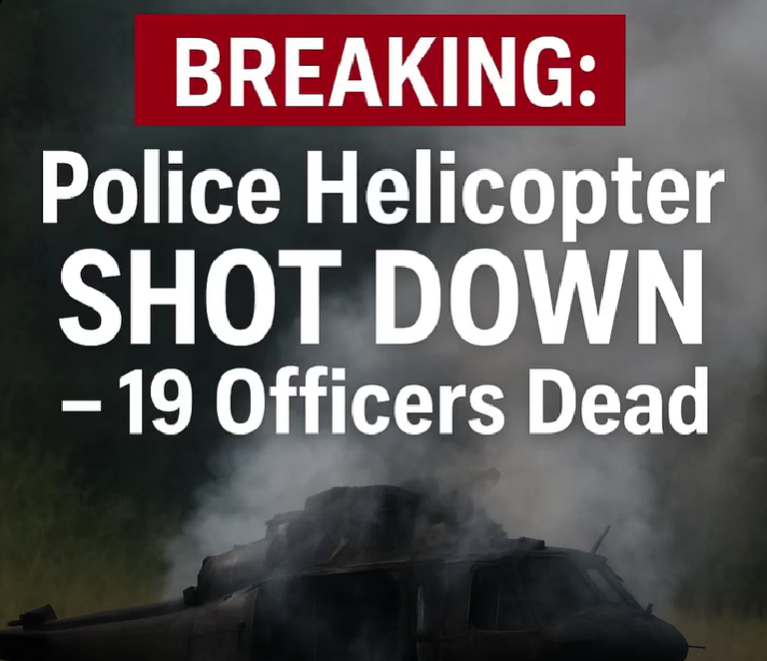
Colombia has once again been shaken by a wave of violence after a deadly helicopter attack and a massive car bomb explosion left dozens dead and injured in separate incidents that authorities have described as acts of terrorism. The attacks, which unfolded within hours of each other, have intensified fears that armed groups and criminal organizations are regaining strength in several regions of the country despite years of government efforts to reduce violence and stabilize conflict zones.
According to Colombian officials, at least 13 police officers were killed after a military helicopter was brought down during an operation in a mountainous area controlled by armed dissident factions. Colombian Defense Minister Pedro Arnulfo Sánchez said intelligence reports indicate the attack was carried out by the 36th Front of the Estado Mayor Central, commonly known as EMC. The organization is made up of dissidents from the former Revolutionary Armed Forces of Colombia, or FARC, a Marxist guerrilla movement that formally disbanded after signing a historic peace agreement with the Colombian government in 2016.
National Police Director Carlos Fernando Triana Beltrán condemned the assault, calling it a “terrorist act” and promising that security forces would continue operations against armed groups responsible for attacks on civilians and law enforcement personnel. Authorities said the helicopter was targeted while transporting officers involved in operations against illegal trafficking networks and armed groups operating in remote regions of Antioquia.
The deadly attack immediately sparked concern across the country, with political leaders warning that violence linked to drug trafficking and guerrilla dissident groups has become increasingly aggressive in recent months. President Gustavo Petro initially suggested that the Gulf Clan, one of Colombia’s most powerful criminal syndicates, could have been involved because the attack happened shortly after authorities seized approximately 1.5 tons of cocaine in the Urabá region. However, the president later clarified that intelligence evidence pointed to the 36th Front of the EMC as the group behind the operation.
Military officials said artillery strikes and coordinated security operations were launched shortly after the helicopter was shot down in an effort to neutralize the fighters responsible. Soldiers and police units were reportedly deployed to surrounding areas as authorities searched for suspects believed to have participated in the ambush. Security forces have not yet confirmed how the helicopter was brought down, though local reports suggested the aircraft may have been hit with heavy weapons fire while flying at low altitude over territory controlled by armed dissidents.
The attack highlighted the continuing security challenges facing Colombia, especially in rural areas where dissident factions, drug trafficking organizations, and illegal armed groups compete for control of strategic territories used for cocaine production and transportation. Analysts say the fragmentation of former rebel organizations after the peace agreement created multiple smaller factions that continue to finance themselves through narcotics trafficking, extortion, illegal mining, and kidnappings.
News of the helicopter attack spread rapidly throughout the country and was followed by another devastating incident later the same day. In the city of Cali, an explosion near the Marco Fidel Suárez military air base killed at least six people and injured dozens more. Authorities described the blast as a terrorist attack carried out with a car bomb, reviving painful memories of some of the darkest periods of Colombia’s internal conflict.
The mayor’s office confirmed that at least 78 people were wounded in the explosion, with emergency crews rushing victims to nearby hospitals while firefighters attempted to secure the surrounding area. Witnesses described scenes of panic as smoke filled the streets and shattered windows covered nearby buildings. Videos circulating on social media appeared to show damaged vehicles, debris scattered across roads, and terrified residents fleeing moments after the explosion.
The Colombian Aerospace Force said the attack specifically targeted the military installation and condemned those responsible for attempting to spread fear and chaos among civilians. Authorities immediately sealed entrances and exits to Cali while imposing temporary restrictions on truck movement throughout parts of the city. Security checkpoints were established on major roads as investigators searched for evidence related to the bombing.
Cali Mayor Alejandro Eder said emergency services worked throughout the night to assist victims and restore order. He also announced a reward of 400 million Colombian pesos, equivalent to just under 100,000 dollars, for information leading to the identification and capture of those responsible. Officials urged citizens to cooperate with investigators and report any suspicious activity connected to the attack.
So far, no organization has publicly claimed responsibility for the explosion, though Colombian authorities are examining possible links between the bombing and dissident groups active in southwestern regions of the country. Security analysts noted that similar attacks have previously been used by armed organizations to pressure the government, intimidate local populations, or retaliate against military operations.
The violence comes at a particularly difficult time for President Petro’s administration, which has attempted to pursue negotiations and ceasefire agreements with multiple armed factions under a strategy known as “Total Peace.” The initiative was designed to reduce violence through dialogue and demobilization agreements with guerrilla groups, criminal organizations, and dissident factions. However, critics argue that some groups have used negotiations as an opportunity to strengthen their operations and expand territorial control.
In June, Colombia experienced another deadly wave of coordinated attacks in Cali and several towns in the Cauca region. Those assaults left at least seven people dead and 28 others injured. At the time, prosecutors said the violence appeared to be linked to retaliation for the 2022 death of a local leader connected to FARC dissident networks. Authorities warned that armed groups were attempting to demonstrate their ability to launch large-scale attacks against state institutions and urban centers.
Residents living in areas affected by the latest violence say fear has once again become part of daily life. Many Colombians who hoped the peace agreement would permanently reduce bloodshed are now worried that new generations of armed fighters are emerging in regions abandoned by the state after the demobilization of the FARC.
Despite the violence, Colombian officials insist they will continue pursuing those responsible while maintaining efforts to stabilize conflict zones. Additional military deployments are expected in vulnerable regions over the coming days. For many Colombians, the attacks serve as a painful reminder that the country’s long struggle with armed conflict is far from over. Although the peace agreement marked a historic step toward ending decades of war, the persistence of dissident groups and organized crime continues to threaten stability across several parts of the nation. As families mourn the victims killed in the helicopter attack and the bombing in Cali, the country faces renewed questions about whether lasting peace can truly be achieved in the face of evolving criminal and insurgent violence. Investigators continue gathering evidence while anxious citizens await answers after the shocking coordinated violence.









Leave a Reply