
No breaking-news banner flashed across television screens. No viral social media tributes flooded the internet overnight. No immediate wave of headlines announced the death of one of classic Hollywood’s most recognizable sci-fi faces.
Instead, Ann Robinson disappeared quietly.
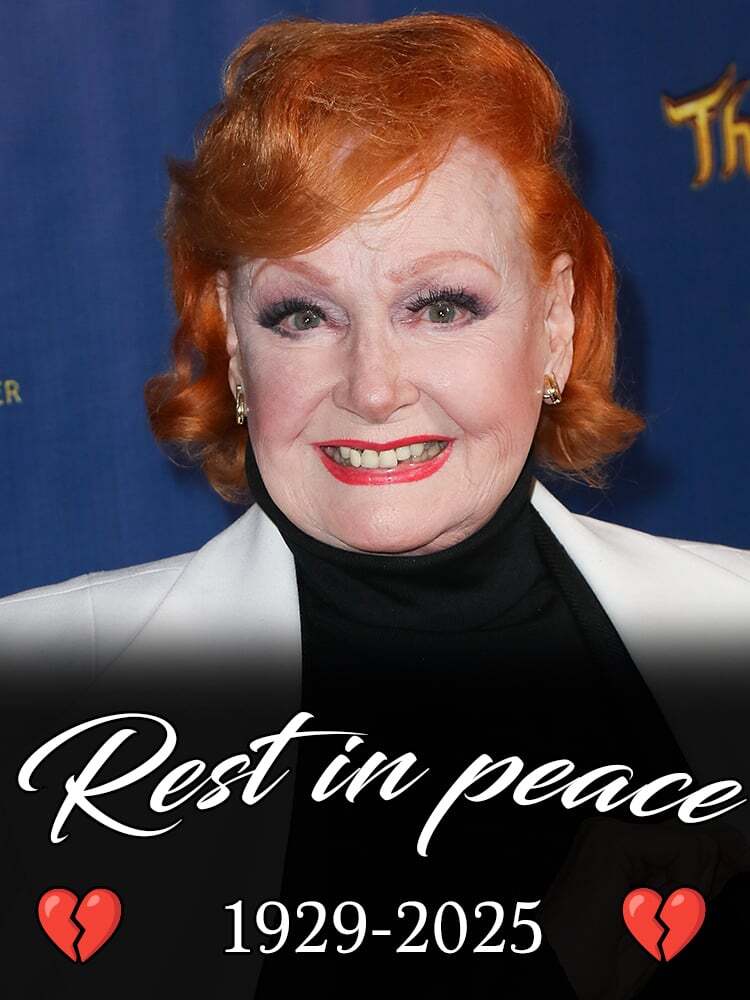
The flame-haired actress who once ran from invading Martians in War of the Worlds died at her Los Angeles home on September 26, 2024, at the age of 96 — and somehow, almost no one outside her family knew about it for months.
In an era where celebrity deaths become global news within minutes, the silence surrounding Robinson’s passing felt almost surreal. Fans who had adored her for decades continued posting convention photos, discussing classic science fiction films, and revisiting her iconic role without realizing the actress herself was already gone.
When the news finally emerged nearly a year later, many were left asking the same haunting question:
Why had her death been kept private for so long?
No cause of death has been publicly revealed. Her family chose to grieve away from cameras, away from headlines, and away from the endless noise of Hollywood culture. And somehow, that mystery only deepened the fascination surrounding a woman whose life already felt like something pulled from a movie script.
Because Ann Robinson’s story was never ordinary.
Long before she became one of the defining faces of 1950s science fiction, she was simply a fearless young woman trying to survive inside Hollywood’s unpredictable machine.
Born in Hollywood in 1929, Robinson entered the entertainment industry during an era when glamour often hid brutal realities. Studios controlled careers with iron fists, actresses were expected to fit impossible standards, and opportunities could disappear overnight.
But Robinson arrived with something many others didn’t have.
Nerve.
Before audiences ever knew her as Sylvia Van Buren, she worked as a stunt performer, throwing herself into physically demanding work at a time when women rarely received recognition for such roles. Hollywood was dangerous then. Safety regulations were limited, stunt doubles were underappreciated, and injuries were simply considered part of the job.
Yet Robinson embraced the chaos.
People who knew her during those years described her as adventurous, determined, and surprisingly grounded for someone navigating the dream factory of 1940s and ’50s Los Angeles. She wasn’t born into Hollywood royalty. She fought her way into the business through persistence, resilience, and sheer willingness to take risks others avoided.
Then came the role that changed everything.
In 1953, Robinson was cast opposite Gene Barry in War of the Worlds, the adaptation of H.G. Wells’ legendary novel that would eventually become one of the most influential science fiction films ever made.
At the time, no one fully understood what the movie would become.
Science fiction in the early 1950s was still evolving. Alien invasion stories existed, but War of the Worlds hit audiences differently. The film arrived during the height of Cold War anxiety, when fear itself had become part of everyday American life. Nuclear tension hung over the country, and people lived with the terrifying possibility that destruction could arrive without warning.
Then came the Martians.
Towering war machines vaporized entire cities while humanity collapsed into panic and confusion. Audiences watched churches fill with desperate prayers. Soldiers failed to stop the invasion. Entire communities disappeared under alien fire.
And at the center of the nightmare was Robinson.
With her striking red hair and emotional performance, she became the human face of survival in a world falling apart. She wasn’t just another screaming damsel running from monsters. There was vulnerability in her performance, but also warmth and humanity that made viewers emotionally invest in every terrifying moment.
Years later, Robinson would remember something unforgettable about the film’s earliest screenings.
People left the theater in stunned silence.
Not cheering.
Not laughing.
Silent.
The movie had shaken audiences so deeply that many simply walked out speechless, trying to process what they had just witnessed. Without realizing it, Robinson had become part of cinematic history.
The role followed her forever.
Decades passed, but fans never forgot Sylvia Van Buren. While many actors resent being tied to one famous role, Robinson embraced it. She attended conventions, signed autographs, posed for photos with generations of science fiction fans, and spoke warmly about the film that changed her life.
Even in her later years, admirers were struck by how gracious she remained.
Fans who met her at conventions often described her as elegant, funny, and deeply appreciative of the people who continued celebrating her work decades after the film’s release. Unlike some stars who distance themselves from cult classics, Robinson understood exactly what War of the Worlds meant to audiences.
For many fans, she represented more than just nostalgia.
She represented a bridge to a vanished era of Hollywood.
But behind the iconic status was a woman carrying complicated emotions about the life she chose.
At the height of her growing fame, Robinson made a decision that would dramatically alter her future.
In 1957, she walked away from a rising Hollywood career to marry famed matador Jaime Bravo.
To outsiders, it sounded romantic — a glamorous actress falling in love with a charismatic bullfighter. The story had the kind of dramatic passion Hollywood itself loved to sell on screen.
Reality proved more difficult.
Years later, Robinson openly admitted the marriage damaged her career in ways she never fully recovered from. She once reflected bluntly that leaving Hollywood at that stage “blew” her career prospects “right out of the water.”
It was the kind of brutally honest statement many classic stars rarely made.
But Robinson never pretended her choices came without consequences.
Hollywood in the 1950s could be unforgiving toward actresses who stepped away, especially women. Careers moved quickly. New stars emerged constantly. A few years away from the spotlight could permanently close doors that once seemed wide open.
And while male stars often returned from absences without issue, women were expected to remain perpetually visible, youthful, and marketable.
When Robinson left, the industry moved on.
Her marriage to Bravo eventually ended in divorce, and she faced the difficult challenge of rebuilding a career that had lost momentum during her absence. For many actresses of her era, that would have marked the end.
But Robinson refused to disappear.
She slowly fought her way back into acting through television appearances and supporting film roles, proving she still belonged onscreen. She appeared in projects including Imitation of Life and steadily worked throughout the following decades, even as Hollywood transformed around her.
The industry she returned to looked very different from the one she had left.
The old studio system weakened. New generations of actors emerged. Color television changed entertainment forever. Blockbusters replaced many classic filmmaking traditions.
Still, Robinson adapted.
There was something quietly remarkable about the longevity of her career. She never became one of Hollywood’s most scandalous celebrities. She rarely dominated tabloid culture. She simply kept working.
And working.
And working.
Into her nineties.
While many performers from Hollywood’s golden age disappeared entirely from public life, Robinson remained connected to film and television well into the 21st century. Younger audiences discovered her through classic movie broadcasts and streaming services, while longtime fans continued celebrating her contributions to science fiction history.
Then came another unexpected moment of full-circle recognition.
In the late 1980s television revival of War of the Worlds, Robinson returned to the franchise that made her famous, once again embracing the legacy she helped create decades earlier.
For fans, it felt poetic.
The woman who once fled Martians across movie screens in 1953 had become part of the franchise’s living history.
And even in her final years, she kept performing.
Her last credited film role came in 2020’s The Last Page of Summer, a remarkable achievement for someone whose career had begun during the Truman administration. By then, Robinson had outlived countless Hollywood contemporaries while remaining active in the industry she once feared had forgotten her.
That resilience became part of her legend.
Which is why the secrecy surrounding her death felt so shocking to fans.
Hollywood is built on visibility. Celebrity culture feeds on constant updates, public statements, memorials, and carefully managed narratives. Yet Robinson’s passing unfolded almost entirely outside that machine.
No immediate public announcement came.
No detailed explanation followed.
No official cause of death was revealed.
For months, her absence existed almost unnoticed beyond close family and friends.
Some fans later admitted they felt strange discovering the news so late, as though they had somehow missed saying goodbye to someone who had quietly occupied part of their lives for decades.
Others respected the privacy.
In many ways, Robinson’s final chapter mirrored the personality people often described throughout her life. She had never seemed obsessed with fame in the way Hollywood often encourages. She appreciated her fans, but she also valued normalcy, dignity, and personal space.
Perhaps her family simply wanted peace.
Perhaps they wanted time to grieve privately before the internet transformed her death into another trending topic consumed for a few fleeting days before moving on.
Or perhaps there were deeper reasons they chose silence.
That mystery remains unsolved.
And strangely, it only adds to the emotional power of her story.
Because Ann Robinson’s life was filled with contradictions that made her feel profoundly human.
She achieved cinematic immortality, yet experienced career regret.
She walked away from fame for love, then spent years rebuilding what she lost.
She became a science fiction icon, yet remained remarkably grounded.
She survived an industry famous for destroying people.
And in the end, she slipped away almost exactly as she had lived much of her life — quietly, on her own terms, without demanding attention.
Still, the silence surrounding her passing cannot erase the impact she left behind.
For generations of movie lovers, Robinson will forever remain frozen in black skies filled with alien destruction, racing through chaos as humanity faces extinction. Her image belongs to one of cinema’s defining visions of fear and survival.
But beyond the Martians and movie history was a woman who kept reinventing herself despite setbacks, heartbreak, and missed opportunities.
That may be the real reason audiences continue connecting with her story.
Not because she outran aliens.
But because she understood what it meant to lose something important, fight to reclaim yourself, and keep going anyway.
In the end, Ann Robinson’s final mystery may never be fully explained.
Her family has remained silent about the details of her death. No dramatic revelations have surfaced. No hidden scandal has emerged. Just questions, memories, and the lingering image of a red-haired actress whose career somehow stretched from Hollywood’s golden age into the modern streaming era.
And maybe that silence is fitting.








Leave a Reply