
False rumors spread rapidly across social media today after viral posts claimed that former U.S. President Donald Trump had been “shot again” in Washington, D.C.. The alarming claim triggered confusion and intense online reactions before it was quickly debunked by credible news outlets and official sources.
Despite the widespread attention the rumor received, there is no verified evidence that any such incident occurred. No law enforcement agencies, government officials, or major media organizations reported an attack involving Trump. Security incidents involving a former U.S. president would normally be confirmed almost immediately through multiple trusted channels, making the absence of credible reporting a strong indication that the claim was false.
Investigations into the viral posts suggest the rumor began on unverified social media accounts before spreading across several platforms through reposts, edited videos, and misleading captions. Some posts used unrelated footage and older clips to falsely suggest a new attack had taken place. Experts say this type of misinformation is often created to generate attention, increase engagement, or fuel political division rather than provide factual reporting.
The confusion was intensified because many posts referenced a real event that occurred in 2024, when Trump was injured during an assassination attempt at a campaign rally in Butler. That incident received extensive national coverage and led to major security investigations and political debate. Because the event remains widely remembered, online misinformation campaigns sometimes reuse footage or references from it to create false narratives about new incidents.
Media analysts warn that prominent political figures are frequent targets of online misinformation. Dramatic headlines involving violence or public safety can spread especially quickly because they trigger emotional reactions and encourage users to share content before checking whether it is accurate. In today’s digital environment, false claims can gain millions of views within minutes, even when there is no factual basis behind them.
Experts in digital communication continue to stress the importance of verifying breaking news through reliable and established sources. Trusted news organizations, official government statements, and law enforcement updates remain essential for confirming major events, particularly those involving public figures or national security concerns.
Authorities also note that false reports involving violence can create unnecessary panic and confusion. Viral misinformation may place pressure on emergency services, increase public anxiety, and contribute to political tension. In some cases, misleading claims can also damage public trust in legitimate reporting.
As of now, all verified information confirms that Donald Trump has not been shot again in Washington, D.C., or anywhere else. No credible evidence has emerged to support the viral claims circulating online.
Officials and media experts continue to encourage the public to approach sensational online posts with caution and to avoid sharing unverified information. Fact-checking before reposting content has become increasingly important as misinformation spreads faster across digital platforms.
The incident highlights how quickly false stories can travel online and serves as another reminder of the growing challenge of distinguishing accurate reporting from viral rumors in the modern information age
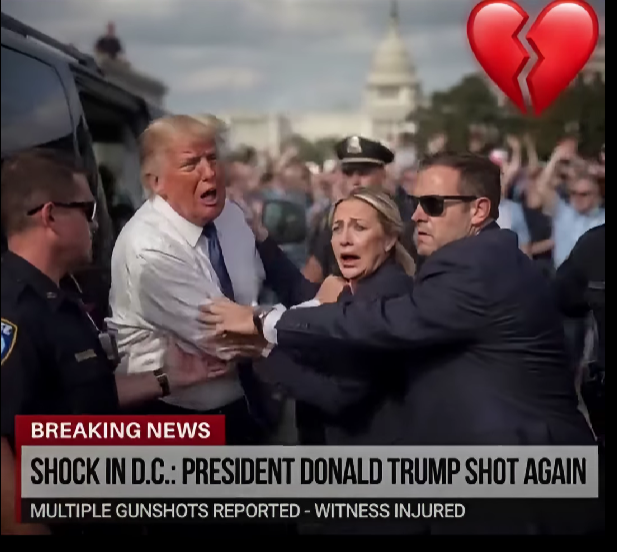
Social media users were sent into a frenzy today after a shocking rumor began spreading across multiple platforms claiming that former U.S. President Donald Trump had been “shot again” in Washington, D.C.
The alarming posts quickly gained traction, generating thousands of shares, comments, and reactions within a short period of time. Many users expressed concern, while others rushed to search for confirmation from news outlets and official sources.
However, despite the widespread panic created by the claim, the story turned out to be completely false.
As the rumor continued to spread, journalists, fact-checkers, and media organizations moved quickly to investigate the reports. Within hours, it became clear that there was no credible evidence whatsoever to support the claim that Trump had been involved in a new shooting incident.
No law enforcement agencies reported such an event. No government officials issued statements regarding an attack. Major news organizations, which would normally provide immediate coverage of any serious incident involving a former U.S. president, had nothing to report because no such event had taken place.
The lack of verified information became one of the strongest indicators that the viral claim was nothing more than misinformation.
Despite this, the rumor continued to circulate online, demonstrating just how quickly false information can travel in today’s digital environment.
According to analysts who tracked the posts, the story appears to have originated from unverified social media accounts. From there, it spread rapidly through reposts, screenshots, edited videos, and misleading captions designed to make the claim appear legitimate.
Some users shared old footage and unrelated videos while falsely presenting them as evidence of a breaking news event. Others reposted dramatic headlines without checking whether any reputable source had confirmed the information.
The result was a wave of confusion that reached millions of people before the rumor could be properly debunked.
Part of the reason the false claim gained traction so quickly may be linked to real events from the past.
Many of the viral posts referenced or indirectly alluded to the assassination attempt that injured Trump during a campaign rally in Butler, Pennsylvania, in 2024. That incident generated enormous media coverage and remains fresh in the minds of many Americans.
Because the event was so significant, misinformation campaigns frequently reuse footage, images, and references connected to it in order to create the appearance of new developments.
Experts say this tactic is increasingly common.
By combining old content with sensational claims, creators of misinformation can make false stories appear believable enough to spread before people take the time to verify them.
Digital media researchers have repeatedly warned that high-profile political figures are among the most common targets of online misinformation campaigns.
Stories involving violence, public safety, or national leaders tend to trigger strong emotional responses. When people experience shock, fear, or outrage, they are often more likely to share content immediately rather than pause to verify its accuracy.
This creates ideal conditions for rumors to spread at an extraordinary speed.
In some cases, false claims can accumulate millions of views before fact-checkers and legitimate news organizations have an opportunity to respond.
Media experts argue that this reflects one of the biggest challenges facing modern communication.
While information has never been more accessible, misinformation has also become easier than ever to distribute.
A single misleading post can travel across multiple platforms within minutes, reaching audiences around the world before any formal verification takes place.
The incident serves as another example of why experts continue to emphasize the importance of relying on trusted sources when major news breaks.
Established news organizations, official government statements, and law enforcement agencies remain the most reliable methods for confirming reports involving public figures and matters of public safety.
Without confirmation from those sources, dramatic claims should be treated with caution regardless of how widely they are being shared.
Authorities also point out that false reports involving violence can have real-world consequences.
Beyond causing unnecessary anxiety, viral misinformation can contribute to political tension, overwhelm public discussion, and reduce trust in legitimate reporting.
False claims can also create confusion during genuine emergencies, making it more difficult for the public to distinguish between verified information and fabricated stories.
As online platforms continue to evolve, experts believe media literacy is becoming increasingly important.
Users are encouraged to verify information before reposting it, check whether multiple reputable outlets are reporting the same story, and remain skeptical of sensational claims that appear without credible evidence.
In this case, those basic verification steps would have revealed the truth almost immediately.
As of now, all verified information confirms that Donald Trump has not been shot again in Washington, D.C., or anywhere else.
The viral claim that spread across social media today was entirely unsupported by credible evidence and has been debunked by fact-checkers and trusted sources.
While the rumor may eventually fade, the episode offers an important reminder about the realities of the modern information age.
In a world where a single post can reach millions of people in minutes, the ability to separate fact from fiction has become more important than ever.
And as today’s events demonstrated, sometimes the biggest story is not the rumor itself, but how quickly people are willing to believe it before the facts are known.






Leave a Reply