
Justice Clarence Thomas doesn’t say much during oral arguments before the U.S. Supreme Court. He’s also got a calm demeanor and a hearty laugh.
He knows the Constitution like the back of his hand. So when a decision is made that seems injurious to the nation’s founding document, he responds like a parent trying to protect a child.
Thomas took other justices to task on Tuesday after a majority of the court refused to hear a lawsuit brought by Florida against Washington and California:
Justice Clarence Thomas accused California and Washington of undermining federal immigration and trucking safety standards after a deadly Florida highway crash, blasting the Supreme Court on Tuesday for refusing to hear a case Florida had “nowhere else to bring. ”
Florida alleged the two blue states improperly issued commercial driver’s licenses to illegal immigrants in violation of federal standards requiring English proficiency and lawful immigration status for certain commercial drivers, arguing the policies created a public safety threat on American roads
Thomas, joined by Justice Samuel Alito, said the Supreme Court had a constitutional obligation to hear the dispute because lawsuits between states can only be brought before the high court.
“If this Court does not exercise jurisdiction over a controversy between two States, then the complaining State has no judicial forum in which to seek relief,” Thomas wrote.
There’s only one court in the country that can hear lawsuits between states, and that’s the Supreme Court
Thomas argued that Florida’s allegations against Washington and California were serious because failing to follow federal commercial licensing laws can create dangerous road conditions and, he said, has contributed to deadly crashes.
Thomas pointed to the fatal Florida highway crash involving truck driver Harjinder Singh, who he said “could not read the road signs,” and argued Florida deserved a chance to pursue its claims
People in the country illegally who can’t read road signs in English can’t be allowed to drive 80,000-pound tractor-trailers on American highways, he said.
“Federal law and regulations prohibit States from providing commercial driver’s licenses to applicants unless they pass a driver’s test, sufficiently understand the English language, and show appropriate immigration status,” Thomas noted.
Thomas wrote that while the court may exercise discretion when deciding whether to hear ordinary appeals, disputes between states stand on different constitutional footing
“We have no more right to decline the exercise of jurisdiction which is given, than to usurp that which is not given,” Thomas wrote.
He’s right, of course. Florida now has no other recourse to pursue legal claims for the deaths of three of its residents. So not only were those deaths in vain, the two blue states who issued the Indian trucker a license get off scot-free.
It’s an outrageous development; Thomas and Alito are right to be upset about it
More than that, we have seven justices who think it’s okay to ignore a basic function of the high court: Settling disputes between states.
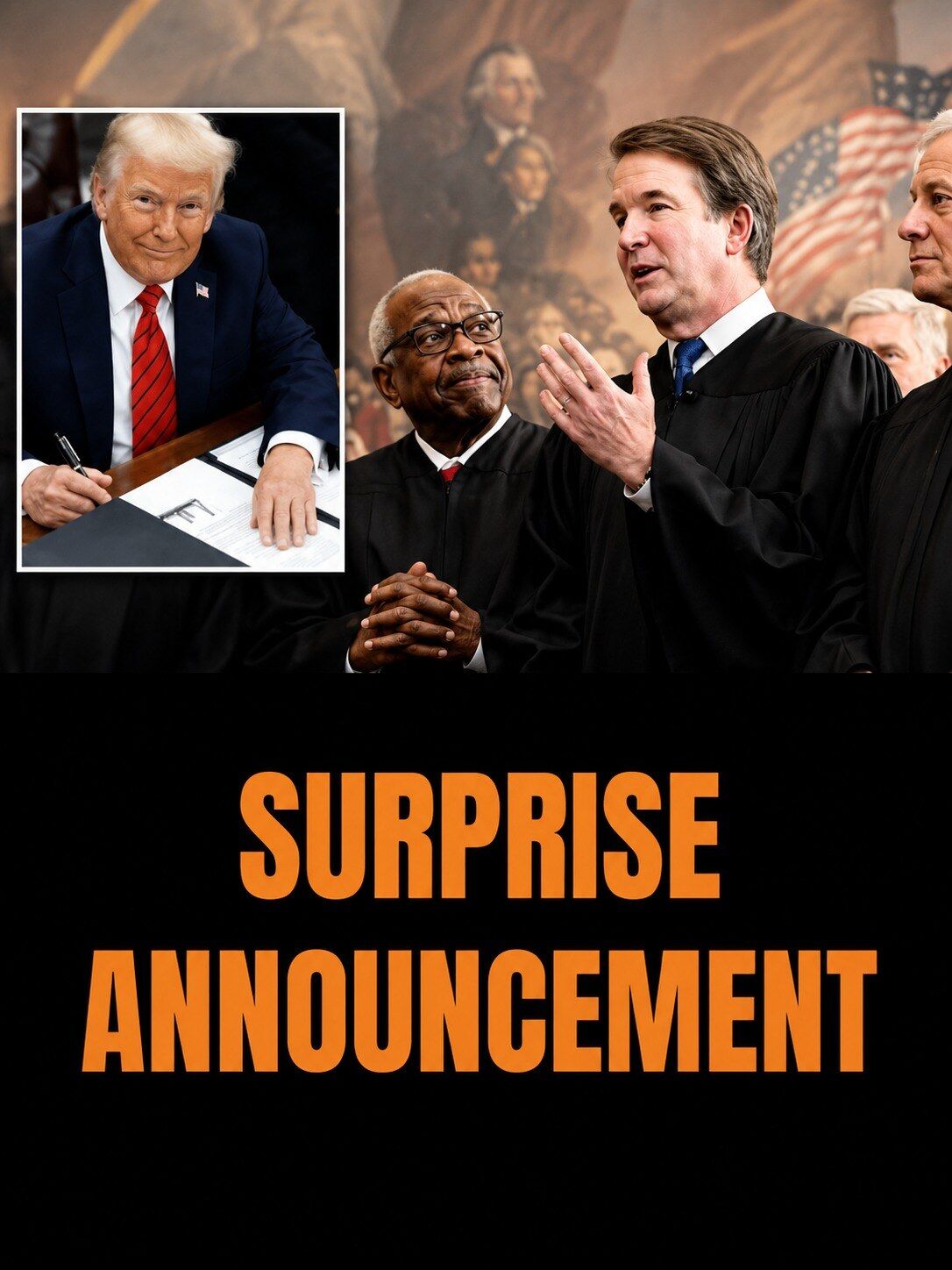
A rare and sharply worded dissent from Supreme Court Justice Clarence Thomas is drawing national attention after he accused the nation’s highest court of refusing to perform what he views as one of its most fundamental constitutional responsibilities.
Thomas, who is often known for his reserved presence during oral arguments and measured public demeanor, did not hide his frustration when the Supreme Court declined to hear a lawsuit brought by the state of Florida against California and Washington.
The dispute centered on allegations that California and Washington issued commercial driver’s licenses in ways that Florida claims conflicted with federal standards governing commercial truck drivers. According to Florida’s argument, those policies created serious public safety concerns and may have contributed to dangerous conditions on American highways.
What has made the story particularly notable is not simply the underlying dispute, but Thomas’s argument that the Supreme Court had a constitutional obligation to hear the case in the first place.
In a dissent joined by Justice Samuel Alito, Thomas argued that disputes between states occupy a unique position under the Constitution because only the Supreme Court can hear them.
“If this Court does not exercise jurisdiction over a controversy between two States, then the complaining State has no judicial forum in which to seek relief,” Thomas wrote.
His statement quickly became the focal point of legal and political discussions.
At the heart of the disagreement is a constitutional question that extends far beyond the specifics of commercial trucking regulations.
Thomas’s argument is based on the idea that when one state sues another, there is no lower federal court available to resolve the dispute. Because of that unique circumstance, he contends the Supreme Court serves as the only possible venue for such cases.
From his perspective, declining to hear the case effectively leaves Florida without a legal path forward.
The underlying lawsuit itself involves allegations related to commercial driver’s licenses and federal regulations governing truck drivers.
Florida argued that federal laws require commercial driver’s license applicants to meet specific standards, including demonstrating sufficient English-language proficiency and satisfying applicable immigration requirements.
According to Florida, failure to properly enforce those standards can create risks on public roads and highways.
Thomas pointed to a fatal Florida highway crash involving a commercial truck driver as an example of why the allegations deserved judicial review.
In his dissent, he argued that Florida had raised significant concerns involving public safety and federal regulatory compliance.
Supporters of Thomas’s position say the issue goes beyond politics and centers on whether states should be able to seek legal remedies when they believe another state is violating federal law.
They argue that if the Supreme Court declines to hear such disputes, states may have no effective mechanism for resolving conflicts involving interstate legal disagreements.
Critics, however, note that the Supreme Court has long exercised discretion regarding which cases it chooses to hear, even in matters involving state governments.
The Court receives thousands of requests annually and accepts only a small percentage of them for full review.
In many instances, the justices decline to hear cases without providing detailed explanations.
Because the majority did not issue a lengthy opinion explaining its decision, public attention has largely focused on Thomas’s dissent and the broader constitutional questions it raises.
The situation has also sparked renewed discussion about the role of the Supreme Court itself.
For some observers, the controversy highlights competing views regarding how actively the Court should involve itself in disputes involving state governments.
Should the Court hear every interstate dispute presented to it?
Or should the justices maintain flexibility to determine which cases warrant review?
Those questions have become increasingly important as political and legal conflicts between states have grown more common in recent years.
Disagreements over immigration, environmental regulations, public health policies, voting laws, education standards, and transportation issues have repeatedly produced lawsuits involving multiple states.
As a result, questions surrounding the Court’s jurisdiction and responsibilities continue attracting significant attention from legal scholars and policymakers.
Thomas’s dissent stands out partly because of his reputation on the Court.
While he is one of the longest-serving justices currently sitting on the Supreme Court, he is often viewed as one of its quieter members during oral arguments.
Yet his written opinions frequently reveal strong convictions regarding constitutional interpretation and the separation of governmental powers.
In this case, his frustration was unmistakable.
He argued that disputes between states deserve special treatment because of their constitutional significance and because alternative judicial forums do not exist.
That concern formed the foundation of his disagreement with the majority’s decision.
The broader public reaction has been predictably divided.
Supporters of stricter immigration enforcement and stronger federal regulatory compliance have praised Thomas’s position, arguing that the allegations deserved a full hearing before the Court.
Others have focused less on the substance of Florida’s claims and more on the procedural question of whether the Supreme Court must hear every dispute brought by one state against another.
Regardless of where individuals fall politically, the dissent has succeeded in drawing attention to an issue many Americans rarely consider: the unique role the Supreme Court plays in resolving conflicts between states.
For now, the Court’s decision means the case will not proceed before the justices.
But Thomas’s dissent ensures that the debate surrounding the Court’s constitutional responsibilities is likely far from over.
As legal experts continue analyzing the implications of the decision, one thing remains clear: a disagreement that began over commercial driver’s licenses has evolved into a much larger conversation about constitutional authority, judicial responsibility, and the role of the Supreme Court in America’s federal system.
And thanks to Thomas’s unusually forceful response, that conversation is now unfolding on a national stage.










Leave a Reply