
Discovering a snake inside your house can be frightening, especially if you have no idea how it got there or whether it’s dangerous. While it may feel shocking, snakes usually enter homes for very practical reasons rather than aggression. They are often searching for food, shelter, or a safe place to escape harsh weather conditions. Homes with rodents, insects, cluttered storage areas, basements, or warm hidden spaces can accidentally become attractive hiding spots for snakes looking to survive. During heavy rain or flooding, snakes may also be forced out of their natural habitats and wander indoors while searching for dry ground.
Even though many snakes are harmless and non-venomous, it is always safest to treat any unknown snake with caution. Trying to identify a species from a distance can be difficult, and many snake bites happen when people attempt to catch or remove them on their own. If you ever encounter a snake inside your home, the most important thing is to remain calm and avoid sudden movements. Keep your distance, isolate the area if possible by closing the door, and make sure children and pets stay far away from the animal until professionals arrive.
Experts strongly recommend contacting local animal control or wildlife rescue services instead of attempting any kind of do-it-yourself removal. Trained professionals know how to safely capture and relocate snakes without harming either the animal or the people inside the home. Prevention is also extremely important when it comes to reducing future encounters. Sealing gaps under doors, repairing cracks in walls, clearing clutter, controlling rodent problems, and maintaining your yard by trimming tall grass and removing debris can make your property far less attractive to snakes searching for shelter or food.
In many cultures around the world, a snake entering a home is believed to carry symbolic meaning, often connected to transformation, warnings, protection, or major life changes. While these beliefs vary widely, the most important thing in any real-life encounter is safety and calm decision-making. A snake in your house may feel terrifying at first, but understanding why it happens and knowing how to respond properly can turn a frightening experience into a manageable situation. With awareness, prevention, and the right help, you can protect both your family and the wildlife around you
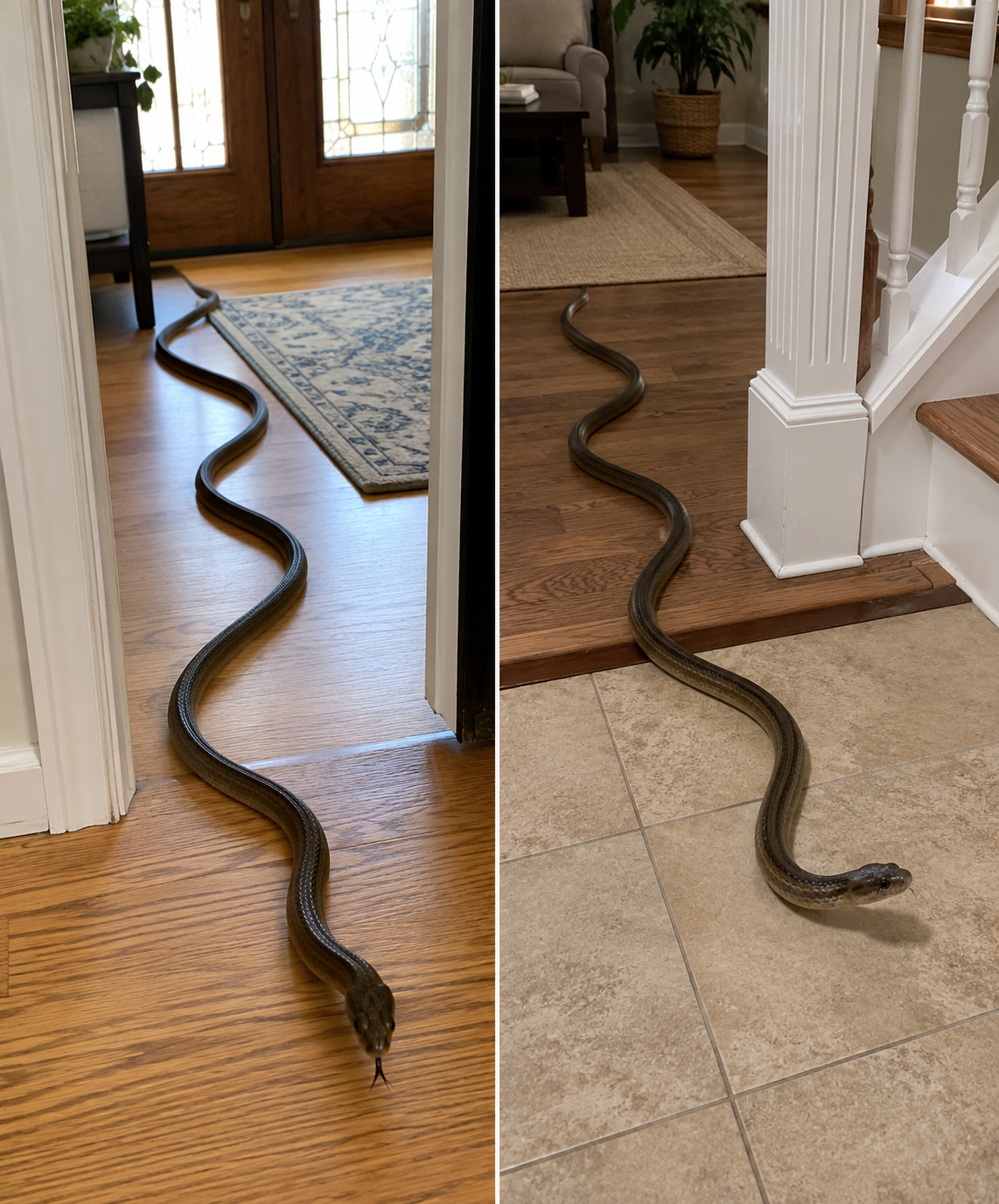
For most people, there are few things more unsettling than spotting a snake slithering across the floor of their own home. What begins as an ordinary day can instantly turn into a moment of panic when a long, unexpected visitor appears from under furniture, behind appliances, or even in the middle of a hallway.
One family recently experienced exactly that nightmare after discovering a snake moving through their house, leaving them stunned and scrambling for answers. While many people immediately assume a snake has entered a home with aggressive intentions, wildlife experts say the reality is usually much less dramatic.
According to specialists, snakes rarely enter homes because they want to interact with humans. Instead, they are often driven by basic survival instincts. Food, shelter, warmth, and protection from harsh weather are among the most common reasons a snake may find itself inside a residential property.
The discovery quickly sparked conversation online, with thousands of people sharing stories of their own encounters with unexpected wildlife inside their homes. Some recalled finding snakes curled up in garages, basements, and attics, while others described seeing them emerge from storage rooms, laundry areas, and even bathrooms.
Although the idea of a snake roaming freely indoors can sound terrifying, experts stress that these reptiles are usually just looking for a safe place to hide.
One major factor that attracts snakes is the presence of food sources. Homes with rodent problems can unintentionally become appealing destinations because mice and rats are a primary food source for many snake species. If a snake detects prey nearby, it may stay longer than homeowners realize.
Clutter can also play a surprisingly large role. Piles of boxes, stored materials, unused furniture, and dark corners provide ideal hiding places where snakes can remain undetected for extended periods. Basements, crawl spaces, and garages are particularly attractive because they often offer shelter, protection, and stable temperatures.
Weather conditions can create another pathway into homes. During periods of heavy rain, flooding, or extreme heat, snakes may be forced from their natural habitats. As they search for dry ground or cooler environments, they can accidentally find their way through small openings around doors, foundations, vents, or utility lines.
The shocking nature of these encounters often leads people to react emotionally, but wildlife professionals repeatedly emphasize the importance of staying calm.
Panic can increase the risk of injury for both humans and the animal. Sudden movements may cause a snake to become defensive, especially if it feels trapped or threatened. Experts recommend maintaining a safe distance and avoiding any attempt to touch, corner, or capture the snake.
Identifying a snake species from several feet away is not always easy. Many harmless species can resemble venomous ones, and mistakes in identification can have serious consequences. This uncertainty is one of the main reasons authorities advise treating any unknown snake with caution.
A significant number of snake bites occur when people attempt do-it-yourself removal methods. Believing a snake is harmless can create a false sense of confidence, leading individuals to take unnecessary risks. Even non-venomous snakes can bite when frightened.
Instead, professionals suggest isolating the area whenever possible. Closing doors, keeping children away, and ensuring pets remain at a safe distance can reduce the chances of a dangerous interaction while help is being arranged.
Wildlife rescue teams and animal control officers are trained to handle these situations safely. Their experience allows them to capture and relocate snakes without harming the animal or endangering homeowners. In many cases, what appears to be a frightening emergency can be resolved quickly by someone with the proper equipment and knowledge.
The incident has also renewed discussion about prevention. Experts say that reducing the chances of a future encounter often starts outside the home.
Small gaps beneath doors, cracks in foundations, damaged vents, and openings around pipes can act as entry points. Sealing these areas can significantly reduce the likelihood of snakes finding their way indoors.
Yard maintenance is another important factor. Tall grass, overgrown vegetation, wood piles, and scattered debris create hiding places that can attract both snakes and the rodents they hunt. Keeping outdoor areas tidy removes many of the conditions that make a property attractive to wildlife.
Controlling rodent populations can also make a substantial difference. Without a reliable food source, snakes are less likely to remain near homes or attempt to enter them.
Interestingly, not everyone views a snake entering a house purely as a negative event. Across different cultures around the world, snakes have long carried symbolic meanings. Some traditions associate them with transformation and renewal, while others see them as warnings, protectors, or signs of major life changes.
These beliefs vary widely depending on the region and cultural background, but they continue to fascinate people whenever unusual wildlife encounters occur.
Despite the symbolism and mystery often attached to snakes, experts insist that safety should always remain the top priority in any real-life situation.
A snake unexpectedly appearing inside a home can trigger fear, confusion, and countless questions. How did it get inside? Is it dangerous? Could there be more? While these concerns are understandable, understanding the reasons behind such encounters can make them far less overwhelming.
In most cases, the snake is not there to cause harm. It is simply following instincts that have helped its species survive for millions of years. Whether searching for food, escaping bad weather, or seeking shelter, the animal is usually trying to meet its own basic needs rather than confront humans.
What may seem like a scene from a horror movie often has a surprisingly simple explanation. And with the right response—remaining calm, contacting professionals, and taking preventive measures afterward—a frightening discovery can become a manageable situation.
For homeowners, awareness is the most powerful tool. Knowing why snakes enter homes, understanding how to react, and taking steps to prevent future visits can help protect both families and wildlife alike.











Leave a Reply