
Elkhart County Multi-Vehicle Crash Shuts Down U.S. 20: Lessons from Large-Scale Highway Accidents
Elkhart County, Indiana — A serious multi-vehicle crash shut down a stretch of U.S. 20 in Elkhart County on Wednesday morning, leaving two drivers injured and prompting a large-scale emergency response. Authorities confirmed that the highway has since reopened, but the incident highlights the dangers of chain-reaction crashes and the complex challenges first responders face when they occur.

The Crash on U.S. 20
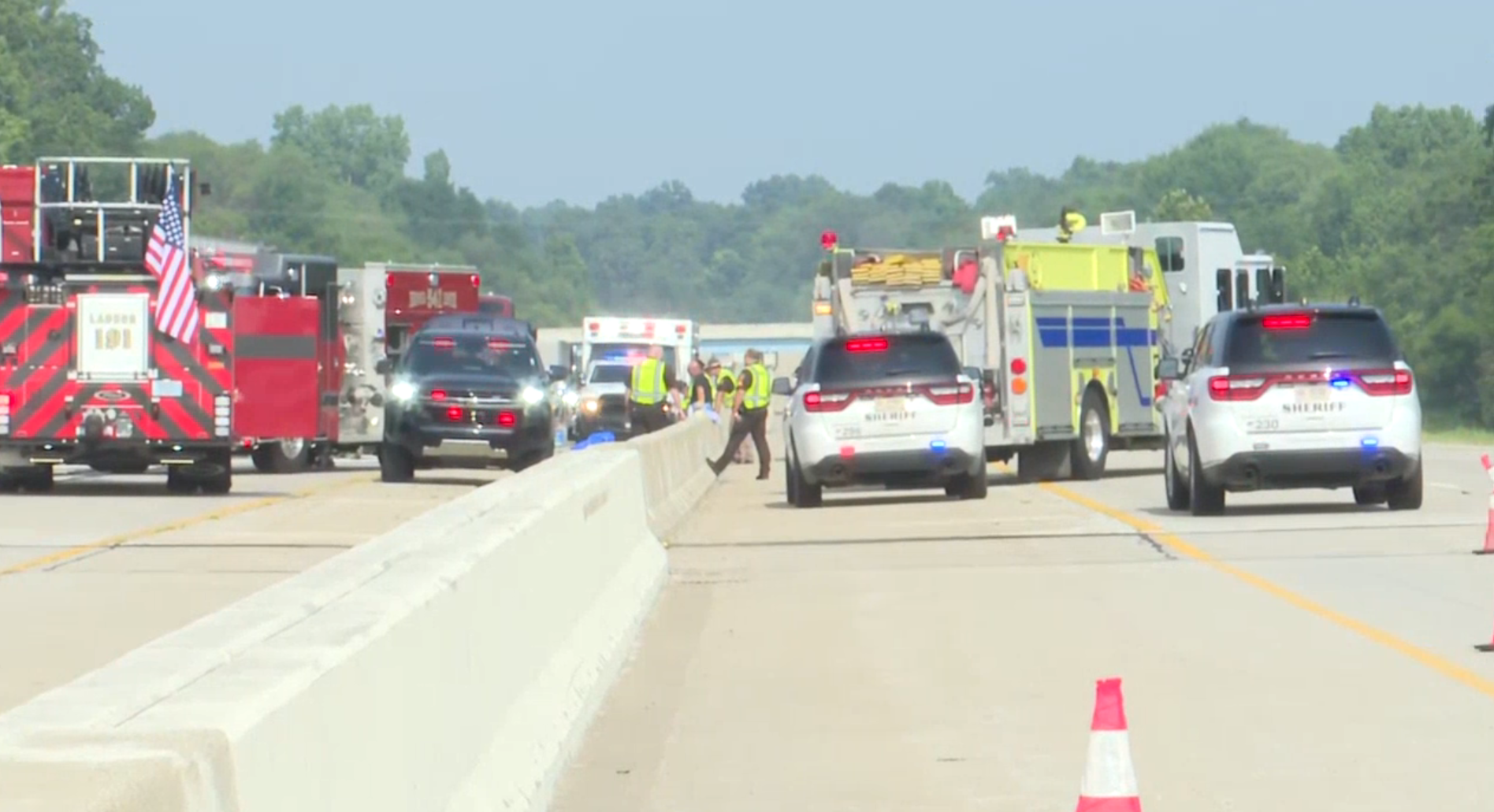
The crash happened just after 8 a.m. in the eastbound lanes of U.S. 20 between County Roads 7 and 9, near the U.S. 33 exit. According to officials, the accident involved two semis, a car, and a jeep.
Investigators say the crash began when an eastbound semi approached traffic that had slowed for construction. The driver attempted to stop but reported that his brakes failed. The truck struck a car, which was pushed into a jeep, before the semi veered off the road and then swerved back into traffic, colliding with another semi.
The impact left debris scattered across the highway and forced a complete closure for several hours. Fuel spilled onto the roadway, requiring the HazMat team to secure the scene before cleanup could begin.

Injuries Reported
Authorities confirmed that the drivers of the car and the jeep were injured. One suffered lacerations and head pain, while the other sustained neck and head injuries. Fortunately, both were wearing seat belts, which officials say helped prevent more serious outcomes.
The drivers of the semis were not seriously injured.
Investigation Underway
The Elkhart County Sheriff’s Department is leading the investigation. While brake failure has been cited as the initial cause, officials are also reviewing road conditions, traffic patterns near the construction zone, and other potential contributing factors.
Officials emphasized that mechanical failures such as brake issues underscore the importance of regular vehicle inspections—particularly for large trucks traveling at highway speeds.

Why Multi-Vehicle Crashes Are So Dangerous
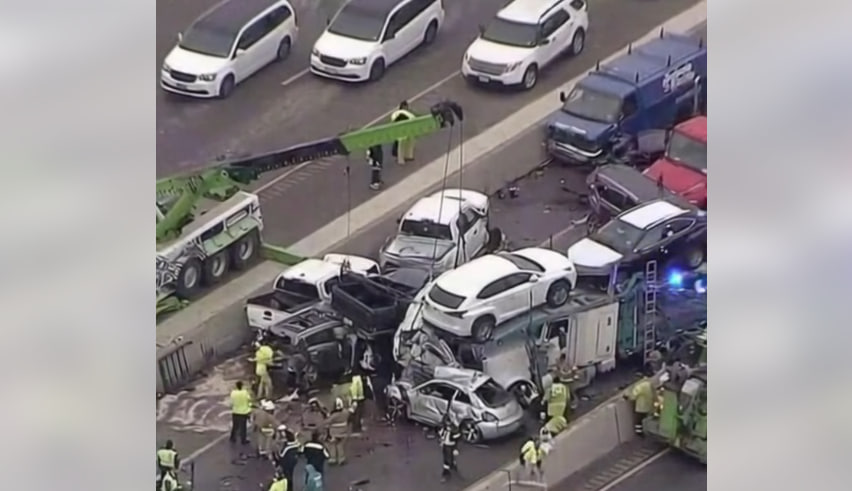
While this crash involved four vehicles, large-scale pileups can include dozens or even hundreds of cars. Such accidents often occur when:
- Traffic suddenly slows or stops.
- Drivers follow too closely.
- Weather reduces visibility or road traction.
- Distractions delay reaction times.
Once one collision occurs, subsequent drivers may have little time or space to avoid crashing, creating a chain reaction. These incidents can span long stretches of roadway and cause significant injury and property damage.
Challenges for First Responders
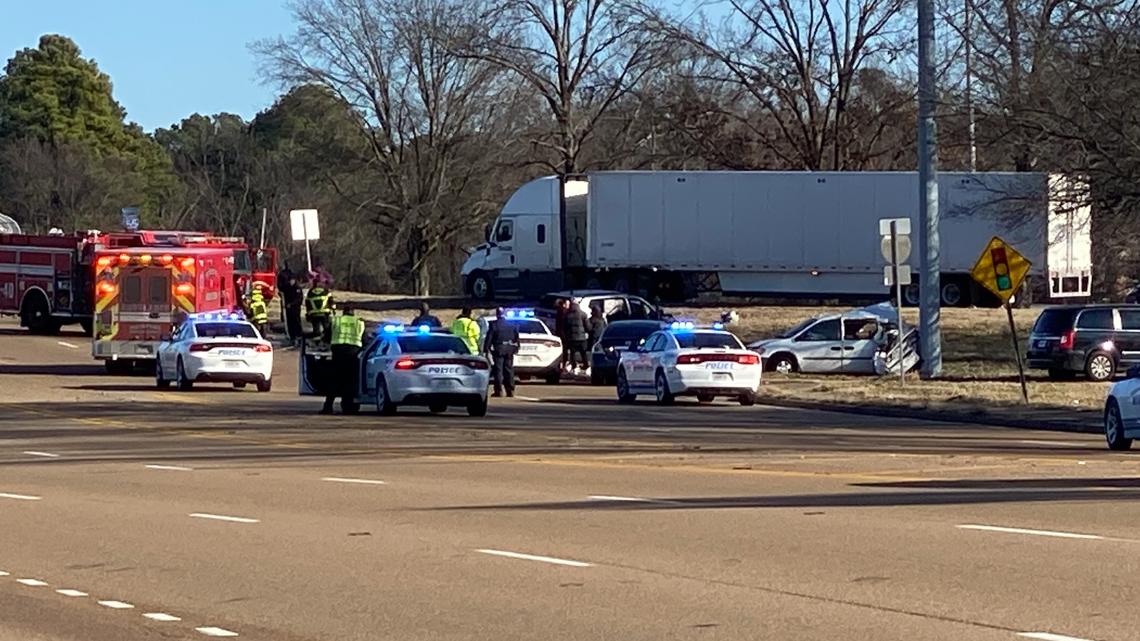
Multi-vehicle crashes are among the most dangerous situations for police, firefighters, and emergency medical personnel. Responders must manage:
- Hazards from fuel spills or fires
- Unstable vehicles and trapped occupants
- Downed power lines or hazardous cargo
- Panicked or wandering civilians
According to the U.S. Fire Administration, roadway incidents are the second leading cause of firefighter fatalities, underscoring the risk that responders face in these environments.
Phases of Emergency Response
Large crashes require careful coordination between multiple agencies. Officials often describe the response in phases:
- Initial Response — First crews size up the scene, identify hazards, and begin triage of victims.
- Secondary Response — Unified command is established with police, fire, EMS, and other agencies. Injured victims are treated and transported.
- On-Scene Cooperation — Tow services, utility companies, and highway departments are brought in to secure and clear the site.
- Command Response — Leadership assigns teams and resources to manage extended operations.
- Rescue Tasks — Crews carefully access trapped victims while managing the dangers of unstable vehicles and equipment.
- Hazard Suppression — HazMat teams and firefighters contain fuel spills, fires, or other threats.
These stages illustrate how complex such incidents can be and why responders need extensive training and interagency cooperation.
Key Safety Takeaways for Drivers
While accidents are sometimes unavoidable, drivers can take steps to reduce their risk:
- Maintain a safe following distance, especially at highway speeds.
- Slow down in construction zones.
- Keep vehicles well-maintained, with regular brake and tire checks.
- Avoid distractions such as texting or eating while driving.
- Stay alert for sudden stops, weather changes, or debris on the road.

Conclusion
The crash in Elkhart County along U.S. 20 may have been cleared within a matter of hours, but the reality is that incidents like this don’t simply end when the wreckage is removed and traffic begins to flow again. What remains is far more complex—an ongoing investigation, unanswered questions, and the lasting impact on those who experienced it firsthand. The physical signs of the حادث may disappear quickly, but the psychological and emotional echoes often linger much longer, shaping how people think about safety, risk, and the simple act of getting from one place to another.
For the drivers who were caught in the middle of it, the crash was more than just a temporary disruption. It was a moment of sudden fear, a reminder of how quickly control can be lost on the road. One minute, everything feels routine—cars moving steadily, familiar surroundings, a predictable journey ahead. The next, everything changes. Screeching brakes pierce the air. Vehicles slow abruptly or collide. Confusion spreads in seconds. For some, it’s the shock of impact. For others, it’s the chilling realization of how close they came to something far worse.
Even for those who walked away without physical injuries, the emotional impact can be profound. The mind replays the moment over and over again, trying to process what happened and how quickly it unfolded. The ordinary suddenly feels fragile. A daily commute becomes something to approach with caution rather than routine confidence.
For some individuals, it may take days or even weeks to feel comfortable driving again. Others may develop a heightened awareness every time they approach a busy highway or a crowded intersection. The memory of that moment—how quickly normal turned into chaos—becomes something they carry with them, shaping their behavior and perception long after the road has been cleared.
This is the hidden aftermath of many crashes—the part that isn’t always visible, but is deeply felt.
At the same time, for first responders, incidents like this are part of a reality that is both routine and extraordinary. Police officers, firefighters, paramedics, and emergency crews are trained to handle high-pressure situations, but no two crashes are ever exactly the same. Each incident brings its own set of challenges, its own level of urgency, and its own human stories.
Large-scale highway incidents, in particular, require a level of coordination that goes beyond individual response. Multiple agencies must work together seamlessly. Communication must be clear, fast, and accurate. Decisions must be made in seconds, often with incomplete information. There is no room for hesitation when lives may be at stake.
Arriving at a chaotic scene, responders must immediately assess the situation—identifying injuries, prioritizing care, securing the area, managing traffic flow, and preventing further collisions. It’s a delicate balance between urgency and control. Acting too slowly can cost lives, but acting without coordination can create additional risks.
Every movement matters.
Every decision carries weight.
And every second can make a difference.
Yet behind the professionalism and efficiency, there is also a deeply human side to this work. These responders are not just trained professionals—they are people who repeatedly witness the aftermath of sudden, often traumatic events. They see fear in people’s eyes. They hear the panic in voices. They experience the intensity of moments that others may only encounter once in a lifetime.
Over time, that exposure can take a toll.
The emotional weight of these experiences doesn’t simply disappear at the end of a shift. It accumulates, quietly, beneath the surface. And yet, despite this, they continue to show up. They continue to respond. They continue to put themselves in unpredictable and often dangerous situations to help others.
Their role is not just to react—it is to restore order in moments of chaos.
As the investigation into the Elkhart County crash continues, authorities will work to determine exactly what led to the incident. This process is often detailed and methodical, involving the analysis of physical evidence, witness statements, traffic patterns, and environmental conditions.
Was it a momentary lapse in attention?
A mechanical failure that went unnoticed?
Road conditions that created unexpected hazards?
Weather factors that reduced visibility or traction?
Or perhaps a combination of several elements that, together, created the perfect conditions for a crash?
These questions are not just about assigning responsibility—they are about understanding cause and effect. They are about identifying patterns, recognizing risks, and using that knowledge to prevent future incidents.
Because every crash tells a story.
A story about decisions made in seconds.
A story about how small factors can align in ways that lead to significant consequences.
And most importantly, a story that can offer valuable lessons—if we are willing to learn from it.
In recent years, traffic patterns have become increasingly complex. Growing populations, expanding urban areas, and increased reliance on personal vehicles have all contributed to busier roads. Highways that once handled moderate traffic now carry constant streams of vehicles, often moving at high speeds and close distances.
With more vehicles comes greater risk.
More opportunities for distraction.
More chances for misjudgment.
More potential for chain reactions when something goes wrong.
At the same time, environmental factors are becoming less predictable. Sudden changes in weather—heavy rain, fog, snow, or extreme heat—can transform road conditions within minutes. Drivers who are unprepared or unaware may find themselves facing situations they didn’t anticipate.
In this environment, safety cannot be taken for granted.
It must be actively maintained.
And that responsibility is shared.
Drivers play a critical role in this system. Staying alert, maintaining safe following distances, adjusting speed based on conditions, and avoiding distractions such as mobile devices are all essential practices. These may seem like basic principles, but their importance cannot be overstated.
Because often, it’s not the extreme situations that cause accidents—it’s the small lapses in attention.
A glance away from the road.
A delayed reaction.
A misjudged distance.
These moments, though brief, can have lasting consequences.
Technology has introduced new tools designed to enhance safety. Modern vehicles come equipped with features such as automatic emergency braking, lane departure warnings, blind-spot monitoring, and adaptive cruise control. These innovations have the potential to reduce accidents and mitigate their severity.
But they are not a replacement for human awareness.
They are aids, not solutions.
Drivers must still remain engaged, attentive, and responsible.
For first responders and emergency planners, preparation is equally critical. As traffic conditions evolve, so too must response strategies. Training programs, equipment, and coordination systems must be continuously updated to reflect new challenges.
Large-scale incidents require not only immediate response but also long-term planning. This includes improving infrastructure, enhancing communication systems, and developing strategies that allow for faster, safer, and more efficient management of emergencies.
Public awareness is another essential component. Knowing how to behave in the presence of an accident—slowing down, maintaining distance, following instructions from authorities—can significantly reduce the risk of secondary incidents.
Too often, additional crashes occur because drivers fail to adjust their behavior when approaching an existing حادث scene.
Simple actions can make a difference.
Caution can prevent escalation.
Awareness can save lives.
Crashes like the one in Elkhart County serve as powerful reminders that the road is an unpredictable environment. It is a space where routine and risk exist side by side, where familiarity can create a false sense of security, and where conditions can change in an instant.
But beyond the immediate impact, these incidents highlight something deeper.
The importance of vigilance.
The value of preparation.
And the necessity of cooperation.
Because road safety is not just an individual responsibility—it is a collective one. Every driver, every responder, and every decision contributes to a larger system. A system where actions are interconnected, and where one moment of caution can prevent a chain reaction.
Where one responsible choice can protect not just a single life, but many.
As traffic continues to grow and conditions continue to evolve, these lessons become increasingly important. The goal is not only to respond effectively when incidents occur, but to reduce their likelihood in the first place.
To create an environment where safety is prioritized.
Where risks are understood and minimized.
And where awareness becomes a shared value.
The Elkhart County crash may have been resolved on the surface, but its impact extends far beyond the physical scene. It leaves behind questions that demand answers, reflections that shape behavior, and a renewed understanding of what it means to navigate the road responsibly.
And perhaps that is where its true significance lies.
Not just in what happened—but in what it reveals.
Because every journey begins with the expectation of arrival.
And every effort we make toward safety—no matter how small—brings us one step closer to ensuring that expectation becomes reality.










Leave a Reply