
The first explosions shattered more than buildings. They also shattered the belief that the conflict could still be contained. As jets from the United States and Israel reportedly struck targets in Iran, the world watched a dangerous new chapter unfold.
Inside Tehran, military commanders rushed to assess the situation. Allies across the region reacted cautiously, while global markets immediately felt the shock. One question quickly spread across governments and households alike: would this escalation trigger a wider war?
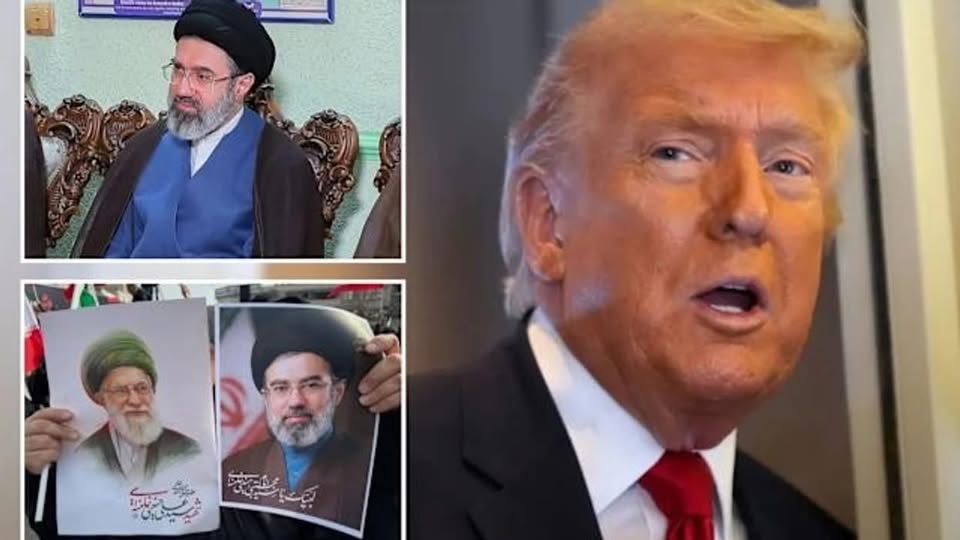
The strikes were carried out as part of an operation reportedly referred to as Operation Epic Fury, which U.S. and Israeli officials described as a large-scale and highly coordinated military effort aimed at weakening Iran’s military infrastructure and nuclear-related capabilities.
According to officials from both nations, the operation focused on strategic sites believed to play a key role in Iran’s defense systems and its broader military development programs. They argued that the targeted locations represented an imminent security threat, stating that the purpose of the strikes was not only to degrade current capabilities but also to prevent potential future attacks and disrupt critical command, control, and defense networks.
In the aftermath, images and videos began circulating across social media platforms and international news outlets, reportedly showing significant damage to military compounds, radar stations, and air-defense installations. Some footage appeared to depict destroyed or heavily damaged structures, fueling global debate over the scale and effectiveness of the operation. At the same time, Iranian state media presented a different account of events, claiming that several incoming missiles had been successfully intercepted and that damage on the ground was limited compared to what foreign reports suggested.
Iranian officials responded with strong and uncompromising rhetoric, condemning the strikes and warning of what they described as “devastating revenge.” These statements significantly heightened regional tensions and raised widespread concerns that the situation could escalate beyond a limited exchange into a broader and more sustained conflict involving multiple actors in the region.
Meanwhile, behind the scenes, a wave of urgent diplomatic activity began to unfold across multiple regions, as governments in Europe, the Middle East, and beyond moved quickly to activate backchannel communications in an effort to contain the rapidly developing crisis. Senior diplomats, foreign ministers, and special envoys reportedly engaged in continuous discussions, both publicly and privately, attempting to reduce tensions and prevent any further military escalation.
International leaders issued coordinated appeals for calm, emphasizing the importance of restraint and dialogue at such a sensitive moment. Foreign ministries from several influential countries warned that any additional strikes or retaliatory actions could significantly worsen an already fragile security environment in the Middle East. They stressed that the region was at risk of sliding into a broader conflict that could extend beyond the immediate parties involved.
At the same time, there were growing concerns among global policymakers and security analysts that continued escalation could have far-reaching geopolitical consequences, potentially disrupting global energy markets, trade routes, and diplomatic relations across multiple continents. Some officials reportedly pushed for emergency multilateral talks, while others called for immediate de-escalation measures and confidence-building steps to prevent miscalculation or unintended expansion of the conflict.
At the same time, there were growing concerns among global policymakers and security analysts that continued escalation could have far-reaching geopolitical consequences, potentially disrupting global energy markets, trade routes, and diplomatic relations across multiple continents. What initially appeared to some as a contained and manageable development was increasingly being reassessed through a far broader and more complex lens, as the interconnected nature of the modern global system meant that even localized instability had the potential to trigger cascading effects far beyond its immediate region.
Within governmental circles, particularly in major economic and political powers, there was a noticeable shift in tone. Discussions that had once focused on monitoring the situation began to evolve into urgent deliberations about containment strategies, risk mitigation, and the prevention of unintended spillover. Officials and advisors reportedly emphasized that in an era defined by interdependence—where energy supply chains, maritime logistics, and financial systems are tightly woven together—no regional escalation could truly remain isolated for long.
Energy markets were among the most immediate points of concern. Analysts warned that even the perception of instability in key production or transit regions could lead to volatility in oil and gas prices, affecting economies that were not directly involved in the conflict. The fear was not only about physical disruption of supply, but also about market psychology—how traders, investors, and institutions might react to uncertainty. Historically, such reactions have often amplified the real-world impact of geopolitical events, creating price shocks that ripple through transportation costs, manufacturing, and consumer inflation on a global scale.
At the same time, attention was drawn to the vulnerability of global trade routes, particularly maritime corridors that serve as essential arteries for international commerce. Security experts highlighted that a disruption in even one strategic chokepoint could lead to rerouting of shipping lanes, increased insurance premiums, and significant delays in the delivery of goods. This, in turn, could affect everything from raw materials and industrial components to food supplies and consumer products. The complexity of modern supply chains meant that a disturbance in one region could quickly propagate through multiple industries across different continents.
Diplomatic relations also began to show signs of strain under the pressure of diverging national interests. Some countries advocated for a more assertive stance, emphasizing deterrence and accountability, while others pushed strongly for dialogue and restraint, warning that escalation could close off avenues for peaceful resolution. These differences sometimes created friction within international forums, where consensus became increasingly difficult to achieve. Nevertheless, there remained a shared recognition—at least among many key stakeholders—that preventing further deterioration was a priority that transcended individual political agendas.
In response to these growing tensions, reports indicated that several officials and diplomatic envoys began advocating for the urgent establishment of multilateral talks. The idea behind these proposed discussions was not only to address the immediate flashpoints but also to create structured communication channels that could reduce the risk of misinterpretation or accidental escalation. The logic was rooted in historical precedent: in many previous crises, the absence of direct communication has often contributed to misunderstandings that intensified already fragile situations.
Others, however, argued that dialogue alone might not be sufficient without parallel confidence-building measures. These could include transparency initiatives, de-escalation commitments, or third-party monitoring mechanisms designed to ensure that actions on the ground did not deviate further into instability. The emphasis, in this view, was on creating a framework where trust—however limited—could be gradually rebuilt through verifiable steps rather than relying solely on diplomatic exchanges.
Behind closed doors, strategic assessments reportedly explored multiple possible scenarios, ranging from contained stabilization to broader regional spillover. These assessments often highlighted the unpredictability of escalation dynamics, where small incidents or miscalculations could rapidly alter the trajectory of events. As a result, there was increasing caution among analysts who warned against assuming that current conditions would remain stable without proactive intervention.
Financial institutions and economic observers also began adjusting their forecasts, factoring in potential risks associated with prolonged instability. Currency fluctuations, shifts in investor confidence, and potential disruptions in cross-border capital flows were all considered part of the wider risk landscape. While markets often demonstrate resilience over time, the short-term volatility associated with geopolitical uncertainty was seen as a significant challenge for both developed and emerging economies.
In international policy circles, there was also growing awareness of the humanitarian dimension that could accompany prolonged escalation. Although much of the discourse focused on strategic and economic implications, advisors stressed that any extended instability could also place additional strain on civilian populations, infrastructure, and regional governance systems. This added another layer of urgency to calls for de-escalation, reinforcing the idea that the costs of inaction could extend well beyond political or economic spheres.
Despite differing approaches and priorities, a common thread began to emerge among many stakeholders: the recognition that miscalculation posed one of the greatest risks. In highly tense environments, where signals can be misread and intentions misunderstood, even routine actions can take on unintended significance. This awareness led to repeated calls for caution, restraint, and the establishment of clearer communication channels to reduce ambiguity.
Ultimately, the situation underscored the fragile balance that often exists in global affairs—where economic stability, political decision-making, and security considerations are deeply intertwined. As discussions continued in various international forums and back-channel communications, the overarching objective remained consistent: to prevent escalation from evolving into a broader crisis with systemic global consequences.
Ultimately, the situation underscored the fragile and constantly shifting balance that defines global affairs, where economic stability, political decision-making, military strategy, and security considerations are not isolated domains, but deeply interwoven systems that continuously influence one another in complex and often unpredictable ways. It demonstrated how quickly localized tensions, when amplified through modern communication networks and geopolitical alignments, can evolve into issues of global concern, drawing in actors far beyond the immediate region and forcing rapid reassessments of risk, policy, and long-term strategy.
As discussions continued across international forums, emergency consultations, and discreet back-channel communications, the overarching objective among the majority of global stakeholders remained consistent and urgent: to prevent any further escalation from spiraling into a broader, more destabilizing crisis with systemic consequences for international security and the global economy. Diplomats, envoys, and senior policymakers engaged in continuous dialogue, often working around the clock, attempting to maintain open lines of communication between conflicting parties while simultaneously coordinating positions among allied and partner states.
Behind the scenes, governments reportedly conducted extensive scenario planning, analyzing a wide range of possible outcomes that could emerge depending on how the situation developed in the following hours and days. These assessments included worst-case projections involving sustained military escalation, regional spillover into neighboring states, disruption of critical infrastructure, and potential long-term fragmentation of existing diplomatic frameworks. The emphasis in these discussions was not only on reacting to events as they unfolded, but on anticipating them in advance, in order to reduce the likelihood of miscalculation or unintended escalation.
At the same time, economic institutions and financial analysts began to closely monitor the situation, warning that even the perception of prolonged instability could have immediate consequences for global markets. Energy prices, particularly oil and natural gas, were identified as highly sensitive indicators, capable of reacting sharply to geopolitical uncertainty. Investors and markets, driven not only by tangible disruptions but also by expectations and sentiment, could amplify the impact of events, creating ripple effects that extend into inflation rates, transportation costs, industrial production, and consumer pricing worldwide. This interconnectedness highlighted how modern economic systems are deeply exposed to geopolitical shocks, even when those shocks are geographically distant.
In parallel, security experts and intelligence agencies intensified their monitoring of military movements, communications, and regional alliances, attempting to interpret signals that could indicate either de-escalation or further escalation. Analysts emphasized the inherent uncertainty of such environments, where incomplete information, misinformation, or deliberate strategic ambiguity can significantly increase the risk of misinterpretation. In such conditions, even defensive actions by one side can be perceived as offensive by another, creating a dangerous cycle of reaction and counter-reaction that is difficult to control once it begins.
Within diplomatic circles, there was also growing recognition of the importance of multilateral engagement, particularly through established international institutions and coalition frameworks. While national interests often diverged, there was a shared understanding among many actors that fragmented or unilateral responses could increase confusion and reduce the effectiveness of de-escalation efforts. As a result, efforts were made to synchronize messaging, align diplomatic priorities where possible, and reinforce communication channels that could help prevent misunderstandings from escalating into irreversible decisions.
In addition, several policymakers and international advisors emphasized the need for structured dialogue mechanisms that could remain active even during periods of heightened tension. These mechanisms were viewed as essential tools for crisis management, allowing parties to clarify intentions, communicate red lines, and reduce the likelihood of accidental escalation. The logic behind these proposals was grounded in historical precedent, where many international crises had been stabilized not solely through deterrence, but through sustained communication and negotiated restraint.
At the humanitarian and societal level, there was also growing awareness of the potential indirect consequences of prolonged instability. While much of the immediate focus remained on strategic and economic dimensions, analysts noted that extended conflict or heightened tension could place additional pressure on civilian populations, regional infrastructure, and public services. This broader perspective reinforced the understanding that the costs of escalation are not limited to governments or military actors, but extend deeply into everyday life, affecting livelihoods, mobility, and long-term development.
Despite the complexity of competing interests and perspectives, a unifying concern gradually emerged among many global stakeholders: the recognition that miscalculation posed one of the greatest risks in such a volatile environment. In situations where uncertainty is high and information is incomplete, even minor misunderstandings can escalate rapidly into significant confrontations. This awareness led to repeated calls for caution, restraint, and careful verification of information before actions were taken or statements were issued.
Ultimately, the entire situation served as a powerful reminder of how interconnected and fragile the modern international system has become. Economic networks, political alliances, security frameworks, and communication systems are now so deeply intertwined that disturbances in one area can rapidly influence conditions across the entire global landscape. As diplomatic efforts continued and tensions remained under close observation, the central objective across the international community remained unchanged: to prevent escalation from transforming into a wider, uncontrollable crisis that could have lasting and far-reaching consequences for global stability, prosperity, and peace.










Leave a Reply