
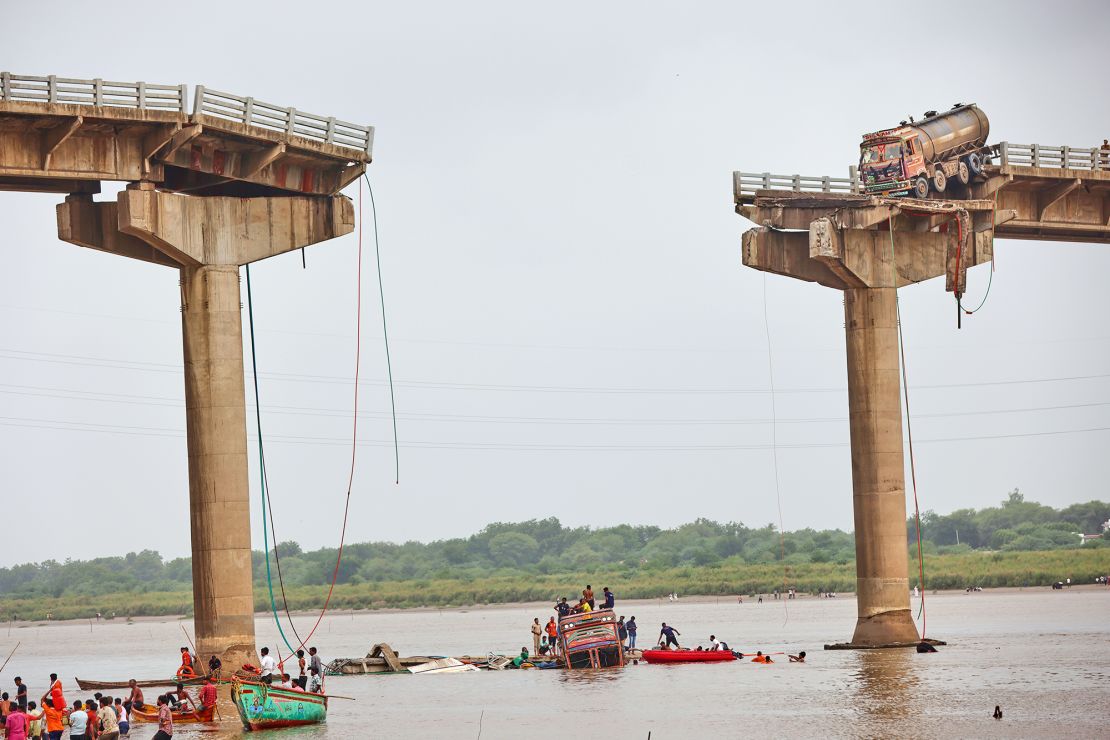
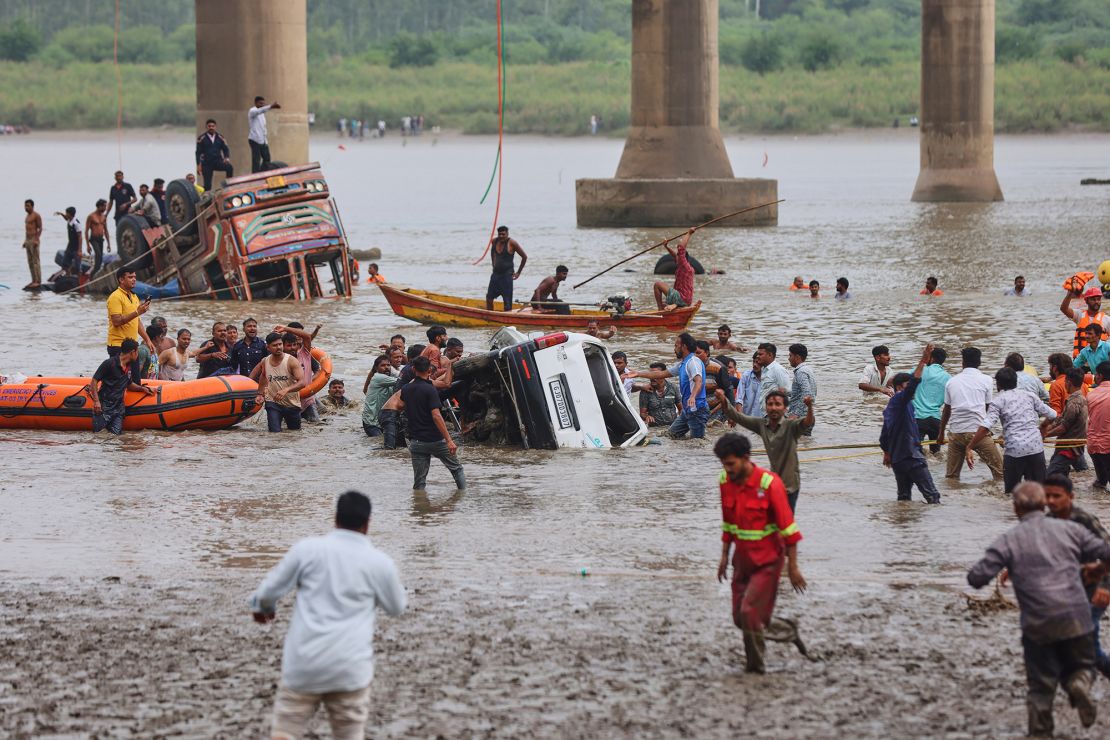
On what began as a typical Wednesday morning in Vadodara, a city in India’s western Gujarat state, life was abruptly upended by a tragedy that could have been avoided. Around 7:30 a.m., as rain continued to fall from days of heavy monsoon activity, a section of a bridge suddenly collapsed. Within seconds, multiple vehicles plummeted into the river below.
Nine lives were lost in that instant.
Bridge Collapse in Gujarat: A Tragedy That Could Have Been Prevented

Health Minister Rushikesh Patel confirmed the collapse occurred while the bridge was occupied by several vehicles. Five people were pulled from the water alive. Emergency crews arrived quickly, but for many, the damage was irreversible. The sorrowful cries of family members at the riverbank echoed across Vadodara as they clutched photos, hoping for miracles amid the debris.
A History of Warnings
Built in 1985, the bridge had been in service for nearly 40 years. While routine use continued uninterrupted, many local residents had raised concerns about its aging structure, especially as monsoon seasons became increasingly intense. According to engineering experts, structures from this era face ongoing stress from modern traffic and extreme weather conditions.
Prime Minister Narendra Modi called the incident “deeply saddening” and extended condolences to the families of the deceased. However, to many in Gujarat, the sentiment felt hollow—they had heard it before.
Just three years ago, in 2022, another catastrophic bridge collapse occurred in the same state. A 143-year-old suspension bridge in Morbi gave way, sending hundreds into the Machchhu River and killing at least 132 people. That incident shocked the nation and prompted calls for urgent infrastructure reform.
But those reforms, critics argue, came too slowly—or not at all.
The Human Cost
The victims of the Vadodara collapse were fathers, mothers, sons, and daughters. Among them was a retired teacher on her way to morning prayers, a young delivery driver just starting his shift, and a family of three returning from a hospital visit.
Each loss left behind grieving families, many of whom now face not only the pain of separation but also the daunting future of life without their loved ones.
One survivor, still recovering in hospital, described the moment of collapse: “It felt like the ground disappeared beneath us. I heard screams and metal twisting. Then water. Cold water everywhere.”
A Systemic Failure
Gujarat’s infrastructure is part of a broader national issue. Across India, aging bridges and roads are pushed to their limits daily. The monsoon only worsens their fragility. Experts have long warned that unless routine audits, maintenance, and retrofitting efforts are prioritized, such tragedies will continue to unfold.
Government records indicate that hundreds of bridges across India have not undergone full structural inspections in the last decade. Funding shortfalls, bureaucratic delays, and political apathy contribute to the growing danger.
When disasters like Vadodara occur, the official response is often reactive: rescue missions, compensation announcements, and investigations. But proactive, long-term solutions remain elusive.
Echoes of Morbi
The 2022 Morbi bridge collapse is still fresh in the memory of Gujarat residents. After that disaster, multiple agencies promised reforms. Contracts were reviewed, older structures inspected, and public-private partnerships scrutinized.
Yet, as this week’s collapse shows, the measures fell short. If anything, the Vadodara tragedy underscores the need for sustained oversight, transparency in infrastructure contracts, and continuous public pressure.
Mourning and Resolve
As darkness settled over the banks of the Vishwamitri River, a quiet glow began to spread along the water’s edge. Dozens, then hundreds, of candles flickered in the night, their reflections trembling in the slow-moving current. Residents of Vadodara gathered in silence, united by grief that felt both deeply personal and painfully collective. Some stood with folded hands in prayer, others placed incense sticks into the soil, watching the smoke curl upward as if carrying their sorrow into the sky.
There were no loud speeches, no grand gestures—only the weight of loss and the unspoken understanding that something irreversible had occurred. The air was heavy with mourning, but beneath that grief, there was something else simmering quietly: anger. Not the kind that erupts in chaos, but the kind that lingers, that questions, that refuses to be silenced.
How many more lives must be lost before aging infrastructure is treated with the urgency it demands?
For the families of the victims, this was not just a headline or a statistic. It was a morning that began like any other—routine, predictable, ordinary—and ended in unimaginable tragedy. Loved ones who had left home expecting to return never did. Conversations were left unfinished. Plans were left unrealized. The simplicity of that day is what makes the loss even more devastating; there was no warning, no storm, no dramatic sign of danger—only a structure that failed when it should have stood firm.
As the community mourns, the tragedy has become more than an isolated incident. It has transformed into a symbol—one that reflects years of overlooked warnings, delayed repairs, and systemic neglect. The bridge was not merely a physical structure spanning a river; it represented trust. Trust that the systems in place to protect lives were functioning. Trust that the paths people travel every day are safe. That trust, now, has been deeply shaken.
Across India, countless bridges—some decades old—continue to carry the weight of millions of daily journeys. Many of them were built in a different era, under different conditions, and have since endured years of wear without adequate maintenance. Engineers and experts have long warned about the risks posed by aging infrastructure, but too often those warnings remain buried in reports, overshadowed by competing priorities or bureaucratic delays.
This tragedy has forced those concerns into the spotlight.
In the days ahead, official investigations will begin. Committees will be formed, data will be analyzed, and responsibility will be examined. There will be statements, assurances, and promises of reform. But history has shown that investigations alone are not enough. Reports, no matter how thorough, cannot rebuild trust unless they lead to visible, sustained action.
Accountability must go beyond identifying what went wrong—it must ensure that the same failures are not repeated elsewhere. This means not only addressing the immediate cause of the collapse but also confronting the broader issues that allowed such risks to persist unchecked. It requires investment, transparency, and a willingness to act before tragedy strikes, rather than after.
For the people of Vadodara, the mourning is far from over. The candles will eventually burn out, the crowds will disperse, but the absence left behind will remain. Birthdays will be missed, family gatherings will feel incomplete, and everyday moments will carry a quiet reminder of what was lost.
Yet within this grief lies a determination—a resolve that these lives must not be forgotten, and that their loss must carry meaning beyond sorrow. Communities often find strength in unity during their darkest moments, and here, that unity is beginning to take shape as a call for change.
The hope is that this tragedy becomes a turning point. That it compels authorities to prioritize safety over delay, action over intention, and prevention over reaction. That it leads to inspections that are not just scheduled, but thorough; repairs that are not just planned, but completed; and systems that are not just designed, but enforced.
Because at its core, this is not just about one bridge, one city, or one moment in time. It is about the countless individuals who cross similar structures every single day, placing their trust in something they rarely think twice about. It is about ensuring that no other family has to experience the same sudden, irreversible loss.
For the sake of those who were lost, and for those who continue to walk, drive, and travel across India’s vast network of aging infrastructure, this must be more than a moment of mourning. It must be the beginning of lasting change.
Let this not be remembered only as a tragedy—but as the moment that demanded, and finally inspired, accountability.











Leave a Reply