

An Unusual Elephant Encounter in Eastern India Raises Questions About Human–Wildlife Conflict
In many parts of the world, elephants are seen as symbols of intelligence, memory, and calm strength. Encounters between humans and elephants are often peaceful, particularly when animals remain within protected forest areas. However, as human settlements continue to expand into wildlife habitats, interactions between people and large animals have become more frequent—and sometimes unpredictable.
One such incident in eastern India drew national attention in 2022 after a tragic series of events unfolded in a rural village. While early headlines emphasized shock value, a closer examination reveals a broader and more complex issue: the growing challenge of human–elephant coexistence.
The Incident and Its Immediate Aftermath

The event occurred in Raipai village, located in the Mayurbhanj district of Odisha, a region known for its proximity to forested land and wildlife corridors. According to local reporting at the time, a 68-year-old woman was performing routine daily activities near her home when she encountered a group of wild elephants moving through the area.
Villagers reported that people attempted to move away as the animals approached. In the confusion, one elephant separated from the group and charged. The woman was injured during the encounter and later died despite medical assistance.
Such incidents, while rare, are not unheard of in regions where elephant habitats overlap with human settlements. Wildlife officials have long warned that encounters involving elephants can escalate quickly due to the animals’ size, strength, and sensitivity to perceived threats.
A Second Encounter That Deepened Public Reaction
Later the same day, while the woman’s family and community were preparing funeral rites, villagers reported that elephants again emerged from the nearby forest. Out of fear, residents fled the area temporarily.
During this second appearance, property damage was reported, including the destruction of several homes. After the animals left, the community returned and continued the funeral preparations.
While some media coverage focused on the shock of the elephants’ reappearance, wildlife experts caution against interpreting animal behavior through a human emotional lens. Elephants do not act out of malice or revenge in the way people might imagine. Instead, their actions are usually driven by stress, confusion, or environmental disruption.
Understanding Elephant Behavior in Human Areas
Elephants are highly intelligent and social animals, but they are also extremely sensitive to changes in their surroundings. Noise, unfamiliar smells, crowds, fire, or sudden movement can trigger defensive reactions—especially in areas where elephants are already under stress.
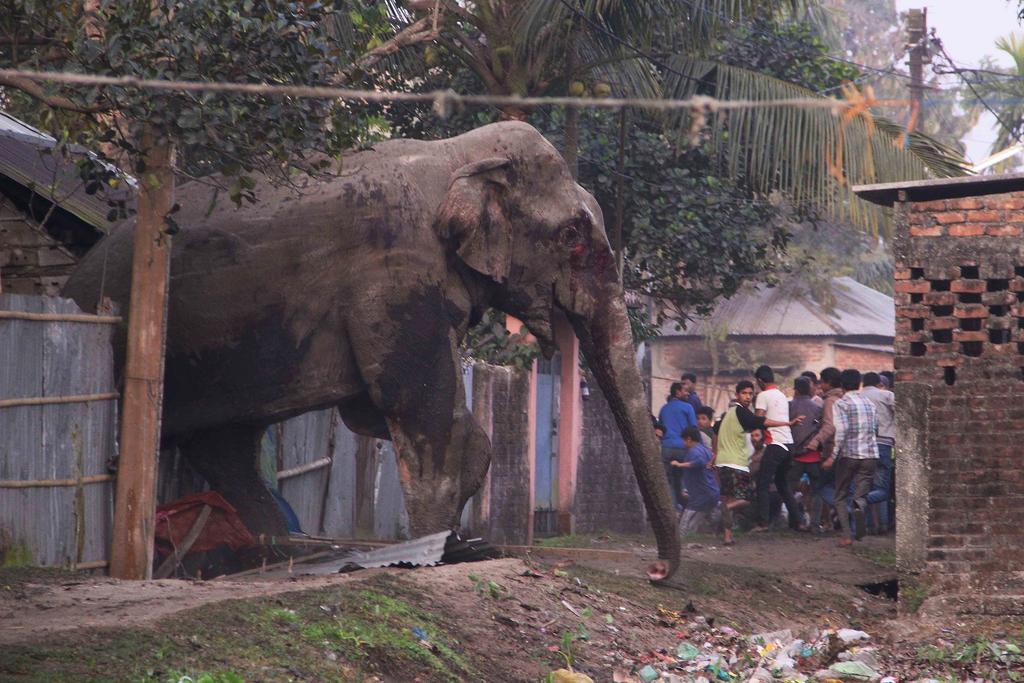
In parts of eastern India, elephants regularly move between forest patches in search of food and water. These migration routes, known as corridors, have existed for generations. When villages, roads, or farmland block these paths, encounters become more likely.
According to conservation researchers, elephants that stray far from their usual habitat may already be experiencing:
- Food scarcity
- Habitat fragmentation
- Separation from their herd
- Prior negative interactions with humans
Any of these factors can contribute to erratic or defensive behavior.
The Role of Habitat Loss and Migration Pressure

Mayurbhanj district lies near forest regions that historically supported elephant populations. Over time, increased agricultural activity, infrastructure development, and population growth have reduced available space for wildlife.
Reports later indicated that the elephant involved may have traveled far from its usual range, possibly originating near Dalma Wildlife Sanctuary, an area more than 100 miles away. Long-distance movement like this is often a sign of habitat stress.
When elephants are forced to navigate unfamiliar territory, the risk of accidental encounters rises significantly.
Why Speculation Can Be Harmful
Following the incident, social media users offered theories about the animal’s motives, including unverified claims about prior human actions. Wildlife authorities emphasized that there was no confirmed evidence supporting these narratives.
Experts consistently warn against speculation in cases involving wildlife. Assigning intention or blame without evidence can fuel fear, misinformation, and hostility toward animals that are already under threat.
Elephants are protected species in India, and conservation efforts depend heavily on public understanding and cooperation.
Human–Elephant Conflict: A Widespread Challenge

This incident is part of a larger pattern seen across parts of South and Southeast Asia. Human–elephant conflict has increased over the past several decades due to:
- Shrinking forest cover
- Expansion of villages into wildlife corridors
- Climate-related changes affecting food availability
- Increased human activity near protected areas
Each year, both humans and elephants are injured or killed in such encounters. Conservation groups stress that the solution lies not in blaming communities or animals, but in better land-use planning and early-warning systems.
How Authorities Respond to Such Events
After incidents involving wildlife, forest departments typically assess the area and implement measures to prevent repeat encounters. These may include:
- Monitoring elephant movement
- Alerting nearby villages
- Repairing or reinforcing forest boundaries
- Relocating animals when necessary
Education programs are also essential. Teaching communities how to respond calmly and safely during wildlife encounters can significantly reduce harm.
A Call for Balance and Prevention

The tragedy in Odisha highlights the delicate balance between human life and wildlife conservation. As rural communities continue to coexist with animals that require large territories, proactive planning becomes critical.
Experts emphasize several long-term strategies:
- Protecting and restoring elephant corridors
- Supporting community-based alert systems
- Investing in non-lethal deterrents
- Reducing habitat fragmentation
Without these efforts, similar incidents may continue—not because animals are aggressive, but because their space is increasingly limited.
Moving Beyond Sensational Headlines
While dramatic headlines capture attention, they often oversimplify complex environmental issues. When wildlife incidents are reduced to shock stories, the opportunity for meaningful discussion is lost.
A more responsible approach focuses on understanding root causes, supporting affected communities, and strengthening conservation efforts that protect both people and animals.
Conlusion
Cranes, heavy rescue vehicles, and specialized emergency equipment were rushed to the scene as early warning signs indicated that the highway’s structure was beginning to fail. What initially appeared to be a routine structural concern quickly escalated into a life-threatening emergency. Concrete started to crack and shift, steel supports groaned under unexpected stress, and visible instability spread across the affected section of roadway. Dust filled the air as small fragments of debris began falling, signaling that the situation was deteriorating rapidly.
Emergency response teams on site immediately activated crisis protocols. These professionals are trained for worst-case scenarios — structural collapses, natural disasters, and large-scale accidents — but facing a failing highway beneath their feet was a stark reminder of how unpredictable infrastructure emergencies can be. Communication lines were kept clear and concise. Orders were delivered firmly and without hesitation. Each team member knew their role, and that clarity proved critical.
As cranes were positioned to stabilize parts of the structure and rescue units prepared for potential casualties, the integrity of the roadway continued to weaken. The ground vibrated with each shift of concrete and steel. It became clear that evacuation was no longer a precaution — it was a necessity. Thanks to rapid response training and disciplined coordination, the evacuation team moved swiftly and efficiently away from the danger zone. Within moments of reaching a safe distance, a significant portion of the compromised structure gave way, collapsing in a cascade of concrete slabs and twisted metal.
In moments of sudden crisis, seconds truly can mean the difference between life and tragedy. This reality became painfully clear as responders watched the structure crumble where they had been standing just minutes earlier. The narrow escape underscored the importance of preparation, structural monitoring systems, and decisive leadership under pressure.
The dramatic incident immediately brought back memories of one of the most significant infrastructure disasters in United States history — the collapse of the Interstate 35W bridge in Minneapolis, Minnesota, in 2007. On August 1 of that year, during the evening rush hour, the eight-lane steel truss bridge spanning the Mississippi River suddenly gave way. Within seconds, 111 vehicles plunged into the river or were crushed beneath massive sections of falling steel and concrete. Thirteen people lost their lives, and 145 others were injured in a tragedy that shocked the nation.
Investigations later determined that a design flaw — undersized gusset plates that connected critical steel beams — contributed significantly to the catastrophic failure. The collapse prompted sweeping changes in how bridges and highways are inspected, maintained, and evaluated across the country. Federal and state agencies implemented stricter oversight measures, increased funding for infrastructure repair, and adopted more advanced structural monitoring technologies.
Events like the recent highway failure highlight why those reforms remain so vital. Much of America’s infrastructure was built decades ago, and while regular inspections are required, aging materials, increased traffic loads, and environmental stressors continue to challenge structural integrity. Engineers today rely on improved modeling software, sensor systems, and predictive maintenance strategies to identify weaknesses before they turn into disasters. Yet even with technological advancements, unforeseen failures can still occur.
What stands out most in both incidents is the critical role of emergency preparedness. Training scenarios that once seemed theoretical become real in seconds. The ability to remain calm, communicate effectively, and act decisively can prevent additional casualties. In this latest case, the evacuation team’s disciplined response ensured that no responders were lost in the collapse — a testament to the value of preparation and teamwork.
Infrastructure failures are stark reminders that bridges and highways are not static structures; they are dynamic systems under constant stress. They require ongoing investment, vigilant oversight, and rapid emergency capabilities. While the memory of past tragedies like the I-35W collapse still resonates, each new incident reinforces the same lesson: proactive maintenance, swift response, and respect for structural warning signs are essential to protecting lives.
As investigations continue into the most recent highway failure, officials will likely examine engineering reports, maintenance records, and structural data to determine what led to the collapse. For now, what remains undeniable is that quick thinking and adherence to emergency protocols prevented what could have been another devastating chapter in infrastructure history.











Leave a Reply