
The human body is a living archive of survival, a complex biological machine that usually operates with a quiet, predictable rhythm. But sometimes, the mask of health slips, and the body begins to send urgent, high-stakes signals that a catastrophe is unfolding just beneath the surface. For many, a breakout of hives—those itchy, raised red welts—is dismissed as a minor irritation, a “clumsy” reaction to a new laundry detergent or a stray patch of poison ivy. However, when these skin flares are accompanied by even the slightest shift in respiration, the narrative changes from a simple annoyance to a “forensic” emergency. This is the moment where the skin acts as a map of a much deeper, internal crisis, revealing a full-body allergic storm known as anaphylaxis. Understanding the radical transparency of these symptoms is not an act of anxiety; it is a life-saving necessity.
Anaphylaxis is an explosive, systemic reaction that occurs when the immune system, once a reliable shield, suddenly views a harmless substance as a mortal enemy. It is a “private horror” that can manifest in anyone, regardless of their medical history. One of the most terrifying aspects of this condition is its unpredictability. You may have spent decades eating the same shellfish, taking the same medications, or walking through the same blooming gardens without a single issue. But the immune system is not static; it is a fluid, evolving entity that can change quietly over the years. A substance that was a “safe” part of your daily life for sixty years can suddenly become the catalyst for a total physiological collapse. When the body decides to break its silence, it does so with a terrifying intensity that leaves no room for hesitation.
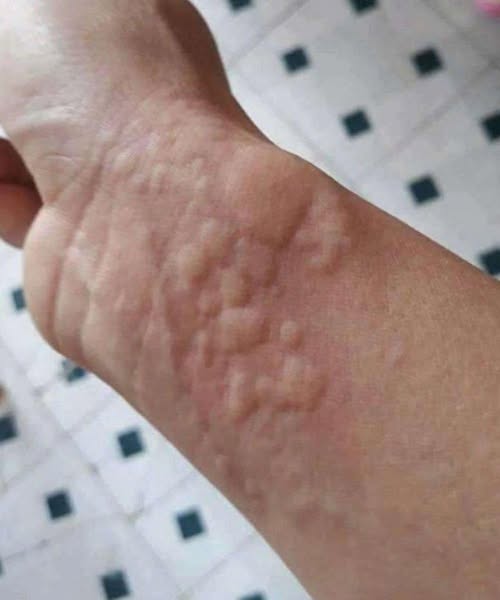
The visual component of this crisis—the sudden eruption of hives—is often the body’s first unmistakable signal that something deeper is unfolding beneath the surface. These raised, inflamed welts can emerge without warning, spreading rapidly across the skin like a chaotic map of internal distress. They may begin as a few isolated patches, but in moments, they can multiply and merge, covering the chest, arms, neck, and face in what feels like a relentless, burning wave. The itching can be intense, almost unbearable, creating a physical distraction that masks the more dangerous processes quietly advancing within. To an outside observer, it may appear as a severe but manageable allergic reaction. But in reality, these visible symptoms are merely the opening move in a far more serious physiological escalation.
What makes this situation particularly dangerous is the deceptive nature of its progression. The hives themselves are not the true threat—they are the warning flare. The real danger begins when the reaction moves beyond the skin and starts to affect the body systemically. This transition can be subtle at first: a faint tightness in the chest, an unusual sensation in the throat, or a slight difficulty when trying to take a full breath. These early signs are easy to dismiss or misinterpret, especially in the chaos of discomfort and confusion. But they mark a critical turning point—the moment when the body’s immune response shifts from localized irritation to widespread disruption.
As the reaction intensifies, the airway becomes the primary battleground. The throat may begin to feel constricted, as though an invisible force is slowly tightening its grip. Breathing, something that normally happens effortlessly and unconsciously, suddenly demands attention and effort. A wheezing sound may develop—a sharp, rhythmic hiss that accompanies each breath, signaling that the airways are narrowing. This is not merely discomfort; it is the sound of the body struggling to maintain one of its most essential functions. Panic can quickly follow, further complicating the situation, as fear accelerates breathing and places additional strain on an already compromised system.
Simultaneously, swelling may begin to appear in the lips, tongue, and face. At first glance, these changes might seem cosmetic—an unfortunate but superficial side effect. In truth, they are external manifestations of a much more dangerous internal process. The same swelling that distorts the visible features is also occurring within the throat and airways, reducing the space through which air can pass. The tongue may feel larger, heavier, harder to control. Speech can become slurred or difficult. Swallowing may feel obstructed. Each of these symptoms is a signal that the body is losing control over its own mechanisms of survival.
At this stage, the situation becomes a race against time. The immune system, designed to protect, has entered a state of overreaction, releasing a cascade of chemicals that amplify inflammation and constriction. Blood vessels may dilate, causing a drop in blood pressure. Dizziness, weakness, or even loss of consciousness can follow. What began as a visible skin reaction is now a full-body crisis—a systemic failure unfolding in real time.
Describing this process as a “game of chess” is not an exaggeration, but rather an attempt to capture its strategic and escalating nature. Each symptom represents a move, a shift in the balance between stability and collapse. The body attempts to compensate, to adapt, to regain control—but the immune response continues to press forward, unpredictable and unrelenting. The stakes are extraordinarily high, because the ultimate consequence is not merely discomfort or temporary distress, but the potential loss of the most fundamental human function: the ability to breathe.
In these moments, awareness becomes critical. Recognizing the transition from a localized allergic reaction to a systemic emergency can mean the difference between rapid intervention and irreversible progression. The body’s signals, though frightening, are also informative. They tell a story—one of escalation, urgency, and the need for immediate action.
What makes this entire experience so striking is how quickly it can unfold. Minutes can separate mild irritation from life-threatening compromise. The shift is not always dramatic or obvious; it can be quiet, almost deceptive, which is precisely what makes it so dangerous. The body, in its attempt to defend itself, becomes its own adversary—an overactive system refusing to stand down, even as the consequences grow more severe.
Ultimately, this is not just a physical event but a deeply human one. It highlights the fragility of the systems we rely on every second of our lives without thinking. It reminds us that something as simple as breathing—so constant, so automatic—can suddenly become uncertain. And in that uncertainty lies the true weight of the crisis: a moment where the body, the mind, and survival itself converge in a fight that must be recognized, understood, and addressed without hesitation.











Leave a Reply