
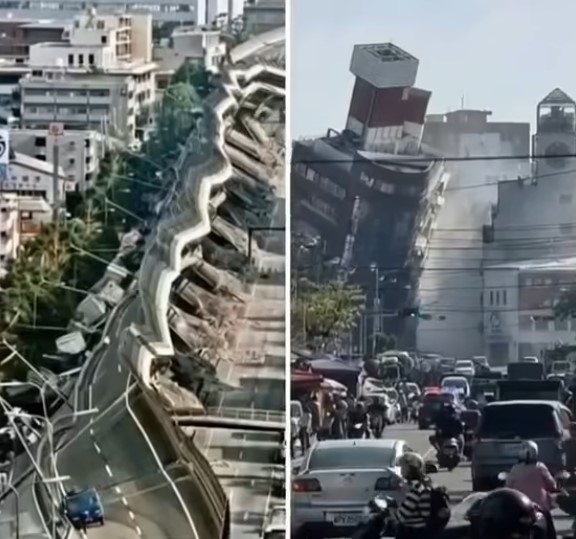
A Major Quake Sends Shockwaves Across the Region
A powerful 7.7-magnitude earthquake struck central Myanmar on Friday, March 28, 2025, at around 1:20 p.m. local time, according to official geological monitoring agencies. The tremor, which originated near the city of Monywa, was strong enough to be felt across multiple neighboring countries, including Vietnam, Thailand, China, Laos, and India.
The seismic event was followed just 10 minutes later by another notable earthquake — this time a 6.4-magnitude aftershock — approximately 20 kilometers away from the town of Kyaukse, also in Myanmar.
Epicenter Details and Depth
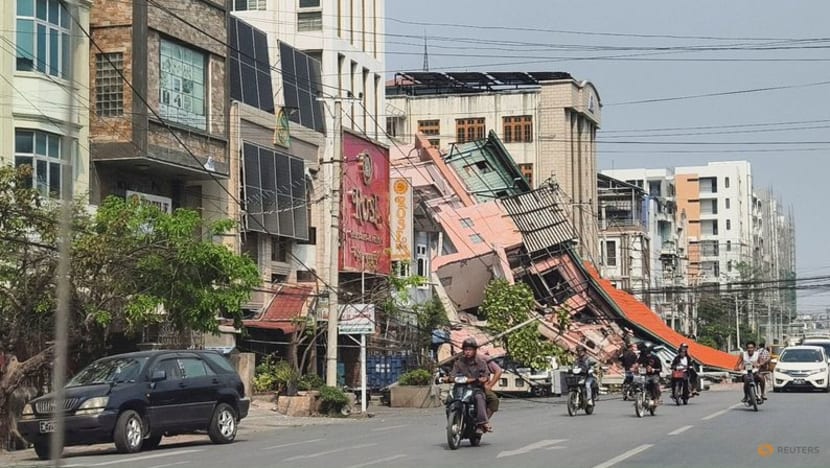
According to India’s National Center for Seismology, the epicenter of the primary 7.7-magnitude quake was located at:
- Latitude: 21.93°N
- Longitude: 96.07°E
- Depth: 10 kilometers
- Region: Near Monywa, Central Myanmar
The shallow depth of the earthquake is a major factor in why the tremors were felt over such a wide area.
Widespread Tremors Across Southeast Asia

Vietnam Reports Shaking in Multiple Cities
In Vietnam, residents in Hanoi, Ho Chi Minh City, and several other urban areas reported feeling the tremors, especially those living in high-rise apartment buildings. Many shared their experiences on social media, describing the sensation as a swaying or rolling motion lasting several seconds.
Authorities confirmed that the earthquake was indeed felt in Vietnam, although no structural damage or injuries have been reported at this time.
Tremors Felt in Bangkok and Other Regional Capitals
In Bangkok, Thailand, the tremors were noticeable enough to cause water to slosh out of swimming pools — a common sign of medium to strong seismic activity in urban areas. Local news outlets also reported that several office workers in tall buildings felt their workplaces shake briefly.
Similar reports came from parts of northern India, Laos, and southern China, where the ground movement, while milder, was still perceptible to residents in multi-story structures.
No Casualties or Damage Reported So Far

As of this writing, no casualties or significant infrastructure damage have been reported in Myanmar or any of the affected neighboring countries. However, officials are continuing to monitor the situation, and aftershocks remain a possibility in the hours and days following such a large seismic event.
Emergency Response and Preparedness
Seismological experts emphasize that while the quake did not cause immediate destruction, the situation is still developing. Local authorities in Myanmar and surrounding nations have urged citizens to remain alert, especially in areas prone to landslides or older buildings that may not be earthquake-resistant.
The United States Geological Survey (USGS) and local seismology institutes across the region are closely tracking aftershock patterns and potential secondary hazards.
Context: Recent Seismic Activity in the Region
Southeast Asia lies within a geologically active zone where tectonic plates frequently shift, causing earthquakes of varying magnitudes. The region has experienced a series of smaller quakes in recent months, though none on the scale of today’s 7.7-magnitude event.
In February 2025, a smaller 2.6-magnitude earthquake was recorded in Chuong My District on the outskirts of Hanoi, Vietnam. While minor, the incident served as a reminder of the need for ongoing earthquake preparedness, even in areas not traditionally seen as high-risk zones.
Understanding the Richter Scale and Earthquake Magnitude
The Richter scale, though now often replaced by the moment magnitude scale (Mw) in professional reporting, remains widely referenced. A 7.7-magnitude earthquake is considered major, capable of causing serious damage if centered near populated areas.
For context:
- 2.0–2.9: Minor, often not felt
- 3.0–3.9: Often felt, rarely causes damage
- 5.0–5.9: Moderate, some damage possible
- 6.0–6.9: Strong, capable of significant damage
- 7.0 and above: Major to great, with the potential for widespread destruction
The depth of the quake also influences how far it can be felt. The shallower the earthquake, the more intense the surface shaking tends to be.
Safety Guidelines During Earthquakes
Authorities across the region have reminded residents of essential safety steps to follow during and after an earthquake:
- If indoors: Drop to the ground, take cover under sturdy furniture, and hold on until the shaking stops
- If outdoors: Move away from buildings, streetlights, and utility wires
- After the quake: Check for gas leaks, structural damage, and stay informed through official updates
Preparedness kits, evacuation plans, and knowing how to shut off utilities can all be lifesaving in the aftermath of a major quake.
The 7.7-magnitude earthquake that struck Myanmar on March 28 stands as a profound and unsettling reminder of the immense geological forces that shape Southeast Asia. While the region was spared the kind of catastrophic destruction that often accompanies earthquakes of this scale, the event should not be viewed as a near miss to be quickly forgotten. Instead, it must be understood as a critical warning—one that exposes both the strengths and the vulnerabilities of a region that sits along some of the most active tectonic zones in the world.
The tremors radiated far beyond Myanmar’s borders, reaching neighboring countries such as Thailand, Laos, China, and even stretching into parts of Vietnam. This wide geographic impact highlights a fundamental reality: natural disasters do not operate within political boundaries. What begins as a localized seismic disturbance can quickly become a regional concern, affecting millions of people across multiple nations. The psychological effect alone—fear, uncertainty, and heightened alertness—can ripple through populations just as powerfully as the physical tremors themselves.
Southeast Asia’s vulnerability is deeply rooted in its geography. The region lies near major fault lines and tectonic plate boundaries, including the collision zones between the Indian Plate and the Eurasian Plate. These geological conditions make earthquakes an unavoidable part of life. However, the level of damage and loss caused by such events is not solely determined by nature—it is shaped by human preparedness, planning, and resilience. This distinction is crucial, as it means that while earthquakes cannot be prevented, their consequences can be significantly reduced.
One of the most pressing issues highlighted by this event is the need for stronger and more consistent public awareness. In many parts of Southeast Asia, knowledge about earthquake safety remains uneven. Urban populations may have greater access to information and resources, but rural communities are often left behind, lacking both education and infrastructure. Governments and organizations must invest in widespread, culturally accessible awareness campaigns that teach people how to respond effectively during an earthquake. Knowing when to “drop, cover, and hold on,” understanding evacuation routes, and recognizing safe zones can be the difference between life and death in those critical moments.
Equally vital is the issue of infrastructure resilience. Rapid urbanization has transformed many Southeast Asian cities into densely populated economic hubs. However, this growth has not always been matched by adequate building standards or enforcement. In some areas, older structures and informal housing remain highly vulnerable to seismic activity. Even newer developments can fall short if regulations are not strictly implemented. Earthquake-resistant construction should not be treated as a luxury or an afterthought—it must become a standard practice embedded in national policies and urban planning strategies. Investing in safer buildings today can prevent unimaginable losses tomorrow.
Emergency preparedness is another cornerstone that demands attention. Effective disaster response relies on coordination, speed, and clarity. Governments must ensure that emergency services are well-trained, properly equipped, and capable of responding under extreme conditions. Early warning systems, where feasible, can provide precious seconds or minutes of advance notice, allowing people to take protective actions. Communication systems must also be robust enough to function during crises, ensuring that accurate information reaches the public without delay.
At the same time, regional cooperation plays an essential role in strengthening disaster resilience. Southeast Asian nations share not only geographic proximity but also common risks. Collaborative efforts—such as joint training exercises, shared research, and coordinated response frameworks—can significantly enhance the region’s ability to manage large-scale emergencies. Organizations like ASEAN have already taken steps in this direction, but continued investment and commitment are necessary to build a truly unified and effective regional safety net.
Another dimension that cannot be overlooked is the economic impact of such events. Even when immediate damage appears limited, earthquakes can disrupt supply chains, affect tourism, and strain public resources. For developing economies, the financial burden of recovery can be particularly heavy. This makes preparedness not only a humanitarian priority but also an economic one. Building resilience is an investment in long-term stability and growth.
As authorities continue to monitor seismic activity and assess any potential aftershocks or long-term consequences, the responsibility does not lie solely with governments. Individuals, families, and communities all have a role to play in fostering a culture of preparedness. Staying informed through credible sources, participating in drills, and maintaining basic emergency supplies at home are simple yet effective steps that can enhance personal safety.
In an age of rapid information exchange, it is also essential to address the role of media and digital platforms. While they can be powerful tools for spreading awareness, they can also amplify misinformation and panic if not used responsibly. Ensuring that accurate, verified information is prioritized during times of crisis is critical to maintaining public trust and preventing unnecessary fear.
Ultimately, the March 28 earthquake should be remembered not just as a geological event, but as a defining moment for reflection and action. It is a reminder that preparedness is not a one-time effort, but an ongoing process that requires vigilance, investment, and collaboration. The relative absence of widespread devastation should not lead to complacency; rather, it should be seen as an opportunity—a chance to strengthen systems, educate populations, and build a safer future.
Nature has once again demonstrated its power. The question now is how the region chooses to respond. By learning from this event and taking proactive steps, Southeast Asia can move closer to a future where communities are not only aware of the risks they face, but fully equipped to withstand them.











Leave a Reply