
Recent developments in the Middle East have increased international concern as tensions between Iran and Israel continue to rise. Governments and international organizations are closely monitoring the situation, particularly due to the presence of sensitive nuclear facilities in the region.
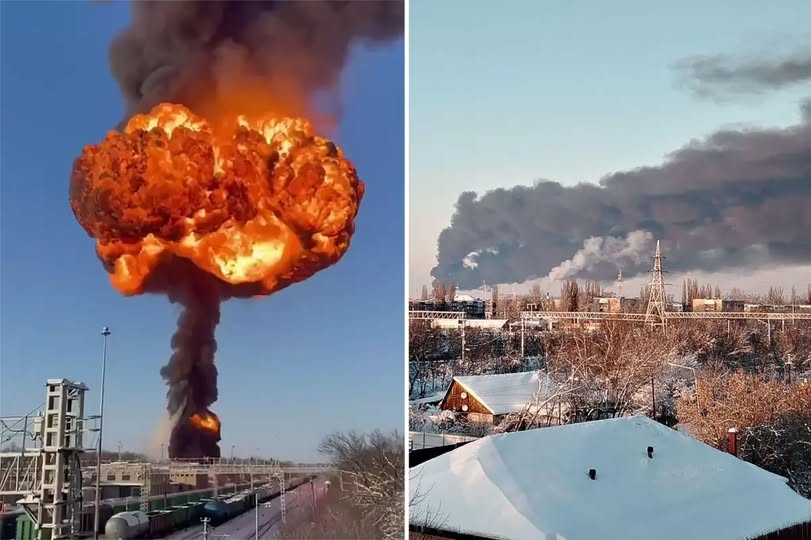
Reports circulating online claim that military operations and missile exchanges have heightened fears about the safety of several nuclear-related sites. However, many of these claims remain unconfirmed by independent authorities, and experts urge caution when interpreting early or unofficial reports.
Public attention has focused on several nuclear facilities associated with Iran’s nuclear program, including:
- Bushehr Nuclear Power Plant
- Natanz Nuclear Facility
- Fordow Fuel Enrichment Plant
These locations have long been central to international discussions about nuclear development and monitoring.
At the same time, commentary has also referenced Israel’s Negev Nuclear Research Center, a highly sensitive site located near the city of Dimona in the Negev Desert.
Some reports have suggested concerns about possible risks to infrastructure in the surrounding region, though there has been no confirmed breach of the facility itself
International Oversight and Emergency Discussions
Because nuclear infrastructure carries profound environmental, political, and humanitarian implications, any situation involving such facilities quickly becomes a matter of international concern. One of the leading organizations responsible for monitoring and guiding global nuclear safety is the International Atomic Energy Agency (IAEA). Established under the framework of the United Nations, the IAEA plays a central role in ensuring that nuclear technology is used safely, securely, and for peaceful purposes.
In times of heightened geopolitical tension—especially when such tensions occur near nuclear power plants, research reactors, or storage facilities—the IAEA increases its level of attention and engagement. This often involves organizing emergency discussions, technical briefings, and high-level meetings with relevant national authorities and international stakeholders. These discussions are not unusual; rather, they are part of a well-established protocol designed to proactively address any potential risks before they escalate into serious incidents.
During such meetings, experts evaluate a wide range of factors. These include the structural integrity of nuclear facilities, the reliability of power supplies needed to maintain cooling systems, the security of nuclear materials, and the readiness of emergency response mechanisms. The goal is not only to assess current conditions but also to anticipate possible scenarios and prepare coordinated responses. Transparency and communication are key elements in this process, as misinformation or lack of clarity can lead to unnecessary panic or misinterpretation of risks.
Additionally, the IAEA may deploy inspection teams or request real-time data from operators to ensure that safety standards are being upheld. These measures help build international confidence and provide reassurance that, even in unstable situations, there are systems in place to maintain control and prevent accidents.
Why Nuclear Facility Safety Matters
Nuclear facilities, including power plants and research centers, are among the most carefully engineered structures in the world. They are designed with multiple layers of safety systems, often referred to as “defense-in-depth.” This concept ensures that if one safety mechanism fails, several others remain in place to prevent any release of radioactive material into the environment.
The guidelines established by the International Atomic Energy Agency emphasize strict adherence to safety protocols at every stage of nuclear operation. These include robust containment structures, redundant cooling systems, constant monitoring of radiation levels, and comprehensive emergency preparedness plans. Staff working at these facilities undergo extensive training to handle both routine operations and unexpected situations.
The importance of nuclear safety becomes even more evident when considering past incidents such as the Chernobyl disaster and the Fukushima Daiichi nuclear disaster. These events demonstrated how failures in safety systems, combined with external factors, can lead to severe environmental contamination, long-term health effects, and widespread economic disruption. As a result, global standards have become significantly stricter, and international cooperation has intensified.
In modern times, even during armed conflicts or political instability, there is a strong global consensus on the need to protect nuclear facilities. Experts stress that these sites must never become targets or collateral damage, as the consequences would extend far beyond national borders. Radioactive contamination does not respect political boundaries, and its effects can persist for decades.
At the same time, it is important to approach such situations with a balanced perspective. While risks should never be underestimated, not every incident or report indicates an immediate danger. Speculation, especially on social media, can spread rapidly and create unnecessary fear. For this reason, verified information from credible organizations like the IAEA and national regulatory bodies remains the most reliable source for understanding what is actually happening.
In conclusion, nuclear facility safety is a global priority that requires constant vigilance, cooperation, and transparency. International oversight mechanisms, such as those led by the IAEA, play a crucial role in ensuring that even in times of uncertainty, risks are carefully managed and minimized.











Leave a Reply